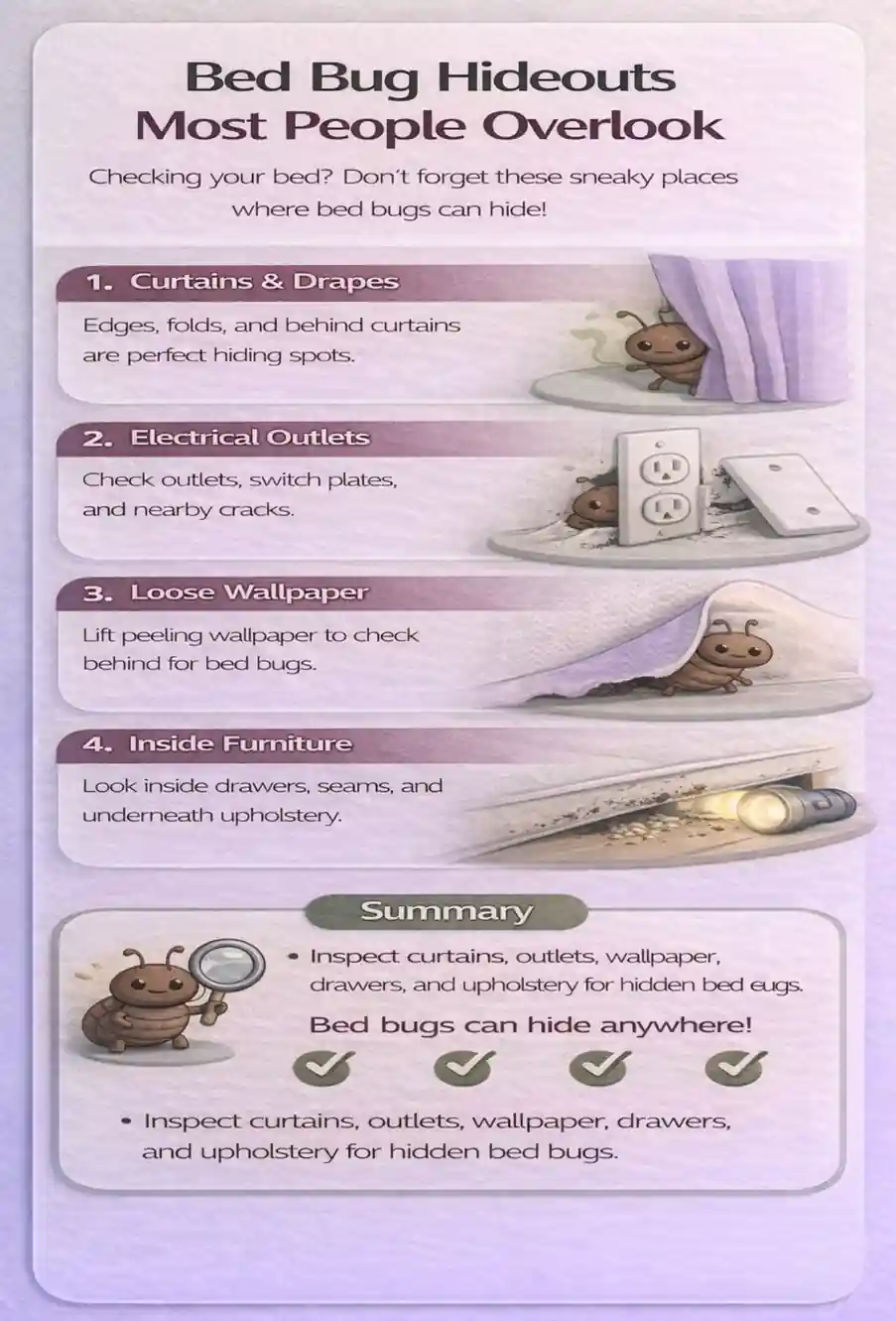
Discovering bed bugs can feel like an overnight nightmare, but in most homes the problem has been developing silently for weeks or even months. Bed bugs don’t limit themselves to mattresses or sheets—they exploit tight cracks, hidden furniture seams, wall edges, and personal items that rarely get inspected. From firsthand cleanouts and furniture removals, the most severe infestations almost always involve overlooked hideouts that allowed bed bugs to spread without detection. This in-depth guide reveals the bed bug hiding places most people miss, explains why these insects prefer them, and shows how identifying these spots early can stop an infestation before it spreads throughout your home.
Quick Answers
Bed Bugs
Bed bugs are small, flat, reddish-brown insects that hide close to where people rest. While mattresses are the most well-known hiding spot, real-world cleanouts show they frequently spread into furniture seams, wall edges, and personal items. These hidden locations allow bed bugs to survive undetected, even when people believe they’ve cleaned thoroughly. Finding and addressing these overlooked hideouts early can prevent widespread infestations and major furniture loss.
Top Takeaways
- Bed bugs hide far beyond beds and mattresses.While mattresses are the most well-known location, real infestations frequently involve couches, recliners, nightstands, dressers, wall trim, and even personal belongings that sit near sleeping areas.
- Overlooked hideouts allow infestations to grow quietly.Bed bugs prefer tight, undisturbed spaces, which lets them multiply unnoticed long before bites or visible signs appear.
- Furniture joints and wall edges are common nesting areas.Seams, screw holes, cracks in bed frames, baseboards, and headboards provide ideal shelter and easy access to sleeping hosts.
- Early inspections reduce spread and cleanup costs.Identifying hidden harborages early can limit how far bed bugs spread, reducing the need for extensive furniture removal or repeated treatments, especially when supported by proactive home maintenance like dryer vent cleaning services.
- Missed hiding spots often explain repeat infestations.When bed bugs return after treatment, the cause is often a hidden location that was never inspected, cleaned, or treated properly.
Where Bed Bugs Commonly Hide Beyond the Bed
In many cleanouts, bed bugs are found away from the mattress entirely. Common overlooked hideouts include couch seams, recliner frames, nightstands, and dresser joints. These areas provide darkness, warmth, and easy access to sleeping humans without frequent disturbance.
Why Bed Bugs Choose Hard-to-See Locations
Bed bugs instinctively avoid open spaces. They prefer tight cracks, fabric folds, and screw holes where their flat bodies stay protected. During inspections, infestations are often traced back to areas homeowners cleaned visually—but not structurally—allowing bugs to remain hidden.
Hidden Household Items That Harbor Bed Bugs
Beyond furniture, bed bugs are frequently discovered inside alarm clocks, power strips, picture frames, luggage, and stored clothing. In removal jobs, these items are often the reason infestations return after treatment, because they were never inspected or isolated.
What Overlooked Hideouts Mean for an Infestation
When bed bugs spread into secondary hiding places, it usually signals an infestation that’s actively expanding. At this stage, simply washing bedding is no longer enough, and broader home maintenance steps like duct cleaning can help address conditions that allow the problem to worsen. The longer these hideouts go unnoticed, the more furniture and belongings become contaminated.
“In most of the severe infestations we handle, the mattress isn’t the main problem—it’s the places no one thinks to check. Bed bugs hide in furniture joints and wall edges long before people notice bites, and missing those spots is why infestations often come back.”
Essential Resources
EPA Bed Bug Guide
https://www.epa.gov/bedbugs
Explains common and hidden bed bug hideouts and outlines safe treatment practices for homes.
CDC Bed Bug Resource
https://www.cdc.gov/parasites/bedbugs
Covers how bed bugs spread and what everyday behaviors increase infestation risk.
NPMA Bed Bug Guide
https://www.pestworld.org/pest-guide/bed-bugs
Shares professional insights on early warning signs and overlooked hiding locations.
Mayo Clinic
https://www.mayoclinic.org/diseases-conditions/bed-bugs
Provides medical guidance on symptoms linked to ongoing or hidden infestations.
Harvard T.H. Chan School of Public Health
https://www.hsph.harvard.edu/bedbugs
Explains why bed bugs persist indoors and how hidden harborages support survival.
University of Kentucky Entomology
https://entomology.ca.uky.edu/ef636
Details bed bug behavior, biology, and preferred hiding places.
Consumer Reports
https://www.consumerreports.org/pests/how-to-get-rid-of-bed-bugs-a3329821929
Offers practical advice to prevent reinfestation caused by missed hiding spots.
Together, these trusted resources explain how bed bugs spread through hidden harborages inside homes and why early detection matters, while also showing how maintaining a cleaner indoor environment to improve air quality can support healthier living conditions and reduce overlooked indoor issues.
EPA Bed Bug Guide
https://www.epa.gov/bedbugs
Explains common and hidden bed bug hideouts and outlines safe treatment practices for homes.
CDC Bed Bug Resource
https://www.cdc.gov/parasites/bedbugs
Covers how bed bugs spread and what everyday behaviors increase infestation risk.
NPMA Bed Bug Guide
https://www.pestworld.org/pest-guide/bed-bugs
Shares professional insights on early warning signs and overlooked hiding locations.
Mayo Clinic
https://www.mayoclinic.org/diseases-conditions/bed-bugs
Provides medical guidance on symptoms linked to ongoing or hidden infestations.
Harvard T.H. Chan School of Public Health
https://www.hsph.harvard.edu/bedbugs
Explains why bed bugs persist indoors and how hidden harborages support survival.
University of Kentucky Entomology
https://entomology.ca.uky.edu/ef636
Details bed bug behavior, biology, and preferred hiding places.
Consumer Reports
https://www.consumerreports.org/pests/how-to-get-rid-of-bed-bugs-a3329821929
Offers practical advice to prevent reinfestation caused by missed hiding spots.
Supporting Statistics
Bed bugs often go unnoticed due to low public awareness.
Less than one-third of Americans can accurately identify bed bugs, which helps explain why hidden harborages are frequently missed during early infestations.
Source: NPMA / Harris Poll
https://www.pestworld.org/news-hub/pest-articles/bed-bug-survey-results-facts/
Hidden hideouts are a routine challenge for professionals.
More than 80% of pest control professionals report treating bed bugs each year, with many cases tied to bugs nesting in overlooked furniture, wall edges, or personal items.
Source: NPMA / University of Florida
https://www.pestworld.org/news-hub/pest-articles/bed-bug-survey-results-facts/
Regulation reflects the risk of uncontrolled spread.
Over 20 U.S. states have enacted bed bug–related laws, underscoring how quickly infestations can spread when infested items and furniture aren’t properly identified or handled.
Source: U.S. EPA
https://www.epa.gov/bedbugs/bed-bug-laws-and-regulations
Bottom line:
Bed bugs persist not because they’re impossible to stop—but because their most common hiding places are easy to overlook.
Bed bugs often go unnoticed due to low public awareness.
Less than one-third of Americans can accurately identify bed bugs, which helps explain why hidden harborages are frequently missed during early infestations.
Source: NPMA / Harris Poll
https://www.pestworld.org/news-hub/pest-articles/bed-bug-survey-results-facts/
Hidden hideouts are a routine challenge for professionals.
More than 80% of pest control professionals report treating bed bugs each year, with many cases tied to bugs nesting in overlooked furniture, wall edges, or personal items.
Source: NPMA / University of Florida
https://www.pestworld.org/news-hub/pest-articles/bed-bug-survey-results-facts/
Regulation reflects the risk of uncontrolled spread.
Over 20 U.S. states have enacted bed bug–related laws, underscoring how quickly infestations can spread when infested items and furniture aren’t properly identified or handled.
Source: U.S. EPA
https://www.epa.gov/bedbugs/bed-bug-laws-and-regulations
Final Thought & Opinion
Bed bug problems rarely spiral out of control because someone ignored the issue altogether. More often, infestations worsen because attention is focused on obvious places while hidden harborages go unchecked. From real cleanouts, overlooked hiding spots are the common thread behind the most costly and disruptive cases.
Most severe infestations escalate because people look in the wrong places.
The worst cases almost always involve uninspected hideouts, not untreated beds.
Once bed bugs spread into furniture joints and household items, cleanup becomes far more disruptive.
Addressing **all hiding places—not just mattresses—**is essential to stopping spread.
Early action on overlooked hideouts helps prevent repeat infestations and major losses.
Most severe infestations escalate because people look in the wrong places.
The worst cases almost always involve uninspected hideouts, not untreated beds.
Once bed bugs spread into furniture joints and household items, cleanup becomes far more disruptive.
Addressing **all hiding places—not just mattresses—**is essential to stopping spread.
Early action on overlooked hideouts helps prevent repeat infestations and major losses.
Next Steps
Inspect beyond the bed
Check furniture seams, wall edges, and stored items.
Reduce clutter
Fewer hiding places limit spread.
Isolate suspect items
Bag and seal items before moving them.
Monitor after cleaning
Repeat inspections matter.
Seek help if bugs persist
Hidden harborages often require professional intervention.
Following these next steps helps limit how far bed bugs can spread by reducing hiding places and catching activity early, while reinforcing the importance of effective strategies for improving indoor air quality to support a cleaner, healthier home environment.
Inspect beyond the bed
Check furniture seams, wall edges, and stored items.
Reduce clutter
Fewer hiding places limit spread.
Isolate suspect items
Bag and seal items before moving them.
Monitor after cleaning
Repeat inspections matter.
Seek help if bugs persist
Hidden harborages often require professional intervention.
FAQ on Bed Bugs
Q: Do bed bugs only hide in beds?
A: No. While beds are a common starting point, bed bugs frequently hide in furniture seams, wall trim, baseboards, and personal items located near sleeping areas.
Q: Why do infestations return after treatment?
A: Reinfestations usually happen when hidden harborages are missed. Bed bugs left in furniture joints, wall edges, or stored items can survive treatment and spread again.
Q: What furniture should be inspected first?
A: Focus on nightstands, couches, recliners, bed frames, and upholstered furniture, especially seams, joints, and screw holes.
Q: Can bed bugs hide in electronics?
A: Yes. Bed bugs often hide in alarm clocks, power strips, remote controls, and other electronics because they provide warmth and tight spaces.
Q: When is it time to seek professional help?
A: Professional help is recommended if bed bugs reappear after cleaning, spread beyond the bedroom, or are found in multiple hiding locations.
A: No. While beds are a common starting point, bed bugs frequently hide in furniture seams, wall trim, baseboards, and personal items located near sleeping areas.
A: Reinfestations usually happen when hidden harborages are missed. Bed bugs left in furniture joints, wall edges, or stored items can survive treatment and spread again.
A: Focus on nightstands, couches, recliners, bed frames, and upholstered furniture, especially seams, joints, and screw holes.
A: Yes. Bed bugs often hide in alarm clocks, power strips, remote controls, and other electronics because they provide warmth and tight spaces.
A: Professional help is recommended if bed bugs reappear after cleaning, spread beyond the bedroom, or are found in multiple hiding locations.