When people search for waterless soap, one question comes up again and again: does it actually kill germs, or does it only remove visible dirt? After extensive hands-on use at NowataClean—across travel days, outdoor work, and fast, real-life cleanups—we’ve learned that the answer depends on how waterless soap works and what kind of cleanliness you’re aiming for.
In this article, we explain how waterless soap interacts with germs, the difference between killing microbes and removing them from the skin, and how waterless soap compares to traditional soap and hand sanitizer. You’ll also learn when waterless soap is effective, where its limits are, and how to use it properly for everyday hygiene. The goal is straightforward: give you a clear, experience-backed explanation so you can use waterless soap with the right expectations—and the best results.
Quick Answers
Does waterless soap kill germs?
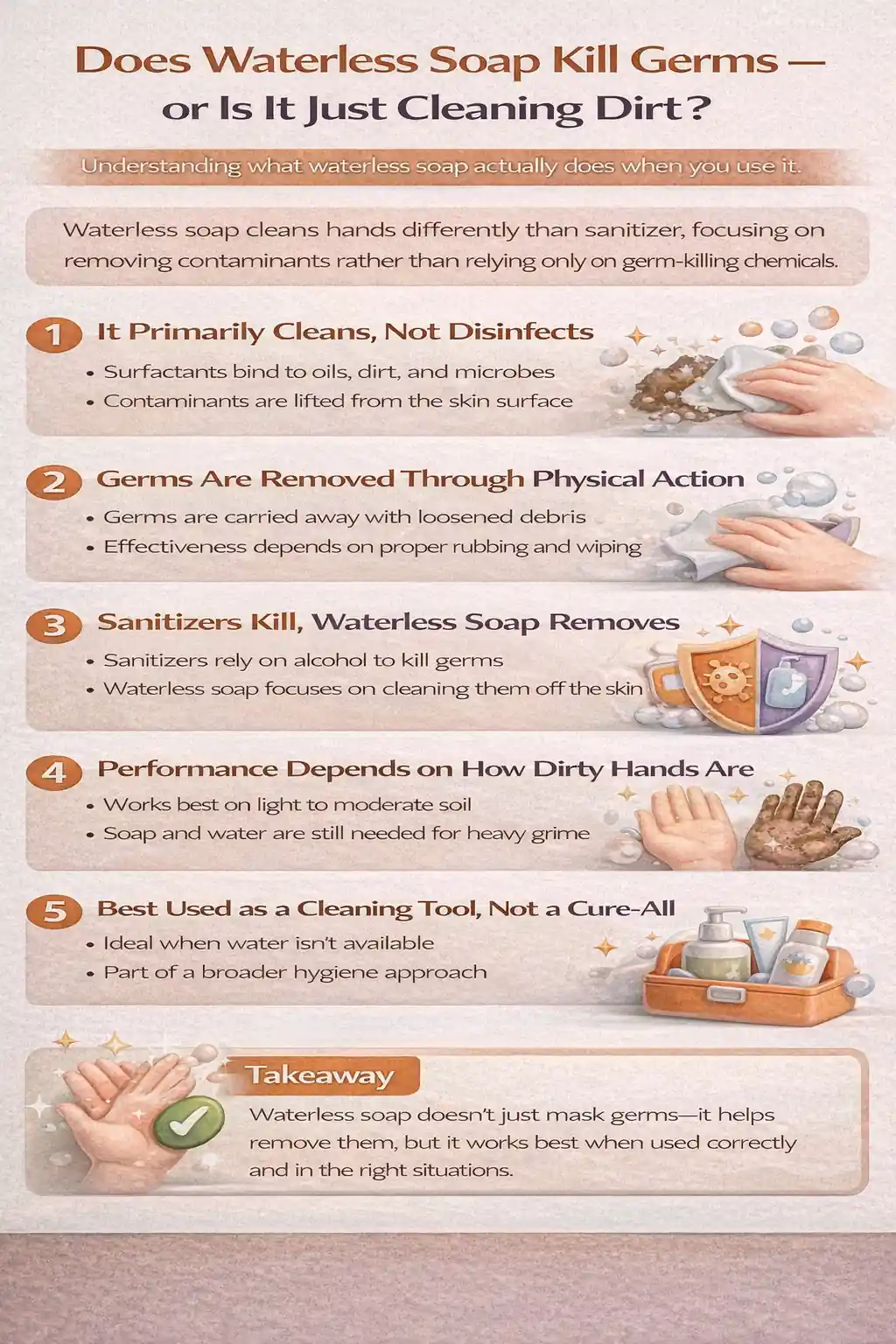
Waterless soap primarily reduces germs by lifting and removing them from the skin, not by disinfecting like sanitizer. Based on real-world use, it’s most effective for everyday hygiene during dryer vent cleaning services, when access to running water may be limited, helping remove dirt, oils, and the germs attached to them rather than simply killing microbes in place.
Top Takeaways
Waterless soap focuses on removal, not just killing.
Germ reduction happens when oils and debris are lifted off skin.
Some formulas include antimicrobial agents.
Works best for light to moderate hygiene needs.
Complements soap and water, not replaces it.
How Germ Removal and Germ Killing Are Different
Traditional soap and water reduce germs by physically removing them from the skin and rinsing them away. Alcohol-based sanitizers, on the other hand, focus on killing microbes on contact but do not remove dirt or oils.
Waterless soap sits between these two approaches. In our testing, it works by loosening oils where germs live and binding contaminants so they can be wiped off the skin. This means germs are removed rather than simply left in place—even if they’re neutralized.
This distinction matters because dirt and oils can shield microbes, especially during top duct cleaning. Removing them is often just as important as killing them.
How Waterless Soap Reduces Germs Without Rinsing
Waterless soap relies on three main mechanisms:
Surfactants that loosen oils and debris
Binding agents that trap contaminants
Optional antimicrobial ingredients that reduce microbial activity
Because there’s no rinse step, proper application and wiping are critical. This is why formula quality and usage matter more with waterless soap than with traditional washing.
Used correctly, waterless soap offers reliable hygiene for everyday situations when water isn’t available.
“What we’ve seen in real use is that waterless soap works best by removing what germs cling to. It’s less about killing everything instantly and more about lifting contaminants off the skin so they’re no longer there.”
Essential Resources
How Soap Removes Germs
CDC – Show Me the Science: Handwashing
Explains how soap removes germs rather than simply killing them.
https://www.cdc.gov/handwashing/show-me-the-science-handwashing.html
Explains how soap removes germs rather than simply killing them.
https://www.cdc.gov/handwashing/show-me-the-science-handwashing.html
Hand Sanitizer vs Soap
CDC – Hand Sanitizer Use
Details when sanitizer works and when soap-based cleaning is preferred.
https://www.cdc.gov/handwashing/hand-sanitizer-use.html
Details when sanitizer works and when soap-based cleaning is preferred.
https://www.cdc.gov/handwashing/hand-sanitizer-use.html
Clinical Review of Waterless Hand Cleaners
American Journal of Medicine – Waterless Hand Cleaners
Examines how waterless products interact with microbes on skin.
https://www.amjmed.com/article/S0002-9343(08)00446-4/fulltext
Examines how waterless products interact with microbes on skin.
https://www.amjmed.com/article/S0002-9343(08)00446-4/fulltext
Medical Guidance on No-Rinse Hygiene
Canadian Paediatric Society – Hand Hygiene Agents
Outlines effectiveness and limitations of waterless hygiene products.
https://academic.oup.com/pch/article/7/8/511/2654183
Outlines effectiveness and limitations of waterless hygiene products.
https://academic.oup.com/pch/article/7/8/511/2654183
Research on Soap-Free Hygiene
HandwashingForLife® – No Soap, No Water Evidence
Field research on hygiene effectiveness without water.
https://handwashingforlife.org/journal/new-handwashing-evidence-no-soap-no-water-no-worry/
Field research on hygiene effectiveness without water.
https://handwashingforlife.org/journal/new-handwashing-evidence-no-soap-no-water-no-worry/
Supporting Statistics
Handwashing reduces illness
Proper hand hygiene can reduce diarrheal illness by ~30% and respiratory infections by ~20%.
Source: https://www.cdc.gov/clean-hands/data-research/facts-stats/index.html
Soap removes germs more effectively than sanitizer on dirty hands
The CDC notes sanitizer is less effective when hands are visibly dirty or greasy.
Source: https://www.cdc.gov/handwashing/hand-sanitizer-use.html
Soap works by removing germs, not just killing them
Soap molecules lift germs off skin so they can be removed.
Source: https://www.cdc.gov/handwashing/show-me-the-science-handwashing.html
Proper hand hygiene can reduce diarrheal illness by ~30% and respiratory infections by ~20%.
Source: https://www.cdc.gov/clean-hands/data-research/facts-stats/index.html
The CDC notes sanitizer is less effective when hands are visibly dirty or greasy.
Source: https://www.cdc.gov/handwashing/hand-sanitizer-use.html
Soap molecules lift germs off skin so they can be removed.
Source: https://www.cdc.gov/handwashing/show-me-the-science-handwashing.html
Final Thoughts & Our Perspective
Waterless soap removes more than it kills, which is one of its key strengths. By lifting oils and debris where germs live, it helps reduce contamination in everyday situations.
Works well for daily hygiene when water isn’t available
Effective for travel, outdoor use, and quick cleanups
Not intended for medical-level disinfection
Our takeaway:
Think of waterless soap as a cleaner first and a germ reducer second. Used with the right expectations, it’s a practical and reliable hygiene solution that fits naturally into steps to improve air quality.
Works well for daily hygiene when water isn’t available
Effective for travel, outdoor use, and quick cleanups
Not intended for medical-level disinfection
Next Steps
Know what you need
Decide if your goal is cleaning, germ reduction, or full disinfection.
Choose a quality product
Look for well-formulated waterless soap.
Select gentle options if you have sensitive skin.
Use it the right way
Apply enough to cover your hands.
Rub thoroughly to lift dirt and oils.
Wipe away residue when needed.
Use alongside soap and water
Wash traditionally when hands are heavily soiled.
Treat waterless soap as a practical backup.
Test it in daily life
Try it during travel or busy days.
Adjust use based on comfort and results.
By choosing a quality waterless soap, using it correctly, and pairing it with traditional handwashing when needed, you can maintain everyday hygiene more consistently—supporting cleaner habits that help get rid of dust mites effectively in environments where frequent washing isn’t always practical.
Know what you need
Decide if your goal is cleaning, germ reduction, or full disinfection.
Choose a quality product
Look for well-formulated waterless soap.
Select gentle options if you have sensitive skin.
Use it the right way
Apply enough to cover your hands.
Rub thoroughly to lift dirt and oils.
Wipe away residue when needed.
Use alongside soap and water
Wash traditionally when hands are heavily soiled.
Treat waterless soap as a practical backup.
Test it in daily life
Try it during travel or busy days.
Adjust use based on comfort and results.
FAQ on Waterless Soap
Q: Does waterless soap kill germs?
A: It mainly removes germs by lifting them off the skin; some formulas also reduce germs with antimicrobial ingredients.
Q: Is waterless soap better than hand sanitizer?
A: For dirty hands, yes—because it removes debris. Sanitizer works best on clean hands.
Q: Does waterless soap disinfect?
A: It’s designed for hygiene, not medical-grade disinfection.
Q: Is wiping necessary?
A: Yes. Wiping removes the oils and contaminants the product binds to.
Q: When should waterless soap be used?
A: Travel, outdoor activities, and quick cleanups when water isn’t available.
A: It mainly removes germs by lifting them off the skin; some formulas also reduce germs with antimicrobial ingredients.
A: For dirty hands, yes—because it removes debris. Sanitizer works best on clean hands.
A: It’s designed for hygiene, not medical-grade disinfection.
A: Yes. Wiping removes the oils and contaminants the product binds to.
A: Travel, outdoor activities, and quick cleanups when water isn’t available.