At Jiffy Junk, we see acetone bottles left behind in dorm move-outs all the time, often tossed in communal trash or hidden in drawers. This guide shows the safest short-term storage steps, what not to do, and the easiest next step for proper disposal so you’re not guessing in a space where safety matters most.
TL;DR Quick Answers
How to Dispose of Acetone
Treat acetone like household hazardous waste. Keep it sealed and upright, store it away from heat or sparks, and take it to a local HHW drop-off site or collection event. At Jiffy Junk, we see the biggest issues when people try to “just toss it” or dump it—if it still pours, don’t guess.
Top Takeaways
Dorm rooms increase acetone risk. Small space. Limited ventilation.
Short-term storage should stay short. Don’t let it sit.
Keep acetone sealed, upright, and contained. Prevent leaks and fumes.
Don’t dump it down drains or toss it in communal trash.
Treat acetone like a flammable chemical, not a cosmetic.
Why Acetone in a Dorm Room Needs Extra Caution
Acetone is common in dorms because it’s found in nail polish remover, art supplies, and some cleaning products. The problem is that dorm rooms are small, shared, and often poorly ventilated. That means steps tо improve аіr quаlіtу are essential because acetone fumes can build up faster, and storage mistakes become a bigger safety issue.
At Jiffy Junk, we regularly see leftover acetone during dorm move-outs, and the biggest risk isn’t the amount. It’s where it ends up: drawers, backpacks, bathroom cabinets, or tossed into communal trash.
What Counts as “Short-Term Storage” in a Dorm?
Short-term storage means you’re holding acetone only long enough to dispose of it properly. In a dorm setting, that typically means:
A few hours to a few days
Until you can reach a campus hazardous waste option
Until you can take it to a proper household hazardous waste drop-off
If you don’t have a disposal plan within a few days, it’s no longer “short-term.” It becomes an ongoing dorm hazard.
Safest Short-Term Storage Steps (Dorm Room Friendly)
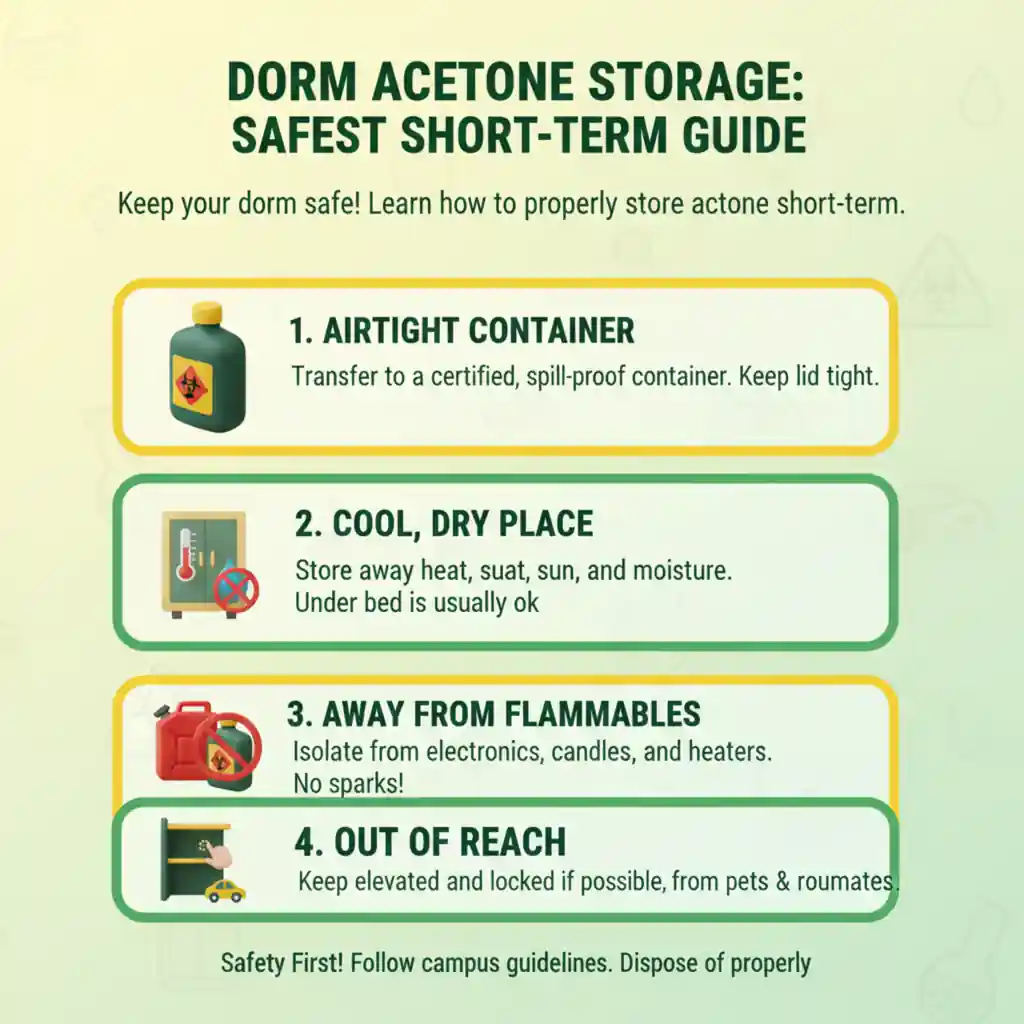
Short-term storage is all about reducing three risks: fumes, leaks, and ignition.
Keep It in the Original Container
Original containers are designed for solvents and have proper labeling. Avoid transferring acetone into water bottles, cups, or travel containers.
Seal It Tight and Store It Upright
Make sure the lid is fully closed. Store it upright to prevent leaks, especially in drawers or bins that get moved around.
Store It Away From Heat, Electronics, and Sunlight
Keep acetone away from:
Space heaters
Hair tools (straighteners, dryers)
Mini fridges (back area can get warm)
Power strips and chargers
Direct sunlight on windowsills
Even small dorm items can generate heat or sparks.
Use Secondary Containment
Place the bottle inside a sealed plastic bag or small plastic container. This prevents spills if the cap loosens and keeps the odor contained.
Keep It Out of Shared Spaces
Do not store acetone in shared bathrooms or communal areas. It increases the risk of someone mishandling it or knocking it over.
What NOT to Do With Acetone in a Dorm Room
These are the most common dorm mistakes we see during cleanouts and move-outs:
Tossing acetone in communal trash bins
Pouring it into the sink or toilet
Leaving it open to “air out”
Storing it in backpacks or clothing drawers
Keeping it near candles, incense, or smoking areas
Dorms are high-traffic spaces. One accident is all it takes.
Best Next Step: How to Dispose of It Properly
The safest acetone disposal option is usually one of the following:
A campus hazardous waste program (if available)
A local household hazardous waste (HHW) drop-off site
A community chemical collection event
If you’re unsure, contact your dorm front desk or campus facilities. Many schools have clear procedures for chemical disposal.
When to Get Help
If you have multiple bottles, a strong odor, or acetone mixed with other chemicals, don’t try to handle it alone. At Jiffy Junk, we often find mystery bottles during move-outs, and the safest choice is to treat unknown liquids as hazardous until confirmed otherwise.
If it smells strong, leaks, or isn’t clearly labeled, it’s time to get help and remove it safely.
“Dorm rooms are one of the worst places to ‘store it for later,’ especially with acetone. At Jiffy Junk, we find it during move-outs all the time, usually stuffed in drawers, backpacks, or tossed into communal trash like it’s harmless. The truth is the risk isn’t the amount, it’s the environment. In a tight dorm space, one loose cap can mean fumes, leaks, or a fire hazard. That’s why we always recommend sealing it, containing it, and getting it to proper disposal as soon as possible.”
Essential Resources
EPA Household Hazardous Waste (HHW) Guide — Why Acetone Disposal Matters
This EPA resource explains why products like acetone are treated as hazardous waste and why dumping them in regular trash or drains can cause problems. It’s the foundation for understanding how to do it right, the same way we approach disposal in cleanouts.
https://www.epa.gov/hw/household-hazardous-waste-hhw
EPA Waste Regulations Overview — The Rules Behind Safe Solvent Handling
If you want to know why solvents like acetone can’t just be poured or thrown out, this EPA overview breaks down the federal hazardous waste framework. It helps you steer clear of legal and environmental missteps.
https://www.epa.gov/regulatory-information-topic/regulatory-and-guidance-information-topic-waste
Miami Hazardous Materials Disposal Program — Real Municipal Drop-Off Example
This city program shows what a compliant chemical disposal site looks like, including how municipal facilities accept solvents. It’s a practical model for anyone trying to find their local version.
https://www.miami.gov/My-Government/Departments/Solid-Waste/Dispose-of-Hazardous-Materials-Chemicals
Miami-Dade Home Chemical Collection Centers — How HHW Events Work
Here’s how a county handles household hazardous waste collection events and drop-offs. This is the kind of setup we recommend students and homeowners check first before guessing about disposal.
https://www.miamidade.gov/global/service.page?Mduid_service=ser1464798615648535
Florida DEP Household Hazardous Waste Program — State Disposal Guidance
This state agency page explains why HHW programs exist, how they support responsible disposal, and what options residents have for getting rid of hazardous materials. It’s great context if you’re navigating local policies.
https://floridadep.gov/waste/permitting-compliance-assistance/content/household-hazardous-waste
CloudSDS Acetone Disposal Guide — Deep Dive on Solvent Safety
This guide gives a detailed look at acetone hazards and recommended disposal practices. It goes beyond the basics, similar to the depth we bring when assessing chemicals during cleanouts.
https://cloudsds.com/chemical-hazard-and-safety/how-do-you-dispose-of-acetone-safely-and-legally/
ChemCafe Acetone Disposal Methods — Practical Handling Tips
This resource provides hands-on tips for safely preparing acetone for disposal and highlights mistakes to avoid, reinforcing the kind of practical advice we share with clients.
https://chemcafe.net/chemistry/how-to-dispose-of-acetone-5826/
These essential resources are especially valuable for junk removal cleanouts because they show exactly how acetone and other solvents must be sealed, separated, and taken to proper HHW drop-offs—so hazardous items don’t end up in regular trash loads.
Supporting Statistics
Hazardous waste builds up in homes
Average household generates 20+ lbs of household hazardous waste per year
Up to 100 lbs can accumulate over time
Jiffy Junk insight: We see these “forgotten chemicals” constantly in move-outs and cleanouts.
Source (EPA): https://archive.epa.gov/region9/waste/archive/web/html/house.html
Acetone fumes have real exposure limits
NIOSH REL: 250 ppm (TWA)
OSHA PEL: 1,000 ppm (TWA)
Jiffy Junk insight: A loose cap in a dorm or garage can make a room uncomfortable fast.
Source (CDC/NIOSH): https://www.cdc.gov/niosh/npg/npgd0004.html
Fire risk is widespread
~1.38 million fires responded to in the U.S. (2024)
~$19 billion in direct property damage
Jiffy Junk insight: Compacted waste loads + flammables is a bad combination.
Source (NFPA): https://www.nfpa.org/education-and-research/research/nfpa-research/fire-statistical-reports/fire-loss-in-the-united-states
An estate cleanout often uncovers forgotten acetone and other hazardous chemicals, so proper handling is critical to prevent dangerous fumes, disposal violations, and fire risk during removal.
Final Thought & Opinion
Dorm rooms aren’t designed for chemical storage. Acetone may be common, but in a tight, shared space it becomes riskier than most students expect.
Safest approach
Keep it sealed
Store it in secondary containment to prevent leaks
Remove it quickly using a proper disposal option
Jiffy Junk’s real-world opinion
During dorm move-outs, we often find acetone:
tossed into communal trash
left open in drawers
stored in bags with clothes
That’s when spills and fumes spread fast. Treat acetone like a flammable chemical, not a cosmetic, and you’ll stay safe and rule-compliant.
FAQ on How to Dispose of Acetone
Q: Can I throw acetone in the dorm trash?
A: Not if it’s liquid. It’s flammable. At Jiffy Junk, we see it tossed during move-outs, which is how it ends up in compacted waste loads. Keep it sealed and dispose of it properly.
Q: Can I pour acetone down the sink or toilet?
A: Usually, no. It can be treated as household hazardous waste. Drain dumping can create fumes and local rule issues. HHW disposal is the safest option.
Q: What’s the safest way to store acetone in a dorm room short-term?
A: Seal it tightly. Store it upright. Use secondary containment (bag or plastic bin) to prevent leaks and odors in a small space.
Q: How long is it okay to keep acetone in a dorm room?
A: As short as possible. “Later” is how it gets forgotten in drawers until move-out. Keep it only long enough to reach proper disposal.
Q: What should I do if acetone spills in my dorm?
A: Ventilate immediately. Keep flames and heat away. Absorb the spill and remove cleanup waste safely. If fumes are strong or the spill is large, contact campus housing staff.