This guide breaks down when bed bug–infested furniture can be saved and when it shouldn’t, using practical lessons from hands-on experience. You’ll learn how to evaluate the furniture, the infestation, and the risks involved so you can make a confident call on bed bug furniture removal without spreading bed bugs further.
TL;DR Quick Answers
bed bug furniture removal
Contain first. Seal furniture before moving it.
Assess risk, not value. Solid items may be treatable; upholstery often isn’t.
Avoid storage. Bed bugs can survive for months in furniture.
Movement spreads bugs. Unsealed handling makes infestations worse.
Remove with control. Proper sealing and transport stop the spread.
Top Takeaways
Contain first.
Seal furniture before moving.Some items can be saved.
Solid furniture is easier to treat.Upholstery is high risk.
Heavily padded items often fail treatment.Movement spreads bed bugs.
Improper handling makes infestations worse.Decide based on risk.
Not cost or sentiment.
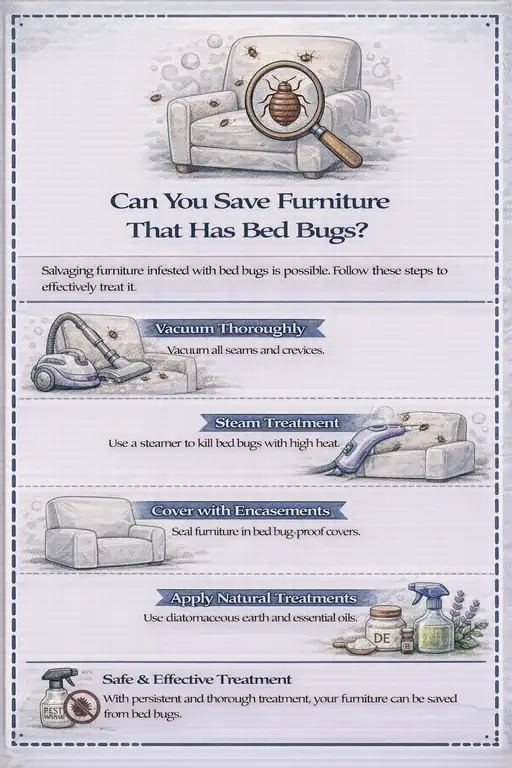
Can You Save Furniture That Has Bed Bugs?
The short answer is: sometimes—but only under the right conditions. From hands-on furniture removals, the biggest mistake people make is treating all infested furniture the same. Some items can be saved safely. Others almost always cause the infestation to come back.
What Determines Whether Furniture Can Be Saved
Saving bed bug–infested furniture depends on a few key factors:
Material: Solid wood and metal are easier to treat thoroughly.
Construction: Simple frames are safer than pieces with padding, seams, or hollow interiors.
Infestation level: Light, early-stage infestations are more manageable than widespread ones.
If bed bugs are deeply embedded or widespread, treatment success drops significantly.
Furniture That Is Often Worth Treating
In real removal scenarios, these items are sometimes salvageable:
Solid wood tables, chairs, and bed frames
Metal bed frames or shelving
Non-upholstered furniture with minimal crevices
These items can often be treated effectively if addressed early and handled without spreading the bugs.
Furniture That Is Rarely Worth Saving
Some furniture is consistently problematic:
Upholstered couches and recliners
Mattresses and box springs
Items with thick padding, tufting, or hidden seams
Even after treatment, these pieces frequently lead to repeat infestations because bed bugs and eggs are difficult to eliminate completely.
The Risk of Trying to Save the Wrong Piece
From experience, attempting to save heavily infested furniture often:
Delays proper removal
Spreads bed bugs during repeated handling
Causes infestations to return weeks or months later
In many cases, safe removal ends the problem faster than repeated treatment attempts.
When Removal Is the Smarter Choice
If furniture is heavily infested, difficult to treat, or already spreading bed bugs to other areas, junk removal becomes the safest option. When done with proper containment, removal helps stop the infestation instead of prolonging it.
“From what we see during real furniture removals, bed bugs don’t care how valuable a piece is—they care how easy it is to hide. Solid wood and metal can often be treated, but heavily upholstered furniture almost always brings the problem back. Knowing when a piece can realistically be saved is usually what ends the infestation for good.”
Essential Resources
When you’re trying to figure out whether furniture with bed bugs can be saved—or needs to go—having the right information makes all the difference. These trusted resources reflect the same containment-first, practical approach Jiffy Junk crews use every day during real in-home removals.
EPA Bed Bug Prevention, Detection & Control
Get clear on what you’re dealing with before you act
This EPA guide helps you confirm a bed bug problem and understand how infestations spread—so you don’t make the common mistake of moving furniture too soon.
https://www.epa.gov/bedbugs/bed-bug-prevention-detection-and-control
CDC Bed Bugs — About Bed Bugs
Understand why some furniture is harder to save than others
The CDC explains how bed bugs hide, survive, and spread, which helps explain why upholstered furniture often causes repeat infestations even after treatment.
https://www.cdc.gov/bed-bugs/about/index.html
Purdue University Extension — Furniture Disposal & Containment
Learn how professionals handle infested furniture safely
This university-backed resource walks through sealing, isolating, and removing furniture the right way—exactly the steps we focus on to prevent spread during removal.
https://extension.entm.purdue.edu/bedbugs/furnitureDisposal.php
EPA Preparing for Treatment Against Bed Bugs
Decide if treatment is realistic before removal
This guide explains how to prepare furniture and living spaces for treatment, helping you judge whether saving an item is practical or likely to fail.
https://www.epa.gov/bedbugs/preparing-treatment-against-bed-bugs
EPA Top Ten Tips to Prevent or Control Bed Bugs
Avoid mistakes that make infestations worse
These EPA tips highlight what not to do—like improper furniture movement or temporary storage—which are some of the most common issues we see on removal calls.
https://www.epa.gov/bedbugs/top-ten-tips-prevent-or-control-bed-bugs
EPA Local Resources for Bed Bug Assistance
Get guidance specific to where you live
Local health departments and extension offices can clarify regional rules, disposal expectations, and treatment resources that may affect your decision.
https://www.epa.gov/bedbugs/local-resources-bed-bug-assistance
EPA Bed Bugs — Get Them Out and Keep Them Out
Plan for long-term prevention, not just one item
This EPA hub pulls together prevention and control strategies to help ensure bed bugs don’t return after furniture is treated or removed.
https://www.epa.gov/bedbugs
Supporting Statistics
Small problems grow fast
CDC: One female bed bug lays ~5 eggs per day.
Eggs hatch in 4–12 days.
In real removals, delayed containment often turns one item into a room-wide issue.
Source: https://www.cdc.gov/dpdx/bedbugs/index.html
Bed bugs spread farther than expected
CDC: Bed bugs can travel up to 100 feet in one night.
Unsealed furniture movement commonly creates new infestation zones.
Source: https://www.cdc.gov/bed-bugs/about/index.html
Early warning signs are easy to miss
CDC: Bite reactions may take up to 14 days to appear.
Furniture is often moved or reused before the problem is identified.
Source: https://www.cdc.gov/bed-bugs/about/index.html
Most people misidentify bed bugs
PestWorld: Only 29% of Americans can identify bed bugs.
82% of pest professionals treated bed bugs last year.
This gap is why sealing first is the lowest-risk move.
Source: https://www.pestworld.org/news-hub/pest-articles/bed-bug-survey-results-facts/
These statistics show how quickly bed bugs multiply and spread, which is why immediate containment matters just as much as monitoring your home’s air quality index when protecting a safe, healthy indoor environment.
Final Thought & Opinion
From real-world experience, the key question isn’t can furniture be saved—it’s whether saving it reduces risk. Bed bugs spread through movement, not delay, and most problems escalate when furniture is handled before it’s contained.
What experience consistently shows:
Cost or sentiment doesn’t stop bed bugs.
Simple, solid furniture may be treatable.
Heavily upholstered items often cause repeat infestations.
The most effective approach:
Contain the furniture first.
Evaluate the real risk.
Remove only when saving it no longer makes sense.
In our opinion, calm, containment-first decisions—not guesswork—are what actually end bed bug infestations.
FAQ on Bed Bug Furniture Removal
Q: Can bed bug–infested furniture be saved?
A: Sometimes.
Solid wood or metal may be treatable.
Upholstered furniture often isn’t.
Q: What matters most before moving infested furniture?
A: Containment.
Seal before moving.
Unsealed movement spreads bed bugs.
Q: Is temporary storage ever safe?
A: No.
Bed bugs survive for months.
Stored items often cause re-infestation.
Q: Can I remove infested furniture myself?
A: Yes, with care.
Fully seal the item.
Plan the move carefully.
Q: When is removal the best option?
A: When risk is high.
Heavy infestation.
Hard-to-treat furniture.
The spread has already begun.