Quick Answers
Acetone disposal
Dispose of acetone by reusing it when possible or taking it to an approved household hazardous waste (HHW) facility. Do not pour acetone down drains, onto soil, or into regular trash while liquid. From hands-on cleanout experience, the safest approach is to store acetone properly, limit how long you keep it, and use disposal methods designed specifically for solvents.
Top Takeaways
Proper storage makes safe disposal possible.
Always use sealed, clearly labeled containers.
Limit how much acetone you store—and for how long.
Keep acetone in cool, well-ventilated spaces.
Plan disposal before storage becomes a risk.
Why Proper Storage Matters Before Acetone Disposal
Before acetone is ever disposed of, how it’s stored plays a major role in safety, environmental impact, and compliance. Acetone is highly flammable and produces vapors that can build up quickly in enclosed spaces. From real cleanout scenarios, storage issues—such as leaking containers, poor placement, or lack of ventilation—often create disposal problems later on.
Storing acetone correctly keeps it stable, contained, and easier to handle when disposal time comes.
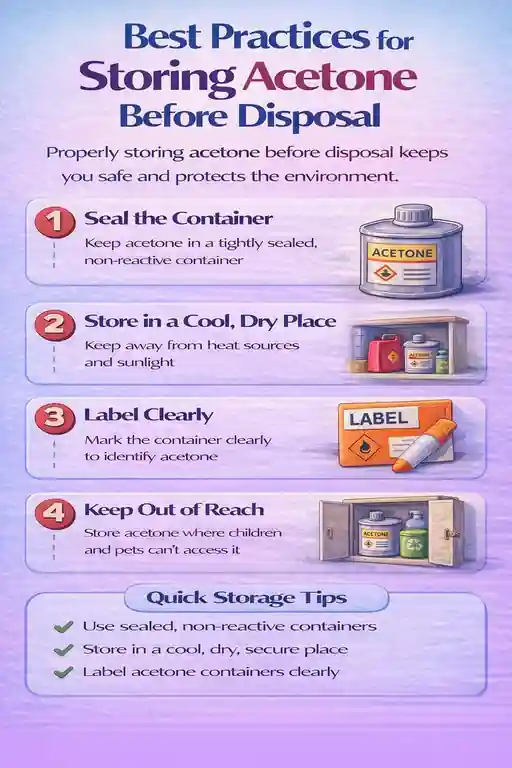
Use the Right Container at All Times
Acetone should always be stored in a tightly sealed, chemical-resistant container, ideally the original manufacturer’s container. Unlabeled bottles or thin plastics increase the risk of leaks, evaporation, and accidental exposure.
Proper containers help control vapors and reduce the chance of container failure before disposal.
Choose a Cool, Well-Ventilated Storage Location
Store acetone in a cool, dry, well-ventilated area away from heat, sparks, or direct sunlight. Garages or sheds may work if airflow is adequate, but enclosed indoor spaces can allow fumes to build up quickly.
Keeping acetone out of living areas also reduces indoor air exposure while it awaits disposal, helping to effectively improve air quality throughout the home.
Keep Acetone Clearly Labeled and Isolated
Label containers clearly and store acetone away from incompatible materials such as oxidizers, cleaners, or fuels. During cleanouts, unlabeled or mixed containers are one of the most common safety concerns.
Clear labeling prevents confusion and reduces handling errors.
Minimize Storage Time and Quantity
Best practice is short-term storage only. Avoid holding acetone longer than necessary and limit the amount stored to what you plan to properly dispose of.
Less time and smaller volumes reduce evaporation, leaks, and misuse risks.
Prepare for Disposal While Storing
Storage should make disposal easier, not more complicated. Keep acetone secure but accessible for transport to a household hazardous waste facility or a professional disposal option such as junk removal services equipped to handle hazardous materials.
When acetone is stored correctly, disposal becomes a controlled final step instead of an urgent problem.
“From firsthand experience, most acetone-related safety issues start with poor storage, not misuse. Using the right container, choosing the right location, and limiting storage time prevents the emergencies we see most often.”
Essential Resources
When customers ask us what to trust when researching acetone disposal, these are the same resources we point them to. They’re practical, reputable, and grounded in how acetone is actually handled in real homes, job sites, and cleanouts—not just in theory.
EPA Hazardous Waste Guidance — Start With the Federal Rules
URL: https://www.epa.gov/hw
This is the baseline resource we rely on to understand how solvents like acetone are classified and regulated at the federal level. It explains why acetone requires special handling and why improper disposal can create environmental and compliance issues.
Household Hazardous Waste Programs — Know Your Disposal Options
URL: https://floridadep.gov/waste/permitting-compliance-assistance/content/household-hazardous-waste
This resource explains how household hazardous waste programs work and why they’re one of the safest disposal paths for acetone. We regularly guide customers to these programs when solvents show up during cleanouts.
Local Chemical Drop-Off Locations — Dispose of Acetone Close to Home
URL: https://www.miami.gov/My-Government/Departments/Solid-Waste/Dispose-of-Hazardous-Materials-Chemicals
Local drop-off centers are often the most practical solution. This page helps residents identify approved municipal locations where acetone can be safely accepted and handled properly.
Practical Acetone Disposal Methods — Understand Your Safe Options
URL: https://www.ethicalshift.com/recycle/how-to-dispose-of-acetone-safely-and-responsibly
This guide breaks down real-world disposal methods—reuse, absorbent solidification, and hazardous waste collection—in plain language. It mirrors many of the scenarios we encounter in residential settings.
Acetone Handling Risks — Avoid Common Safety Mistakes
URL: https://www.safetyiq.com/blog/acetone-hazards-safe-handling-and-disposal-practices
Improper handling often creates bigger problems than disposal itself. This resource explains why shortcuts increase fire, fume, and exposure risks—issues we frequently see when acetone isn’t managed correctly.
Eco-Conscious Disposal Techniques — Compare Disposal Paths
URL: https://nationalscience.biz/access/safe-environmentally-conscious-acetone-disposal/
This resource helps readers compare disposal approaches and understand when certain methods are appropriate. It’s useful for weighing options before choosing a final disposal route.
Leftover Acetone Management — Reduce Waste Before Disposal
URL: https://welly.it.com/what-do-you-do-with-leftover-acetone-the-ultimate-guide-to-safe-disposal
Leftover acetone is common in garages and workshops. This guide focuses on minimizing waste through reuse, safe storage, and smarter disposal planning—steps that often prevent problems before they start.
These resources reinforce a responsible, real-world approach to acetone disposal by emphasizing safe handling, legal compliance, and environmental protection, the same standards followed when coordinating hazardous materials through a valet trash service during residential cleanouts and solvent-related waste removal.
Supporting Statistics
Solvent recycling is already widely used in the U.S.
The EPA reports 1.5+ million tons of hazardous waste are recycled each year, including solvent recovery.
In cleanouts, we often see acetone discarded unnecessarily—despite recycling being a proven option.
Source: https://www.epa.gov/hw/hazardous-waste-recyclingIndoor acetone exposure is significantly higher than outdoors.
ATSDR data shows indoor acetone levels can be 5× higher than outdoor levels.
This mirrors what we see in garages and enclosed storage areas with poor ventilation.
Source: https://www.atsdr.cdc.gov/toxprofiles/tp21-c5.pdfIndoor air quality matters because that’s where exposure happens.
Americans spend ~90% of their time indoors (EPA).
Indoor air can be 2–5× more polluted than outdoor air.
Poor chemical storage increases vapor buildup before disposal.
Source: https://www.epa.gov/report-environment/indoor-air-qualityNonprofit research confirms the same risk pattern.
The American Lung Association reports indoor air is often far more polluted than outdoor air.
Improper chemical storage is a common contributor.
Source: https://www.lung.org/clean-air/indoor-air
These statistics highlight why proper acetone storage and disposal matter so much, especially during an estate cleanout where large amounts of stored chemicals, poor ventilation, and unnecessary solvent disposal can significantly increase indoor air exposure and environmental risk if not handled correctly.
Final Thought & Opinion
Proper acetone storage sets the tone for safe disposal.
From real cleanouts, most problems begin long before disposal day—often during storage.
What we’ve learned from hands-on experience:
Acetone issues usually start weeks earlier
Poor ventilation and unclear storage create risk
Disposal becomes harder when storage isn’t planned
Our perspective:
Store acetone with disposal already in mind
Use sealed, labeled containers
Keep quantities small and storage time short
When storage is intentional, disposal stays routine. Simple, controlled setups prevent fire risks, air-quality issues, and last-minute emergencies.
FAQ on Acetone Disposal
Q: What’s the safest way to dispose of acetone?
A:
Use an approved HHW facility or professional service.
Never use drains, soil, or regular trash.
These mistakes cause long-term issues we see in cleanouts.
Q: Can acetone be stored before disposal?
A:
Yes, short term only.
Use sealed, labeled containers.
Store in cool, ventilated areas.
Q: Is evaporation a safe disposal method?
A:
Only for very small amounts.
Outdoor use only.
Allowed only where regulations permit.
Q: What should I do with leftover acetone from small projects?
A:
Reuse if clean.
Otherwise, store safely.
Take it to an HHW facility.
Q: How should large amounts of acetone be handled?
A:
Avoid DIY disposal.
Use professional services.
Ensures safety and compliance.