Quick Answers
estate cleanout
An estate cleanout is the organized process of sorting, removing, and responsibly handling everything inside a home after a major life change.
From first-hand experience, the key to a successful estate cleanout isn’t speed—it’s having a clear order of decisions before anything is removed.
What it typically includes:
Sorting belongings (keep, donate, sell, dispose)
Protecting important documents and valuables
Coordinating donation, recycling, and disposal
Leaving the property ready for sale or move-out
Why it matters:
A structured estate cleanout reduces stress, prevents costly mistakes, and helps families move forward with confidence, while also supporting effective strategies to enhance indoor air quality as the home is cleared and prepared for its next stage.
Top Takeaways
Estate cleanouts are decision-heavy for first-timers.
Sorting and prioritization matter more than physical removal.Most first-time cleanouts happen unexpectedly.
Preparation reduces emotional and logistical strain.Slowing down prevents irreversible mistakes.
Rushing often leads to loss or regret.Experience fills the knowledge gap.
Guidance helps first-timers avoid common pitfalls.Structure brings peace of mind.
A clear plan turns uncertainty into control.
What Is an Estate Cleanout for First-Timers?
For first-timers, an estate cleanout is the complete process of clearing a home’s contents while making informed decisions about what stays, what goes, and what requires special care. It extends far beyond basic hauling and includes evaluating personal items, safeguarding valuables, coordinating donations, and responsibly disposing of what remains. First-time cleanouts are often handled by family members or executors who are learning the process as they go, which makes clarity and organization essential.
When Do First-Timers Usually Face an Estate Cleanout?
First-time estate cleanouts most often arise during life transitions such as:
The passing of a loved one
Downsizing or moving to assisted living
Preparing a home for sale or rental
Managing probate or estate settlements
Handling urgent timelines or safety concerns
For first-timers, these situations often overlap, making it harder to separate emotion from logistics without a clear process.
How the Estate Cleanout Process Works for Beginners
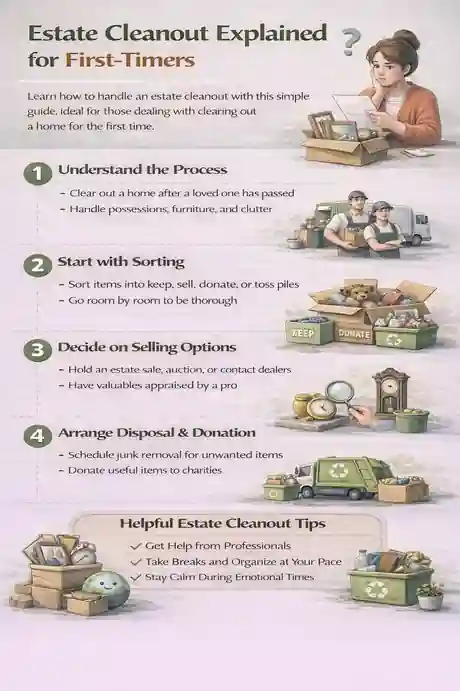
While no two cleanouts are identical, first-time estate cleanouts generally follow a predictable path:
Initial Review and Planning
Understand the scope, volume, and time constraints before moving anything.Sorting and Categorizing
Separate belongings into keep, donate, sell, recycle, or dispose.Removal and Coordination
Items approved for removal are cleared in an organized manner.Responsible Handling
Donations, recycling, and disposal are handled thoughtfully.Final Walkthrough
The property is left clear and ready for its next stage.
For beginners, following this order prevents confusion and backtracking.
Can First-Timers Handle an Estate Cleanout Alone?
Some first-time cleanouts can be handled independently, especially in smaller homes or low-pressure situations. However, many first-timers underestimate the physical, emotional, and time demands involved. When volume is high, deadlines are tight, or emotions run deep, experienced help often makes the process faster, safer, and less stressful—without sacrificing control.
Why the Process Matters for First-Time Cleanouts
For first-timers, understanding the estate cleanout process upfront prevents common missteps. A structured approach helps protect sentimental items, avoid rushed decisions, and set realistic expectations, while also creating opportunities to effectively improve air quality once clutter is removed. Instead of reacting to each challenge as it appears, first-timers who understand the process stay one step ahead.
“After guiding families through countless estate cleanouts, we’ve learned that the hardest part isn’t clearing a home—it’s making the right decisions before anything is moved. A well-handled estate cleanout follows a clear order, protects what matters most, and gives people peace of mind when they need it most.”
Essential Resources
Below are trusted resources that help first-timers plan, budget, and navigate estate cleanouts with clarity.
Understand Legal Responsibilities First
Probate Property Cleanouts: Rules, Timeline & Who Pays
Learn who has authority, when a cleanout can legally begin, and how probate affects first-time decisions.
https://easycleanoutsllc.com/blog/probate-property-cleanouts-rules-timeline-and-who-pays/
Follow a Beginner-Friendly Checklist
The Ultimate Estate Cleanout Checklist: 8 Practical Steps
A simple, chronological guide ideal for first-timers who need structure.
https://www.curio.app/blog/estate-cleanout-checklist
Learn the Full Cleanout Workflow
Estate Cleanout Checklist: A Complete Process Guide
Helps beginners understand each phase from start to finish.
https://wasteremovalusa.com/blog/estate-cleanout-checklist/
Decide When to Get Help
Complete Guide to Estate Cleanout Services
Explains when professional support is beneficial for first-timers.
https://theownerbuildernetwork.co/complete-guide-to-estate-cleanout/
Organize Sorting Decisions
Estate Cleanout Checklist: 11 Essential Sorting Steps
Helps first-timers avoid overlooking valuables.
https://junk-rescue.com/estate-cleanout-checklist/
Understand Cost Expectations
What Does an Estate Cleanout Cost?
Provides realistic benchmarks for budgeting your first cleanout.
https://www.homeadvisor.com/cost/cleaning-services/estate-cleanout/
Prepare the Home Afterward
Estate Cleanout Checklist for Final Property Readiness
Ensures nothing is missed once the cleanout is complete.
https://primedumpster.com/dumpsters/estate-cleanout-checklist
These resources guide first-timers through the legal, financial, and practical steps of an estate cleanout, helping them plan responsibly from start to finish while accounting for follow-up property needs like top duct cleaning once the home is cleared and ready for its next stage.
Supporting Statistics
Estate cleanouts are becoming more common
Over 3 million deaths occur annually in the United States, according to the
CDC mortality statistics.In practice, this leads to more families and first-time executors facing estate cleanouts with little advance preparation.
An aging population is increasing first-time estate cleanouts
Adults age 65 and older now make up roughly 18% of the U.S. population, based on data from the
U.S. Census Bureau on older adults.This demographic shift is driving more cleanouts related to downsizing, assisted living, and probate-related property transitions.
Downsizing is often delayed until a major life event
Research from the
AARP Public Policy Institute on housing preferences shows that many older adults plan to downsize but remain in their homes.As a result, first-time estate cleanouts often involve decades of accumulated belongings, increasing both emotional and logistical complexity.
Estate cleanouts directly affect waste and donation systems
The United States generates nearly 300 million tons of municipal solid waste each year, according to the
U.S. Environmental Protection Agency waste data.Thoughtful estate cleanout planning helps reduce unnecessary landfill impact through donation and recycling efforts.
Key insight:
These statistics reflect a growing reality—estate cleanouts are becoming more frequent and complex, with dryer vent cleaning often becoming a necessary part of preparing older homes for transition. Aging trends, delayed downsizing, and environmental considerations make structured planning especially important for first-timers navigating the process.
Final Thought & Opinion
For first-timers, estate cleanouts are almost never just about physical work. In reality, they’re about navigating uncertainty while making permanent decisions, often during emotionally difficult moments. The pressure to “just get it done” is where most mistakes happen.
From first-hand experience, the most common challenges first-timers face include:
Not knowing what should be decided first, leading to rushed or out-of-order decisions
Underestimating the emotional weight of sorting personal belongings
Moving too quickly and discarding items that later turn out to be important or irreplaceable
What consistently makes the difference is structure. First-timers who approach an estate cleanout with a clear plan tend to experience:
Less stress and second-guessing
Better protection of valuables and sentimental items
More control over timelines, costs, and outcomes
Our perspective is simple:
Speed does not equal success.
The order of decisions matters more than effort.
Guidance—whether from experience, resources, or professionals—prevents regret.
A first estate cleanout doesn’t have to feel overwhelming or chaotic. With a thoughtful process and the right support, it can become a manageable transition—one that replaces uncertainty with clarity and regret with relief.
FAQ on Estate Cleanout
Q: What makes a first estate cleanout different?
A: First-timers often lack a roadmap. Clear structure and guidance make the biggest difference.
Q: How long should a first-time cleanout take?
A: Typically 1–several days, depending on size and volume.
Q: Who usually leads the process?
A: An executor or authorized family member.
Q: What impacts cost most for first-timers?
A: Item volume, labor, accessibility, and urgency.
Q: When should first-timers seek professional help?
A: When volume, deadlines, or emotions make the process difficult to manage alone.