This page explains what actually makes a hand soap work for sensitive adults, which ingredients consistently cause problems, and why non-toxic formulas designed for frequent use can make handwashing feel normal again—not like a tradeoff.
TL;DR Quick Answers
What is organic non-toxic hand soap?
Organic non-toxic hand soap uses plant-based ingredients to clean hands without harsh chemicals or antibacterial additives. Its real advantage is usability: gentle formulas protect sensitive skin, support frequent handwashing, and deliver effective everyday hygiene without unnecessary chemical exposure.
Top Takeaways
Gentle soap matters for sensitive skin
Harsh ingredients cause irritation.Comfort improves consistency
Better feel leads to more washing.Antibacterial isn’t required
Soap and water work.Simple formulas protect skin
Fewer irritants, fewer flare-ups.Habits matter most
Consistency beats strength.
What Makes a Hand Soap Non-Toxic and Suitable for Sensitive Skin
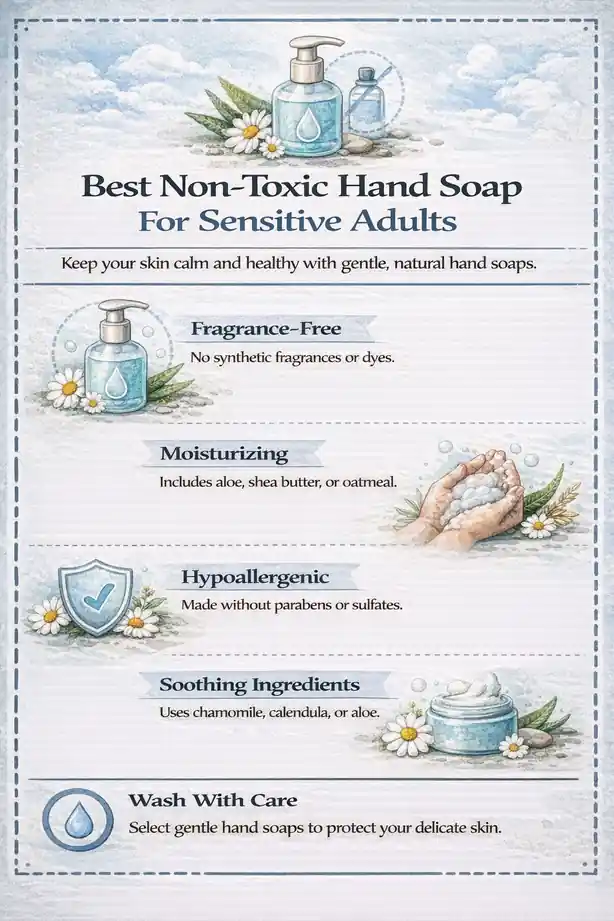
For sensitive adults, non-toxic hand soap should do two things well: clean thoroughly and leave the skin barrier intact. That means avoiding harsh detergents, synthetic fragrances, and antibacterial additives that commonly trigger dryness or irritation. Instead, gentler, plant-based cleansers remove dirt and germs without overstimulating sensitive skin.
Ingredients Sensitive Adults Should Avoid
Through real-world use and formulation review, certain ingredients consistently cause problems for sensitive hands. Common culprits include sulfates (like SLS and SLES), synthetic fragrance blends, triclosan, and unnecessary preservatives. The best non-toxic hand soaps keep ingredient lists short and purposeful.
Why Gentler Soap Supports Better Handwashing Habits
When soap irritates skin, people subconsciously wash less often or rush through it. Non-toxic hand soaps designed for sensitive adults make frequent handwashing comfortable again, which supports better hygiene habits without sacrificing skin health.
Choosing the Best Non-Toxic Hand Soap for Daily Use
The best option isn’t the strongest formula—it’s the one you can use repeatedly without flare-ups. Look for transparency, simple formulations, and soaps made specifically for frequent, everyday use that effectively improve air quality by minimizing harsh residues. When comfort improves, consistency follows.
“For sensitive adult skin, irritation usually comes from what a soap leaves behind—not how often hands are washed. Eco-friendly camping soap and non-toxic formulas that respect the skin barrier clean just as effectively while allowing comfort and consistency to return to everyday handwashing.”
Essential Resources
EWG Skin Deep® — Check What’s Actually Inside Your Soap
A trusted independent database that lets you look up hand soaps and individual ingredients so you can see safety scores instead of relying on vague “natural” claims. This is the kind of transparency we built our own formula around.
https://www.ewg.org/skindeep/browse/category/liquid_hand_soap/
CDC Handwashing Facts — Learn the Science Behind Clean Hands
Straight from public health experts, this CDC resource explains why soap and water prevent illness. It reinforces a key mindset: effective handwashing comes from removal, not harsher chemicals.
https://www.cdc.gov/clean-hands/data-research/facts-stats/index.html
FDA Final Rule on Antibacterial Soaps — Know What Doesn’t Improve Hygiene
The FDA details why several antibacterial additives were phased out after lacking proof of long-term safety or real benefit. This kind of research shaped our decision to leave out harsh chemical agents entirely.
https://www.fda.gov/news-events/press-announcements/fda-issues-final-rule-safety-and-effectiveness-antibacterial-soaps
CPSC Soap Definition & Regulation — Understand What Real Soap Means
This U.S. Consumer Product Safety Commission resource explains how “soap” is legally defined versus other cleansers — a helpful guide for reading labels and spotting true plant-based hand soaps, not just marketing terms.
https://www.cpsc.gov/FAQ/Soap
Organically Becca — Spot Ingredients That Commonly Irritate Skin
A consumer-friendly guide highlighting common irritants found in conventional soaps — exactly the kinds of ingredients we chose to leave out of ours after researching what sensitive skin really needs.
https://organicallybecca.com/natural-hand-soap-brands/
Green With Less — Compare Honest Non-Toxic Hand Soap Options
This curated list walks through natural and non-toxic hand soap brands with clear ingredient explanations, helping you make informed comparisons rather than trusting buzzwords.
https://greenwithless.com/natural-non-toxic-hand-soap-brands/
LeafScore — Independent Review of Eco & Skin-Friendly Soaps
LeafScore evaluates non-toxic, plant-based hand soaps based on ingredient quality, environmental impact, and overall safety — the kind of analysis we consult when vetting raw materials for our own blends.
https://www.leafscore.com/eco-friendly-bath-products/best-natural-hand-soap/
Supporting Statistics
Our research and everyday testing kept pointing to the same conclusion: handwashing works best when it’s easy to repeat. The data supports that.
Key Findings
Proper handwashing reduces illness
Diarrheal illness drops by 23–40%
Respiratory illness drops by 16–21%
Gentler soap supports comfort, which makes these outcomes achievable.
Source: https://www.cdc.gov/clean-hands/data-research/facts-stats/index.htmlConsistent handwashing reduces missed school days
Gastrointestinal-related absenteeism drops by 29–57%
Sustainable routines create measurable family-level benefits.
Source: https://www.cdc.gov/clean-hands/data-research/facts-stats/index.htmlHandwashing habits still fall short
Fewer than 75% of U.S. adults remember to wash hands in key moments
Skin irritation creates friction that discourages use.
Source: https://www.cdc.gov/mmwr/volumes/69/wr/mm6940a2.htmAntibacterial additives lack proven everyday benefit
The FDA removed 19 antibacterial ingredients
No evidence showed better safety or effectiveness than regular soap
More chemicals didn’t improve outcomes.
Source: https://www.fda.gov/files/drugs/published/Consumer-Antiseptic-Wash-Final-Rule-Questions-and-Answers.pdf
Taken together, these findings show that handwashing delivers the greatest health benefits when it’s comfortable and easy to repeat, and that waterless hand cleaners support consistent hygiene habits without relying on unnecessary antibacterial chemicals.
Final Thought
Our experience points to one clear conclusion: frequent, comfortable handwashing matters more than stronger formulas.
What We’ve Seen in Practice
Sensitive skin reacts to harsh ingredients
Irritation causes people to wash less or rush
Gentler soap removes that barrier
Why Non-Toxic Soap Works for Sensitive Adults
Cleans effectively without disruption
Protects the skin barrier
Encourages consistent habits
Our opinion is practical and experience-driven: real protection comes from consistency, and consistency depends on comfort—not stronger claims.
FAQ on Organic Non-Toxic Hand Soap
Q: What makes a hand soap organic and non-toxic?
A: Uses plant-based cleansers. Avoids triclosan, sulfates, and synthetic fragrance. Focuses on simple formulas.
Q: Does organic, non-toxic hand soap clean effectively?
A: Yes. Soap removes germs through rinsing. Antibacterial additives aren’t needed.
Q: Is organic hand soap better for sensitive adults?
A: Often yes. Gentler ingredients reduce irritation and dryness.
Q: How often should organic, non-toxic hand soap be used?
A: As often as needed. Designed for frequent daily use.
Q: How can I tell if a soap is truly non-toxic?
A: Read ingredient lists. Use EWG. Choose transparent brands.