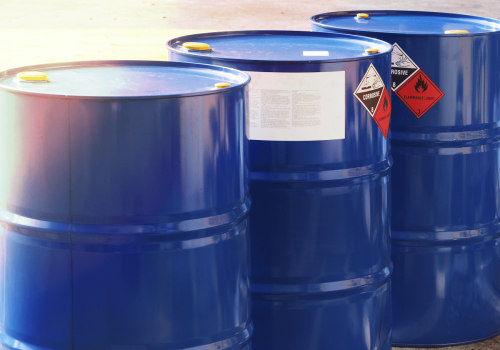
Three things to handle before you call anyone: kill every ignition source in the room, open a window to the outside, and move kids, pets, and anyone with breathing problems out of the area.
Then make the call. Poison Control takes the first call when a person has been exposed, whether to vapor, skin, or eyes. CHEMTREC handles chemical incident guidance, and the line runs around the clock. Dial 911 if the vapor is thick, if anyone is symptomatic, or if anything near the spill could ignite.
In the homes I've assessed for residual VOC issues after solvent events, the households that handle the first few minutes well almost always avoid the multi-day air quality problems that follow.
TL;DR Quick Answers
Can you pour acetone down the sink?
No. Acetone is a federally regulated ignitable hazardous waste (RCRA U002), and pouring any quantity down a drain violates federal disposal rules.
Three reasons it's dangerous, not just illegal:
Fire risk. Acetone has a 0°F flash point. Vapor pools in P-traps and floor drains, then ignites at any normal indoor temperature.
Plumbing damage. Acetone dissolves PVC, rubber gaskets, and pipe sealants. Even a single large pour can soften joints.
Indoor air quality. Vapor is heavier than air and travels through plumbing vents, surfacing in rooms far from the spill point hours later.
What to do instead: Take leftover acetone to your local household hazardous waste (HHW) program. Most counties run a drop-off facility or scheduled collection events.
Top Takeaways
13. Kill ignition sources and ventilate before you make any call. Acetone's 0°F flash point means the vapor can ignite at any normal indoor temperature.
14. Call Poison Control at 1-800-222-1222 first whenever a person has been exposed to vapor, skin contact, or eye contact.
15. Call CHEMTREC at 1-800-424-9300 for chemical incident guidance. The line runs around the clock and connects you to hazmat specialists.
16. Call 911 immediately when vapor is thick throughout a room, anyone is symptomatic, or you see ignition risk near the spill.
17. Pouring acetone down a drain is never the right disposal path. Following best practices for storing acetone matters because it damages plumbing, violates federal hazardous waste rules under RCRA U002, and creates the fire and air quality hazards that brought you here.
The First 5 Minutes: What to Do Before You Call Anyone
Five steps, in this order:
1. Kill every ignition source. No smoking, no matches, no gas stove operation. Don't flip a light switch. The small electrical arc inside one is enough to light acetone vapor. Don't run any motor inside the affected room either: bathroom or kitchen exhaust fan, garbage disposal, dishwasher, even a portable fan can spark.
2. Open windows to the outside. Cross-ventilation works best: one window on the spill side of the house, another on the opposite side. Skip the spill-room exhaust fan. The motor inside it is its own ignition source.
3. Get vulnerable people out of the area. That means kids, pets, anyone with asthma or COPD, and anyone pregnant. Acetone vapor at high concentration causes headache, dizziness, and respiratory irritation, and vulnerable occupants feel the effects first.
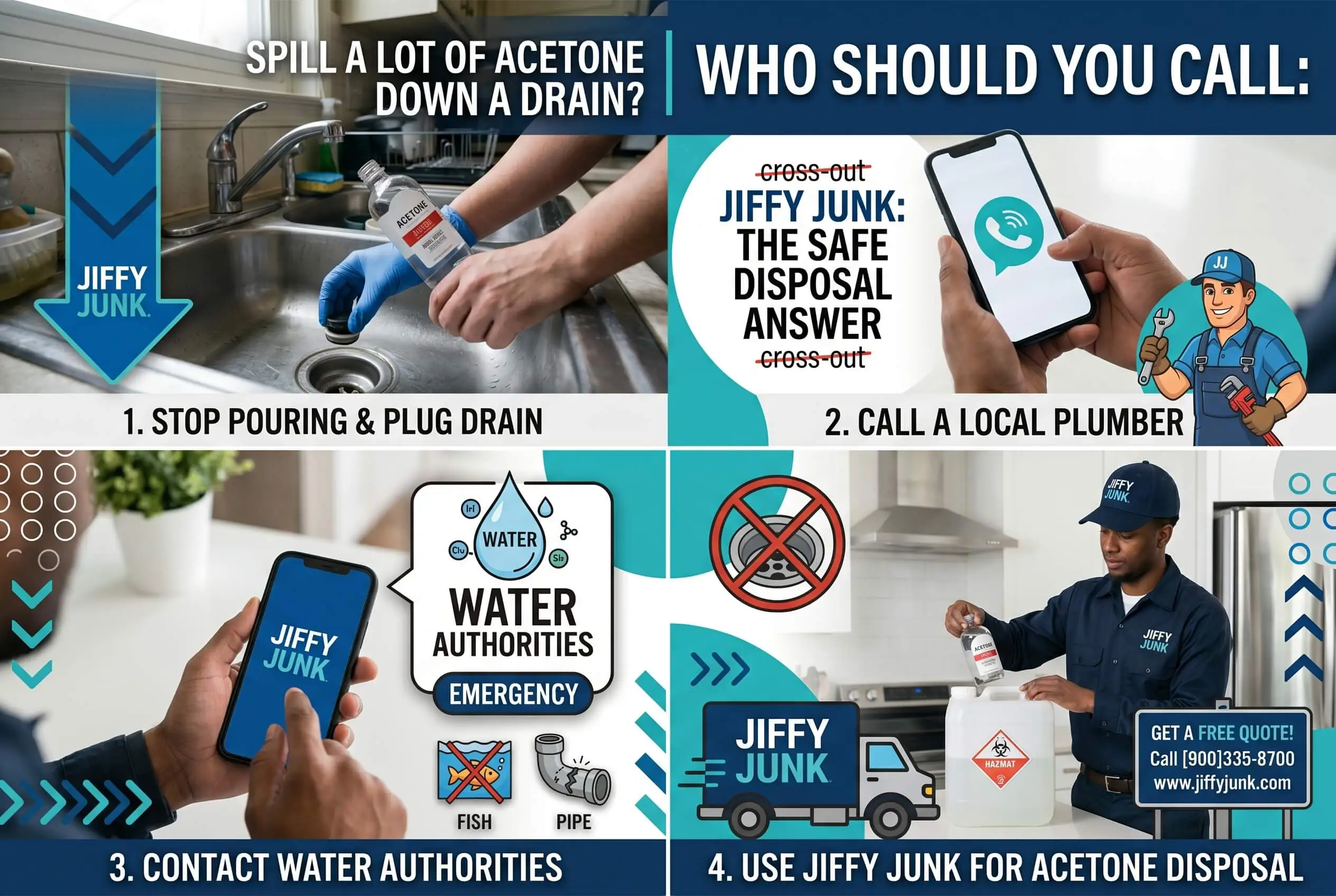
4. Stop pouring water down the drain. The instinct is to flush it through. Don't. Acetone is fully miscible with water, so flushing doesn't dilute. It just spreads vapor further into the plumbing and out through other drains in the house.
5. Get your information ready. You'll want the volume spilled (rough estimate is fine), the time elapsed, and the brand or product type if a container is nearby. Both CHEMTREC and Poison Control will ask.
Who to Call, In Order
The right number depends on what's happening in front of you.
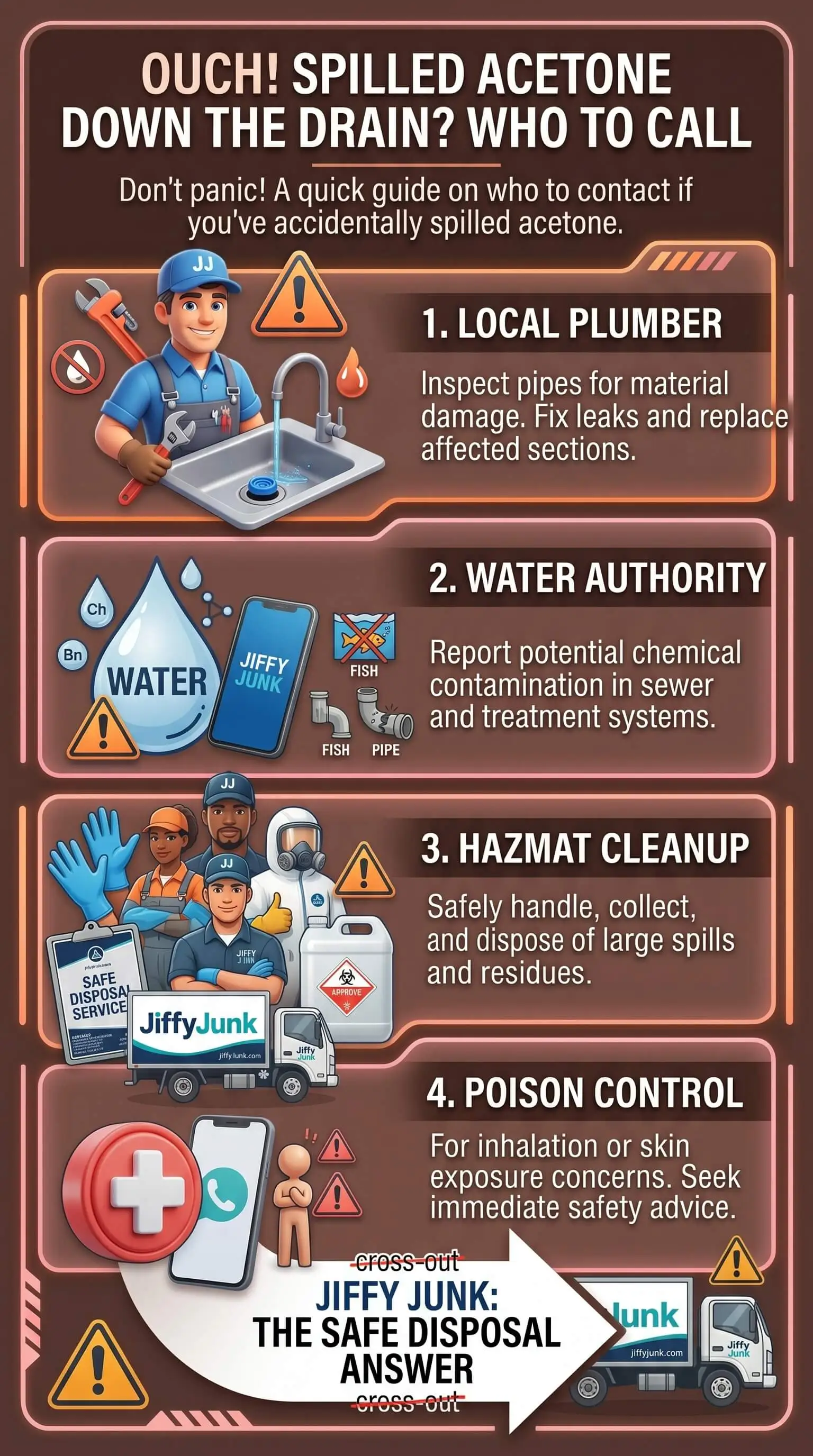
• Anyone showing symptoms, or vapor thick throughout the room: 911. This is the only call that comes before everything else when a person is in distress or active fire risk is present.
• Any human exposure (vapor inhalation, skin or eye contact): Poison Control at 1-800-222-1222. Free, confidential, staffed 24/7 by toxicologists.
• Chemical incident guidance for the spill itself: CHEMTREC at 1-800-424-9300. Also 24/7. CHEMTREC will walk you through containment and connect you to hazmat specialists when the call needs that depth.
• Cleanup and disposal coordination: your local household hazardous waste program. Most counties run a dedicated HHW collection facility or scheduled drop-off events.
• Plumbing assessment after the air quality risk clears: a licensed plumber. Acetone attacks PVC, rubber gaskets, and certain pipe sealants. A plumber can inspect for compromised joints once the room is safe to enter.
• Federal release reporting (rarely applies to households): the National Response Center at 1-800-424-8802. Required only when the spill exceeds 5,000 pounds (about 750 gallons) under CERCLA. That threshold sits well above any normal household quantity.
Why Acetone Down a Drain Is Different from Other Solvents
Most household solvents shouldn't go down a drain. Acetone is worse than most, and the reason has to do with how its vapor moves once inside the plumbing. Acetone vapor is heavier than air. After the vapor leaves the spill point, it falls and pools in low spaces: the trap of the sink you poured it into, basement floor drains, the tub drain in a downstairs bathroom, the dry P-trap in the guest bath nobody uses. From those pooled locations, vapor can re-emerge into adjacent rooms hours after the spill and trigger fume problems in parts of the house far from where it started.
That's the indoor air quality piece a plumbing-focused source won't cover. It's why ventilation is action two, not action four.
“The thing most homeowners get wrong after a solvent spill is the ventilation direction. They open a window on the far side of the house and expect fresh air to draw across the spill and out the same path. What actually happens, especially in homes with low-flow HVAC and dry P-traps in unused bathrooms, is that the resulting negative pressure pulls acetone vapor through those dry traps and into rooms that should be vapor-free. I've walked into upstairs bedrooms where the smell of nail-salon solvent was stronger than in the kitchen, where the bottle had been knocked over twenty minutes earlier. If you open a window, open the one closest to the spill first.”
7 Essential Resources
If you're reading this in the middle of an active spill, skip to the FAQ section below for the fastest direct answers. Before that day comes, these are the seven references worth bookmarking for any solvent event at home.
6. CDC NIOSH Pocket Guide to Chemical Hazards: Acetone. cdc.gov/niosh/npg/npgd0004.html. The federal data sheet on acetone's chemistry: flash point, IDLH (immediately dangerous to life or health) thresholds, exposure limits, first aid procedures. This is what you'll cite when a hazmat operator asks for chemistry specifics on the phone.
7. OSHA Occupational Chemical Database: Acetone. osha.gov/chemicaldata/476. Federal regulatory data on permissible exposure limits in workplaces. Useful when a residential exposure starts to feel like it's approaching occupational thresholds and you need a comparison anchor.
8. NOAA CAMEO Chemicals: Acetone. cameochemicals.noaa.gov/chemical/8. Emergency response data including ERG Guide 127 procedures for flammable water-miscible liquids. The local fire department will be working from this document if they show up at your address.
9. Poison Control, online at poisonhelp.org. The national 24/7 hotline at 1-800-222-1222. Free and confidential, staffed by toxicologists. First call for any human exposure to acetone vapor, skin contact, or eye contact.
10. CHEMTREC Emergency Response. chemtrec.com/our-services/emergency-response. The 24/7 chemical incident guidance hotline at 1-800-424-9300. They'll connect you with hazmat specialists who can walk you through containment and exposure response in real time.
11. EPA Household Hazardous Waste Locator. epa.gov/hw/household-hazardous-waste-hhw. Federal guidance for finding the local HHW collection program in your county. The HHW program is who handles cleanup and proper disposal of leftover acetone, contaminated absorbents, and any rags used in the response.
12. New Jersey Department of Health Right to Know Hazardous Substance Fact Sheet: Acetone. nj.gov/health/eoh/rtkweb/documents/fs/0006.pdf. A state health department fact sheet covering plumbing-specific concerns: acetone attacks plastics, demands non-sparking tools during cleanup, requires specific PPE. Useful as a printable reference to take to the spill area.
3 Statistics
Three numbers explain why a major acetone drain spill is the emergency this page treats it as.
The flash point of acetone is 0°F (CDC NIOSH Pocket Guide). That number means the liquid puts off enough vapor to ignite at any indoor temperature you'll encounter, including a chilly basement in January. Acetone falls into Class IB Flammable Liquid, the second-most-flammable category in the federal scheme. That classification is why ignition-source elimination is action one on this page.
Acetone vapor in air becomes explosive between 2.5% and 12.8% (lower and upper explosive limits, CDC NIOSH). A meaningful drain spill in a closed bathroom can reach the lower limit within minutes when the windows are shut. That's why ventilation is action two, not action five.
CHEMTREC handled 32,184 leaks and spills through its 24/7 hotline in 2023, and the majority involved material releases like the spill this page is responding to (CHEMTREC 2023 incident overview). The infrastructure for this exact problem exists, runs around the clock, and is what you should call.
Final Thoughts and Opinion
In the homes I've assessed for residual VOC issues after solvent events, the difference between a household that handled the first five minutes well and one that didn't show up in the air for days afterward. Well-handled spills usually clear within 24 to 48 hours of consistent ventilation. The poorly-handled ones leave a sweet, slightly metallic odor in fabric, HVAC return ducts, and cabinet linings near the spill point. That odor takes weeks to fully clear.
My honest opinion: the right phone call depends less on volume spilled than on whether anyone is symptomatic. Poison Control should be the default first call for any residential acetone spill where the smell is noticeable indoors, even when CHEMTREC and 911 aren't yet warranted. The toxicologists on the line will tell you, in plain language, whether the symptoms you or a family member are reporting need a hospital visit or just fresh air. That's exactly the question most people are too rattled to answer for themselves at the moment.
The honest answer to can you pour acetone down the sink is no, never. The proper disposal path was always there. If you have leftover acetone in the house right now, safe acetone disposal at home walks through the steps you should have used in the first place. For ongoing storage between uses, see my notes on storing acetone before disposal, which covers container selection, location, and timing.
Frequently Asked Questions
Can you pour acetone down the sink at all?
No. Acetone is a federally regulated ignitable hazardous waste under RCRA U002, and pouring any quantity down a drain violates federal disposal rules. Beyond the legal issue, acetone attacks PVC and rubber components in plumbing, and the vapor can ignite at any normal indoor temperature. Small amounts add up if you make it a habit.
How much acetone down the drain is dangerous?
Any amount you can smell indoors should be treated as dangerous. The smell threshold for acetone sits well below the lower explosive limit, so the nose detects vapor before the air becomes flammable. As a rough guide: anything from a quarter cup upward in a closed bathroom warrants the actions on this page. Spills above a gallon should escalate to CHEMTREC for guidance.
How long do acetone fumes last after a spill?
With aggressive ventilation, residual fume levels in the spill room usually drop to non-detectable within 24 to 48 hours. Without ventilation, or in homes with shared HVAC return air, vapor can hang in fabric and ducts for a week or longer. A lingering odor past that point is usually trapped vapor in the plumbing, not ongoing evaporation.
Will acetone damage my plumbing or PVC pipes?
Yes. Acetone dissolves many plastics, and the New Jersey Department of Health Right to Know fact sheet on acetone says specifically that it attacks plastics. Repeated exposure, or a single large spill, can soften PVC joints, degrade rubber gaskets and washers, and weaken pipe sealants. Schedule a plumbing inspection once the immediate emergency clears.
Should I call 911 or Poison Control first?
Call 911 first if anyone is symptomatic (dizziness, severe headache, difficulty breathing), vapor is thick throughout the room, or you see any sign of fire or smoldering. Otherwise, Poison Control at 1-800-222-1222 is the first call. The toxicologist on the line will tell you whether 911 is needed based on the exposure details you describe.
What should I do with leftover acetone instead of pouring it down the drain?
Take it to your local household hazardous waste collection program. Most counties run a dedicated HHW facility or scheduled drop-off events, and the EPA's HHW page lists how to find the program serving your address. Until drop-off, keep the acetone in its original sealed container, somewhere cool and well-ventilated, away from heat and any ignition source.
Call to Action
If you have leftover acetone sitting in a cabinet or garage, a complete guide to acetone disposal alternatives walks through the disposal paths your local HHW program supports.
If this guide helped, share it with someone who keeps acetone in the house. Drop a comment below if you've handled an acetone event yourself. Documented experience makes this page more useful.