This guide covers all three. The dimensions cited show why 10 yard dumpster size is a practical fit for smaller projects, using industry-standard size taxonomy across United States haulers. Every disposal figure traces back to verified EPA data. The goal is straightforward: book the right container the first time.
TL;DR Quick Answers
10 yard dumpster size
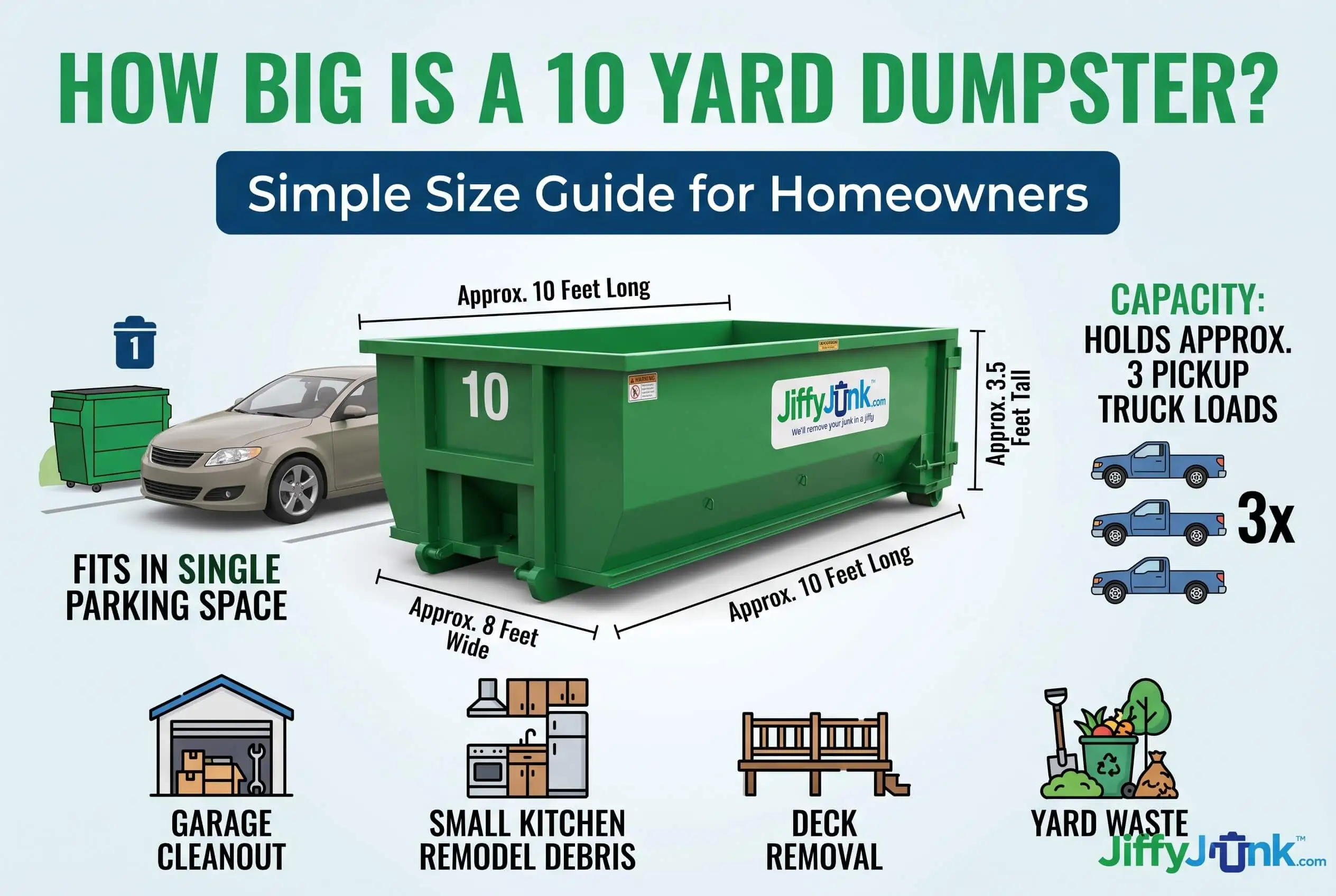
A 10 yard dumpster measures about 12 feet long, 8 feet wide, and 4 feet tall, with a weight allowance of 1 to 2 tons (2,000 to 4,000 pounds). Standard rental cost runs $250 to $450 for a 7- to 10-day window.
Key facts:
Capacity: about 10 cubic yards, or roughly 3 pickup truck loads
Equivalents: 50 to 70 large trash bags, or the contents of a single-car garage
Weight limit: 1 to 2 tons. Most overage fees come from weight, not volume.
Driveway needed: at least 22 by 10 feet, with 25 feet of overhead clearance
Best for: single-room remodels, garage cleanouts, small roof tear-offs, moderate landscaping
Size up if: whole-house cleanout, multi-room renovation, or heavy debris like concrete, tile, or brick
The rule that saves homeowners money: weigh the project before measuring it. With heavy materials, a 10-yard hits the weight cap before it fills by volume. The jump to 15 yards typically adds $50 to $100, which is almost always cheaper than booking a second haul.
Top Takeaways
Dimensions: about 12 ft long, 8 ft wide, and 4 ft tall, equivalent to roughly three pickup truck loads.
Standard weight allowance: 1 to 2 tons (2,000 to 4,000 lbs). Weight catches more homeowners by surprise than volume does.
National rental price range: $250 to $450 for a 7- to 10-day rental. Confirm the included weight allowance and per-ton overage rate before signing any quote.
Best fit: single-room renovations, garage and attic cleanouts, small roof tear-offs, and moderate landscaping debris.
Size up when the project involves a whole-house cleanout, multi-room renovation, or heavy materials such as concrete, brick, or tile.
Driveway clearance: roughly 22 by 10 feet of footprint, 25-plus feet overhead, and 60 feet of straight access for the delivery truck.
Permits: typically required for street placement, with fees from $20 to $150.
Prohibited at every hauler: paint, batteries, refrigerants, tires, and other hazardous materials.
Exact Dimensions of a 10 Yard Dumpster
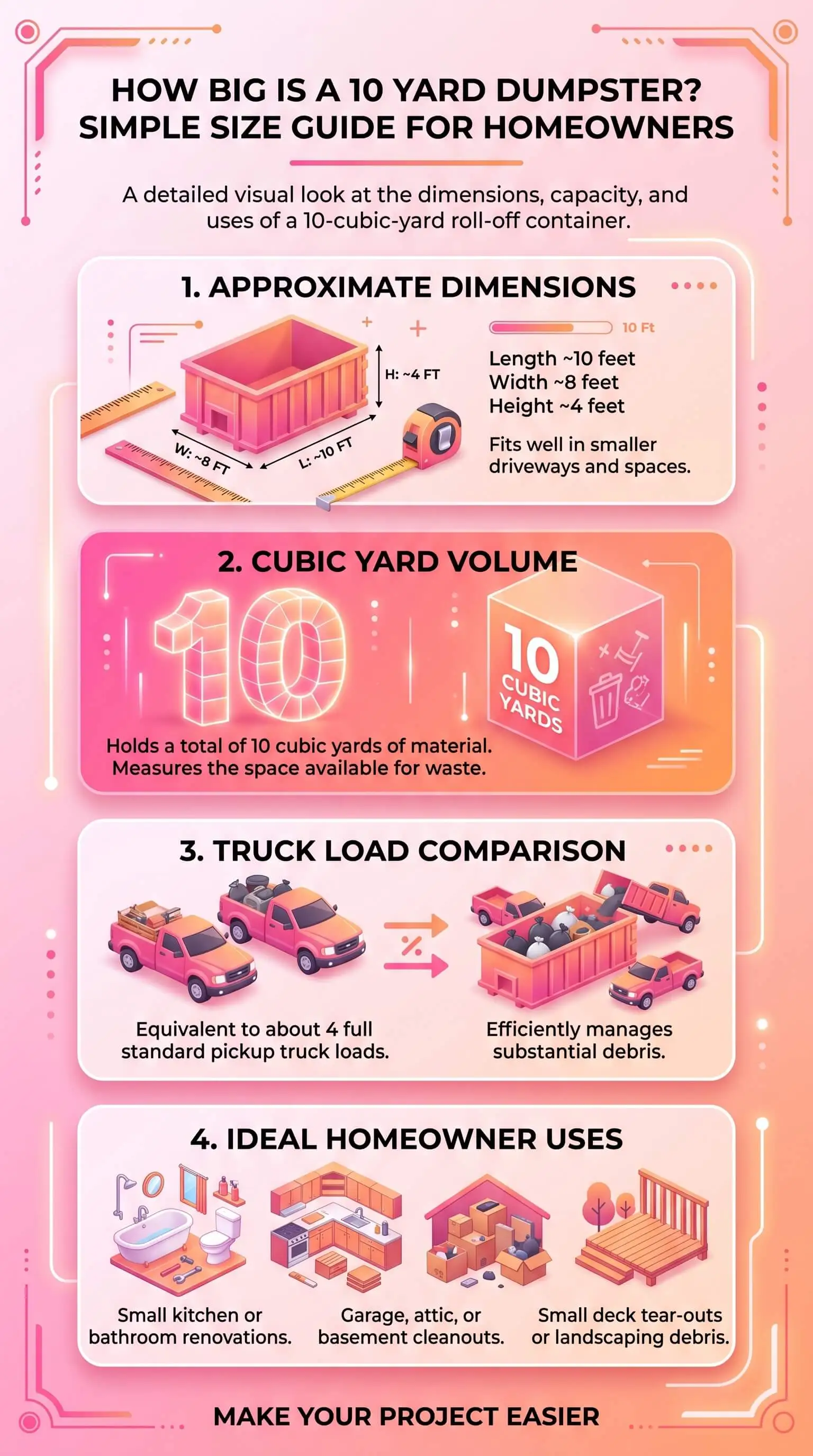
A standard 10 yard dumpster (also called a 10 cubic yard or 10 yarder) comes in at about 12 feet long, 8 feet wide, and 4 feet tall. Dimensions vary slightly between haulers, but those figures align with the industry standard across most US providers.
The most useful number in this size class isn't volume. It's the 4-foot sidewall. Most adults can load debris directly over the side without a ladder or ramp, which makes the 10-yard the most practical option for DIY work. For more on how roll-off dumpster units evolved into the standard residential format, the Wikipedia entry covers the broader history.
Driveway planning needs at least 22 by 10 feet of clearance for the container itself, plus walking room around it. Add 25 feet of overhead clearance for the delivery truck's hydraulic arm, and 60 feet of straight, unobstructed access so the truck can back in safely. If your driveway is steep, narrow, or shared with a neighbor, call the rental company before booking and describe the access. A short conversation upfront prevents almost every delivery-day surprise.
How Much Can a 10 Yard Dumpster Hold?
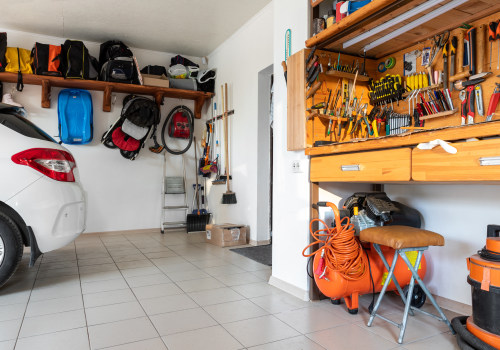
Ten cubic yards comes out to about three standard pickup truck loads, or 50 to 70 large trash bags, or the contents of a single-car garage. The container also handles 2,000 to 3,000 square feet of asphalt shingles, or the drywall, flooring, and trim debris from a single-room remodel.
While volume matters, the real constraint on a 10-yard rental is almost always weight. Most rentals include a weight allowance of 1 to 2 tons (2,000 to 4,000 pounds). With light debris like boxes, furniture, or yard waste, the container fills before you reach the cap. Heavier materials such as concrete, tile, dirt, or asphalt shingles reverse the equation, and the weight allowance runs out first.
The mistake we see most often is mental measurement in volume ("a garage's worth of stuff") with weight forgotten ("...plus that pile of old patio pavers"). Getting both estimates right before booking is the difference between a quote that holds and a final bill that doesn't.
Common Home Projects That Fit a 10 Yard Dumpster
Based on what we see most often, the size suits five project categories well:
Single-room renovations: bathroom remodels, kitchen refreshes, finished-basement gut jobs. Debris from a single room rarely exceeds 10 yards by volume.
Garage and attic cleanouts: years of accumulated boxes, broken furniture, and forgotten purchases. The right tools for a garage cleanout matter as much as the dumpster size, and a one-day strategy is often realistic if you clean out the garage in a single day with a plan in hand.
Small roof tear-offs: residential roofs up to about 1,500 square feet of asphalt shingles fit by volume, though the weight allowance becomes the binding constraint quickly.
Yard and landscaping debris: shrub removal, sod replacement, deck demolition, and weekend cleanups.
Pre-move and estate decluttering: downsizing before listing a home, or first-time estate cleanouts where one container handles the bulk of the work.
When a 10 Yard Dumpster Isn't Big Enough
Sizing up makes sense in four situations. Whole-house cleanouts usually call for 20 to 30 yards. Multi-room renovations are safer at 15 to 20 yards. Heavy-debris projects involving concrete, brick, dirt, or tile reach the weight cap before they fill the box, so a smaller "heavy-only" container often pencils out better. Mattress-heavy hauls can run into per-mattress fees that some haulers charge regardless of volume, so check local mattress disposal rules before assuming the dumpster covers everything.
The honest math on sizing up: a 15- or 20-yard adds $50 to $100 to the bill in most markets. Scheduling a second pickup because the first container filled too fast costs significantly more, often a full second rental fee plus delivery. When in doubt, the bigger container is the cheaper container.
How Much Does a 10 Yard Dumpster Cost to Rent?
National rental prices for a 10 yard dumpster fall between $250 and $450 for a standard 7- to 10-day rental period. The biggest variables include geographic location (urban markets price higher), the type of debris being hauled (heavy material often carries premiums), the weight allowance included in the quote, and any permit or delivery fees added on. Rental duration extensions also add daily costs.
The hidden-fee questions worth asking before booking: What weight allowance is included? What's the per-ton overage rate? Are delivery and pickup baked into the quote, or charged separately? Is there a fuel surcharge? Hidden line items account for almost every "the bill was higher than expected" complaint we hear. For a deeper breakdown of regional pricing variance and weight-overage math drawn from a decade of hauling data, this 10 cubic yard dumpster size and rental cost guide from Jiffy Junk walks through the numbers transparently.
Will a 10 Yard Dumpster Fit on Your Driveway?
This is the question most articles skip. The practical answer breaks down into four checks:
Footprint: reserve at least 22 feet of length and 10 feet of width.
Overhead: clear branches, wires, and awnings to 25-plus feet.
Surface: lay plywood under the wheels to prevent gouging concrete or asphalt.
Permits: street placement almost always requires a city permit, typically $20 to $150.
A short conversation with the rental company before you book prevents almost every delivery-day surprise. They've seen every driveway shape, and they'll tell you upfront whether the access works.
"While picking the right size matters, the most expensive mistake homeowners make on a 10-yard rental is misestimating weight. Light debris like boxes and furniture fills the container by volume. Heavy materials like concrete, tile, or shingles reach the weight cap first, and the overage fees that follow can rival the base rental cost. The rule that saves the most money on this size class: weigh the project before measuring it. When the choice comes down to 10 versus 15 yards on a heavy job, the larger container almost always works out cheaper than booking a second haul."
7 Essential Resources
Seven reference points worth bookmarking before you book any rental. Each one covers a gap that rental companies don't always explain upfront.
EPA — Sustainable Management of Construction and Demolition Materials. Federal data on what happens to renovation debris after pickup, including current recycling and diversion rates. epa.gov/smm/sustainable-management-construction-and-demolition-materials
EPA — Household Hazardous Waste Guidance. Federal guidance on items that can't legally go in any dumpster (paints, cleaners, batteries, electronics) plus alternative disposal options. epa.gov/hw/household-hazardous-waste-hhw
EPA — Reduce, Reuse, Recycle Resources. Practical recycling guidance for materials worth diverting before paying to landfill them. epa.gov/recycle
EPA — Municipal Solid Waste Landfills. Background on where dumpster contents typically end up, and why weight-based pricing exists in the first place. epa.gov/landfills/municipal-solid-waste-landfills
Habitat for Humanity ReStore. Drop-off and free pickup for usable furniture, appliances, and building materials. Most ReStore locations accept large items. habitat.org/restores
OSHA — Construction Industry Safety. DIY-friendly federal guidance on safe demolition, lifting, and debris handling for homeowner projects. osha.gov/construction
Earth911 — Local Recycling Locator. Searchable database of drop-off and pickup options by zip code for items that don't belong in any dumpster. earth911.com
3 Statistics
The numbers below put the scale of US debris generation in context, and explain why proper sizing and proper sorting both matter.
1. The U.S. Generates 600 Million Tons of Construction & Demolition Debris Annually
The EPA's Sustainable Management of Construction and Demolition Materials report puts C&D debris at approximately 600 million tons in 2018, more than twice the volume of all municipal solid waste combined. Demolition activity accounted for over 90% of that total. What this means for you: the bulk of what fills a 10-yard dumpster is renovation material drawn from the largest waste stream the country generates.
2. Half of All US Trash Still Ends Up in Landfills
The EPA's National Overview of Facts and Figures on Materials, Waste and Recycling reports that Americans generated 292.4 million tons of municipal solid waste in 2018, or about 4.9 pounds per person per day. Roughly 50% (146.1 million tons) ended up in landfills. What this means for you: sorting recyclables, donations, hazardous waste, and materials that can improve air quality before the dumpster arrives keeps your project from contributing to that landfill share.
3. About 76% of C&D Debris Reached a Next Use in 2018
Of the 600 million tons of construction and demolition debris generated, just over 455 million tons (about 76%) reached a next use rather than landfill disposal, according to EPA reporting. Aggregate, recycled metals, and salvaged building materials accounted for most of that diversion. What this means for you: most of what fills a 10-yard dumpster has a better destination than a landfill, provided you or your hauler take time to sort it.
Final Thoughts and Opinion
Honest assessment: a 10 yard dumpster is the right size for most homeowners on most projects, provided you treat it as a weight-capped container rather than an empty box to fill, which helps keep dumpster rental prices easier to manage and more budget-friendly. The expensive mistake we see most often is the second framing. Treating it as volume-only is how overage fees happen.
The 10-yard size makes financial sense when the project stays contained to a single room or area, the debris is mostly light to medium weight, and the driveway has space for the container plus the time to load it yourself. Beyond those conditions, a full-service junk removal team usually pencils out better once you total the real costs of permits, weight math, and a weekend of loading.
The homeowners who feel best about their decision tend to share three habits. They measure and weigh the project before booking. They sort recyclables before loading. They ask the rental company every question on the hidden-fees list before signing the quote. Projects that follow that sequence stay on budget at a noticeably higher rate than projects that don't.
 Frequently Asked Questions
Q: What are the exact dimensions of a 10 yard dumpster?
A: A standard 10 yard dumpster measures about 12 feet long, 8 feet wide, and 4 feet tall. Exact figures vary slightly by hauler, but this range matches the industry standard across the United States. The 4-foot sidewall makes loading possible without a ladder or ramp.
Q: How much weight can a 10 yard dumpster hold?
A: Most 10-yard rentals include a weight allowance of 1 to 2 tons (2,000 to 4,000 pounds). Going over triggers per-ton overage fees that vary by hauler. Heavy materials like concrete, tile, brick, and asphalt shingles reach the weight cap before they fill the container.
Q: How long can I keep a 10 yard dumpster rental?
A: Standard rental periods run 7 to 10 days. Most haulers offer extensions for a daily rate, typically $5 to $15 per day. Confirm the rental window in writing before delivery to avoid surprise fees.
Q: Do I need a permit for a 10 yard dumpster?
A: Containers placed entirely on private property (driveway or yard) generally don't require a permit. Containers that sit on a public street or sidewalk usually do, with most municipalities requiring an application before delivery. Permit fees typically run $20 to $150 and take a few days to process.
Q: What can't I throw in a 10 yard dumpster?
A: Universally prohibited items include batteries, electronics, refrigerants, AC units, tires, paint, cleaners, fuel, asbestos, and other hazardous chemicals. Mattresses, appliances, and certain electronics fall into a "depends on your hauler and state" category. Ask before loading. Rejected loads can void the rental.
Q: Is a 10 yard dumpster big enough for a kitchen remodel?
A: For most single-kitchen remodels, yes. The debris from cabinets, flooring, drywall, and old appliances typically fits within 10 cubic yards. The exception is a remodel that also involves tearing out tile flooring across a large area. Tile weight can exceed the standard allowance, and a 15-yard size becomes the safer pick.
Ready to Clear Your Space the Easy Way?
If the 10-yard size fits the project profile in this guide, you have what you need to book with confidence. If the rental window, permit paperwork, weight math, and loading aren't the way you want to spend a weekend, the alternative is a full-service junk removal team that handles every step. They arrive, load everything, sort what can be donated or recycled, and haul the rest away on a single visit.
Either path works. Pick the one that matches the project.