TL;DR Quick Answers
Best soap for diabetics
The best soap for diabetics is a fragrance-free, alcohol-free, pH-balanced, plant-based cleanser with a moisturizing base — one that cleans without stripping the moisture diabetic skin already struggles to hold. For diabetic skin, what a soap leaves out matters as much as what it puts in.
Look for:
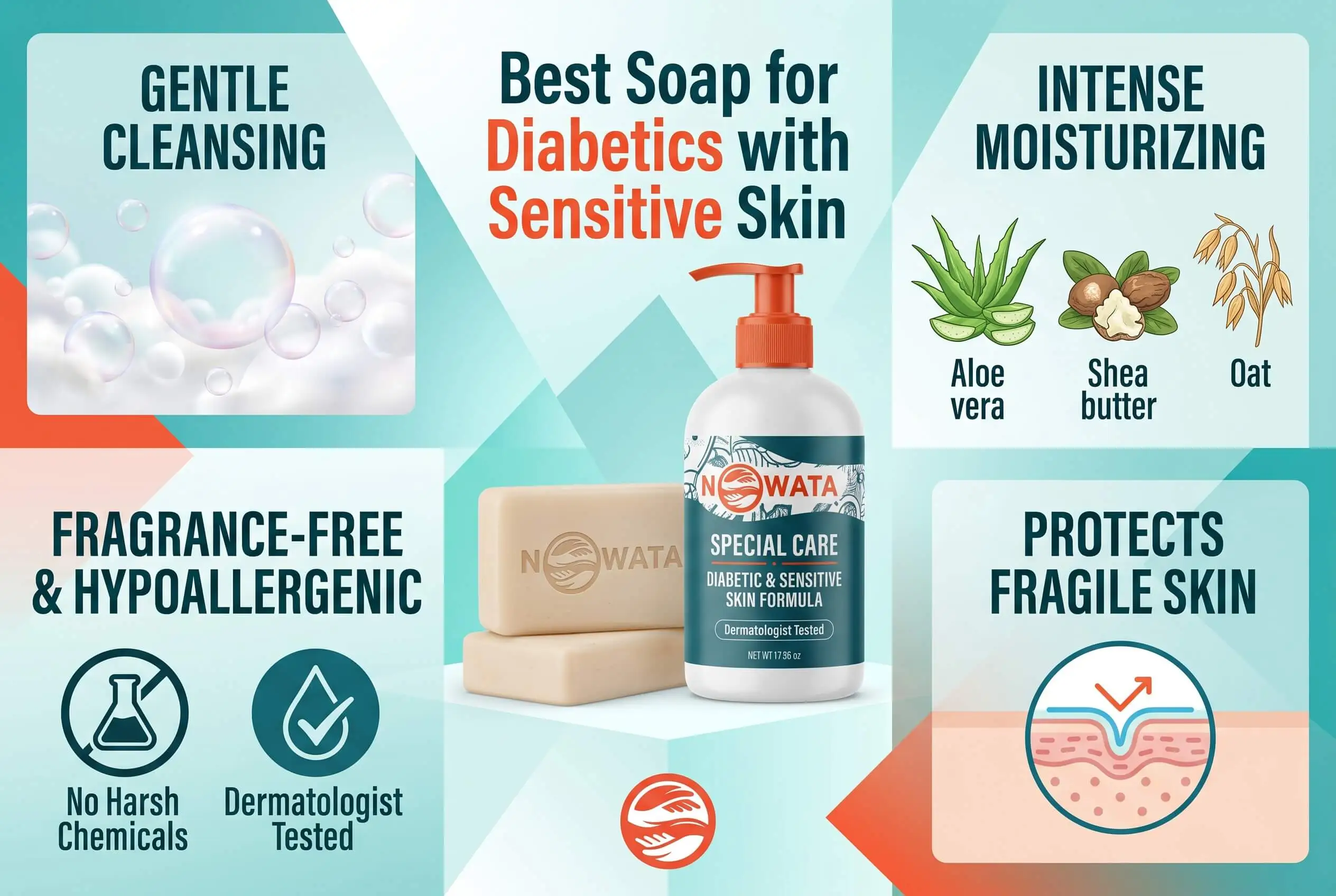
Fragrance-free — synthetic fragrance is a top trigger of skin irritation.
Alcohol-free — no stripping of natural oils, no micro-cracking.
pH-balanced to 4.5–5.5 — works with the skin's acid mantle, not against it.
Plant-based — no sulfates (SLS/SLES), parabens, phosphates, or triclosan.
A moisturizing base — ingredients like coconut milk powder condition while they clean.
Top Takeaways
The best soap for diabetics with sensitive skin is fragrance-free, alcohol-free, pH-balanced, and plant-based, with a moisturizing base.
Skip synthetic fragrance, sulfates, parabens, phosphates, and harsh antibacterials like triclosan.
Wash with warm water, pat dry, and moisturize while skin is still damp, and keep cream out from between the toes.
Skin disorders affect most people with diabetes, so protecting the barrier every day is real prevention.
Soap protects skin, but it doesn't treat diabetes. See a clinician for wounds, infection, or new skin changes.
Short version: pick a soap that's fragrance-free, alcohol-free, pH-balanced, and plant-based, with a moisturizing base. Leave the perfume, the sulfates, the alcohol, and the harsh antibacterials on the shelf.
Here's why it matters more for you than for most people. High blood sugar pulls water out of your skin, slows healing, and weakens the acid mantle, the slightly acidic barrier that keeps moisture in and bacteria out. Nerve changes can dull what you feel, so water that's too hot or a small split can slip past you until it turns into something that won't close. Your daily handwash either protects that barrier or quietly wears it down.
Ordinary soap tends to wear it down. Classic bar soap comes from saponification, where fats react with an alkali, and the result usually lands around pH 9 to 11. Your skin sits closer to 4.5 to 5.5, so an alkaline bar pulls it out of its natural range and leaves it tight and stripped. A pH-balanced, plant-based cleanser works inside that range instead of against it.
What to look for:
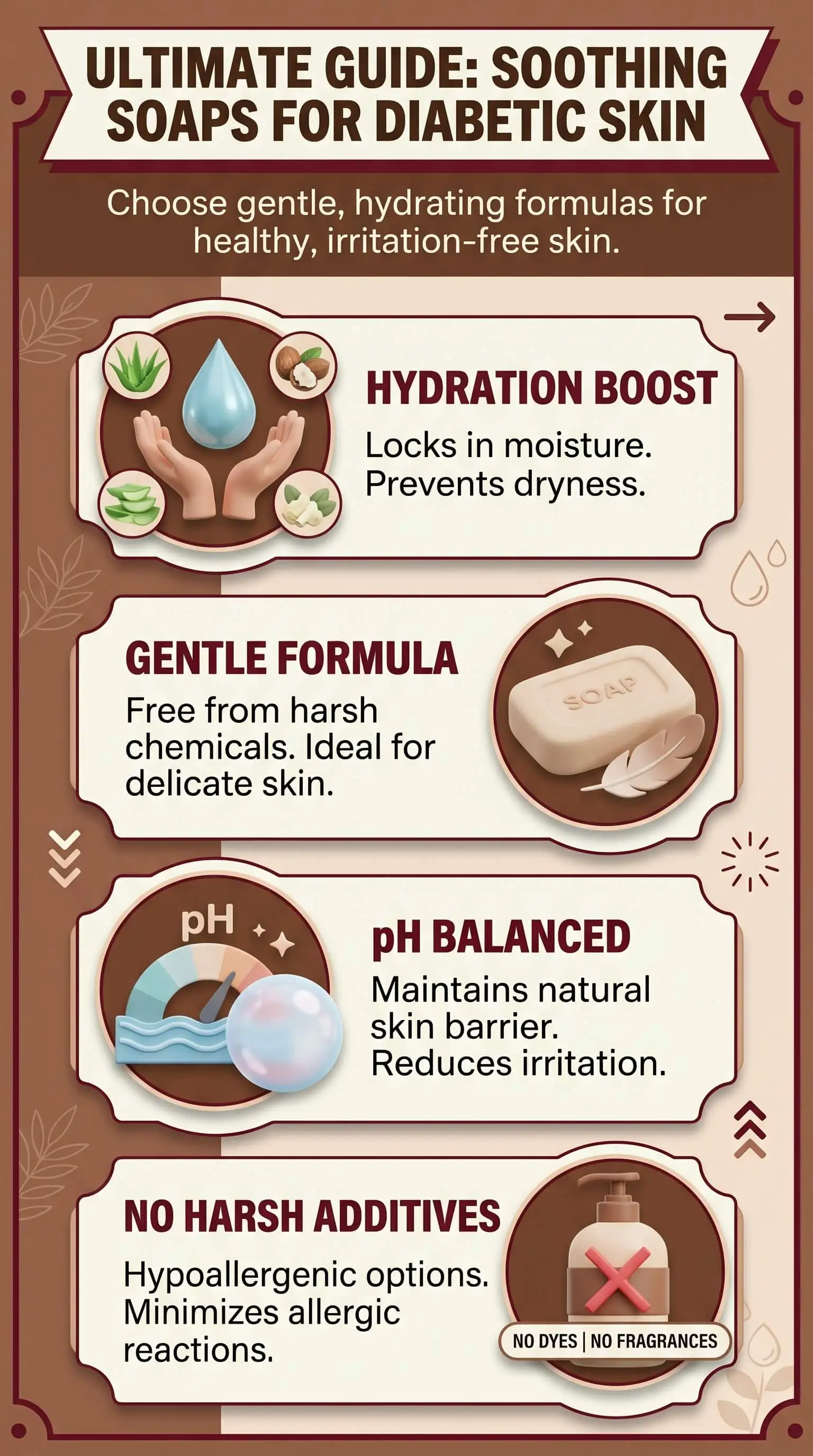
Fragrance-free. Synthetic fragrance is one of the most common triggers of contact dermatitis, and your skin doesn't need the exposure.
Alcohol-free. No alcohol means no stripping of natural oils and no micro-cracking.
pH-balanced to skin's natural 4.5 to 5.5, so it works with the acid mantle rather than against it.
Plant-based, with no sulfates (SLS or SLES), parabens, phosphates, or triclosan.
A moisturizing base. Ingredients like coconut milk powder condition while they clean, so hands feel softer instead of stripped.
What to skip:
Alcohol in any form: ethanol, isopropyl, denatured.
“Fragrance” or “perfume” anywhere on the ingredient list.
Sulfates, parabens, phosphates, and harsh antibacterials like triclosan.
Scalding water and hard scrubbing. Warm water and a light touch treat fragile skin better.
After you wash, pat dry instead of rubbing, and pay attention to skin folds and the spaces between your toes. Moisturize while your skin is still damp, but keep heavy cream out from between the toes, where trapped moisture invites fungal trouble. Look over your hands and feet every day. None of this treats diabetes or replaces your care team. It protects the skin between appointments, which is where a lot of trouble starts, just as small daily home habits can help improve air quality before bigger issues appear.
“We built NOWATA because we kept running into the same trade-off: hand hygiene that worked but left skin red, cracked, and chemically loaded, especially for the patients and family members with diabetic or sensitive skin. Dr. Ruslan Maidans and Dr. Yalda Shahriari spent two years on the formula before we put it on anyone's hands but our own family's. The rule we kept coming back to was simple. Nothing goes in that we wouldn't put on our own children's skin. That isn't a tagline. It's two decades of clinical and biomedical work pressed into a drop of soap.”
7 Essential Resources
We're scientists, but we're parents first. When families ask where to start, this is the short list we send. Every one of these comes from a medical organization, a government agency, or peer-reviewed research.
American Diabetes Association: Diabetes and Skin Complications. The plain-language breakdown of what diabetes does to skin and why infections run higher.
American Academy of Dermatology: dermatologist-recommended skin care for diabetes. What board-certified dermatologists actually recommend for daily cleansing and when to see a doctor.
NIDDK (NIH): Diabetes and Foot Problems. How nerve damage and reduced circulation make the skin on hands and feet slower to heal.
CDC: Clean Hands. Why physically removing germs, not just chemically targeting them, is the community standard.
MedlinePlus (NIH): diabetic skin care instructions. Step-by-step daily guidance, with a direct recommendation to use mild soap and skip strong ones.
Kirsner, Yosipovitch et al. (2019), Journal of Drugs in Dermatology. A peer-reviewed review showing gentle cleansers and moisturizers help the diabetic skin barrier.
Environmental Working Group: Skin Deep database. Look up any soap formula and check its ingredients for fragrance, parabens, and sulfates before you buy.
3 Statistics
Most people with diabetes get a skin disorder. A clinical review in the American Diabetes Association's journal puts it at about 79% (from a study of 750 patients), with skin infections, dry skin, and inflammation leading the list. Source: Clinical Diabetes, Cutaneous Manifestations of Diabetes Mellitus.
Small cracks turn into big problems. Between 10% and 15% of people with diabetes develop a foot ulcer in their lifetime, and most start as a small break in dry skin. Source: Agency for Healthcare Research and Quality (AHRQ).
Daily ingredients add up. In 2016 the FDA ruled that 19 antibacterial soap ingredients, including triclosan, weren't proven safe for long-term daily use, and weren't shown to beat plain soap and water. Source: U.S. Food and Drug Administration.
Final Thoughts and Opinion
Most soaps were never built for diabetic skin. They were built for average skin, and diabetic skin has been quietly absorbing the trade-offs ever since: dryness, cracking, irritation from ingredients that were never necessary. Our take is simple. You don't need a shelf full of products. You need one gentle, fragrance-free, alcohol-free, pH-balanced sls free soap you'll actually use every day, a good moisturizer, and the habit of checking your skin. One line stays firm, though: a good soap protects skin, but it doesn't treat diabetes or heal a wound. A sore that won't close, signs of infection, or a skin change that worries you is a call to your doctor, dermatologist, or podiatrist, not a job for your sink. If your skin has been telling you for years that ordinary soap isn't working, it's worth switching to one that was made for it.
Frequently Asked Questions
What is the best soap for diabetics with sensitive skin?
One that's fragrance-free, alcohol-free, pH-balanced to skin's natural 4.5 to 5.5, and plant-based, with a moisturizing base that cleans without stripping. Skip anything with synthetic fragrance, sulfates, parabens, or triclosan.
Why should diabetics avoid fragranced soap?
Synthetic fragrance is one of the most common causes of contact dermatitis. On a skin barrier that's already compromised, that irritation can move from discomfort to cracking and infection quickly. Fragrance-free removes the risk without costing you any cleaning power.
Is alcohol-free or rinse-free soap actually effective?
It can be. Alcohol sanitizers strip oils and leave residue behind. A rinse-free option like NOWATA physically lifts dirt, oils, and germs off the skin instead, and independent lab testing (ASTM E1174) puts that removal at over 99.9% of the viruses and bacteria tested.* No alcohol, no rinse, no drying afterward.
What pH should soap be for diabetic skin?
Close to your skin's natural range of about 4.5 to 5.5. Highly alkaline bars (pH 9 to 11) disrupt the acid mantle, letting moisture out and bacteria in. A pH-balanced formula works with that barrier instead.
Can the wrong soap make diabetic dry skin worse?
Yes. Alkaline bars, strong fragrances, and sulfate-heavy formulas strip natural oils and deepen dryness, which leads to cracks that raise infection risk. A gentle, moisturizing, pH-balanced cleanser helps you avoid that cycle.
CTA
Your skin has put up with enough. If you want a cleanser built for diabetic and sensitive skin, take a look at NOWATA, a doctor-made, plant-based, fragrance-free, rinse-free hand soap that's lab-tested to physically remove 99.9% of germs without alcohol, water, or synthetic fragrance.* And if your skin is already irritated or broken, check with your healthcare provider before you change anything.