TL;DR Quick Answers
How to keep kids' hands clean
The goal isn't to kill the germs on your child's hands, it's to remove them. At home, soap and water with 20 seconds of scrubbing is the gold standard. When there's no sink, reach for a gentle, plant-based, rinse-free soap that lifts dirt and germs off the skin instead of a sanitizer that leaves them sitting there. Clean at the moments that matter, not by a daily count.
Clean their hands at these key moments:
Before eating or handling food
After using the toilet
After playgrounds, parks, or shared surfaces
After coughing, sneezing, or blowing their nose
After touching animals or pets
Top Takeaways
There's no fixed number. Most kids wash six to ten times on a normal day, and more when something's going around.
Anchor washes to key moments instead of chasing a quota.
Scrub at least 20 seconds, about two rounds of “Happy Birthday.”
Plain soap is plenty, and antibacterial soap isn't necessary.
Frequent washing dries young skin, so reach for a gentle, fragrance-free soap.
Killing germs and removing them aren't the same. Soap and rinse-free removal lift the grime that sanitizer leaves behind.
Use soap and water first, and save 60%-plus alcohol sanitizer for when there's no sink.
So, How Many Times a Day Is Enough?
Forget the magic number. Pediatric guidance ties handwashing to events, not the clock, so the count shifts with your kid's day. A toddler home with you hits fewer triggers than a second-grader who's been on the playground, passed around the class crayons, and ridden the bus. On a normal day, most kids land somewhere around six to ten washes. During cold-and-flu season or a daycare outbreak, that climbs, and that's exactly what you want. Cover the right moments and the number takes care of itself.
The Moments That Matter Most
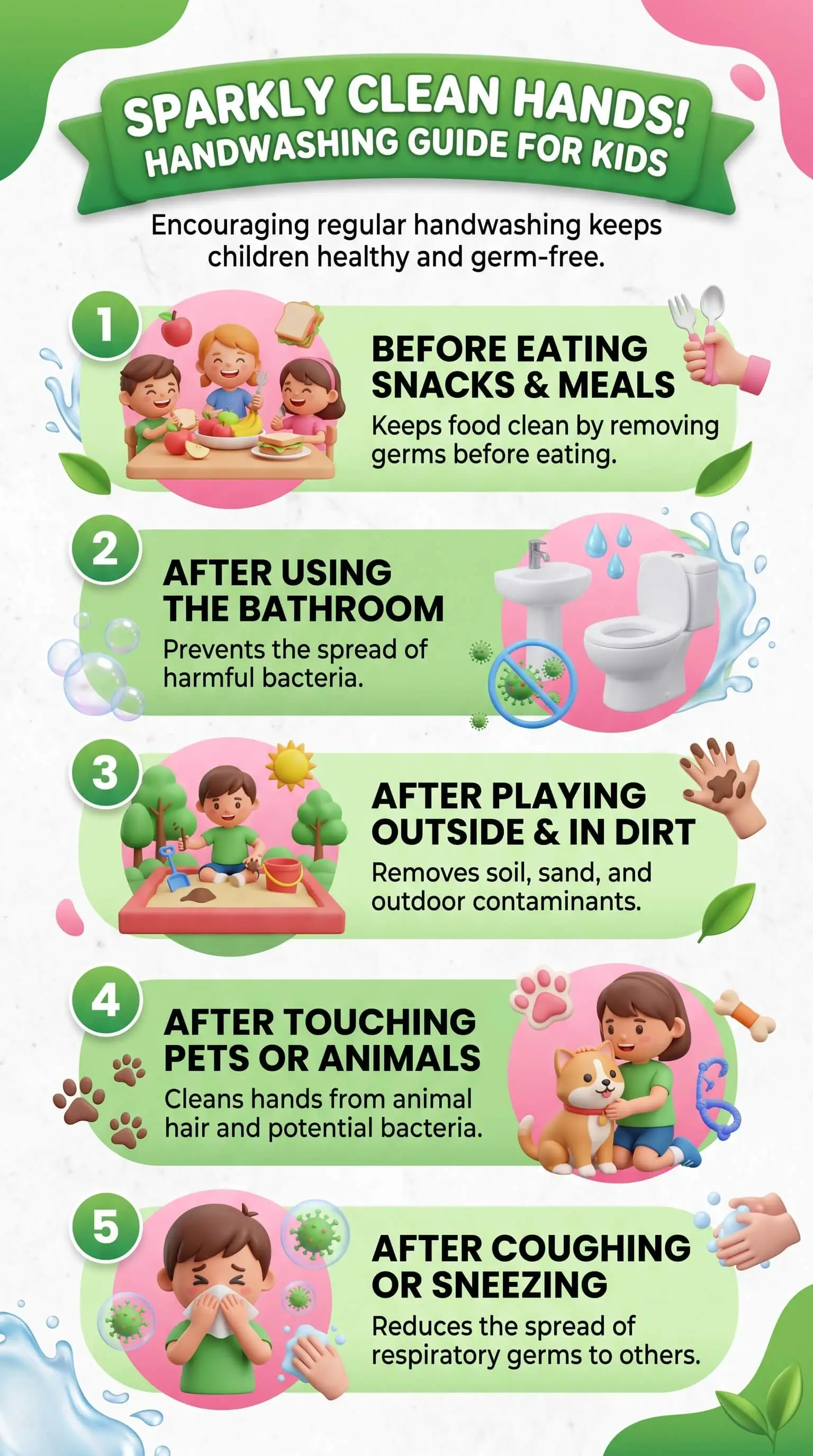
These are the washes I never skip, and the ones worth holding the line on:
Before eating or helping with food
After using the toilet
After coming in from outside, school, or anywhere public
After blowing their nose, coughing, or sneezing
After touching pets or other animals
After playing with shared toys, screens, or art supplies
Any time their hands look or feel grimy
Cover these, and the daily tally sorts itself out.
A Simple Daily Schedule You Can Keep
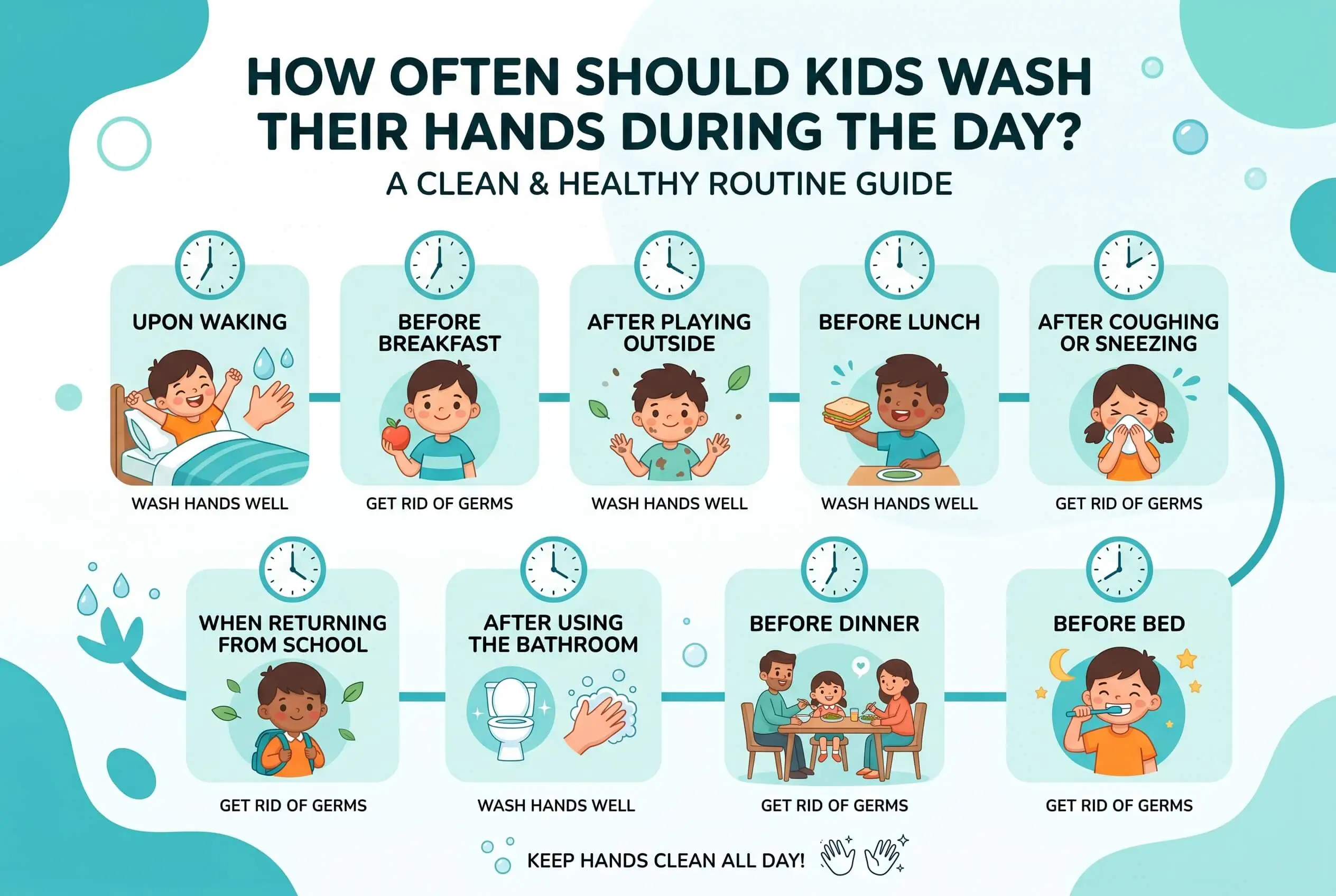
Want a starting rhythm instead of a running count? Tie each wash to something your kid already does, so it rides along with the day:
Morning: after the bathroom, before breakfast
Midday: before lunch, then again after recess or outdoor play
After school: the second they walk through the door
Evening: before dinner, and again before bed
Treat it as a rhythm, not a rulebook. Once it sticks, you'll nag less and they'll remember more. In our house, the after-school wash was the hardest to land and the one that paid off most during flu season.
How to Wash the Right Way
Frequency only helps if the technique holds up. Here's the part that matters: soap doesn't so much kill germs as lift them off the skin and send them down the drain. That's the whole job, and it's why a rushed two-second rinse does almost nothing. The five steps below come straight from CDC guidance, and they're simple enough for a preschooler:
Wet hands with clean running water, warm or cool.
Lather with soap across palms, backs, between fingers, and under the nails.
Scrub for at least 20 seconds, about two rounds of “Happy Birthday.”
Rinse well under running water.
Dry completely with a clean towel, since germs travel more easily off wet skin.
Young children are still building the coordination for all this, so a step stool, a foaming pump, and a little supervision go a long way.
Choosing a Soap That's Gentle on Little Hands
Here's what most guides skip. Plain soap works fine, and antibacterial soap isn't necessary for everyday washing. But six to ten washes a day is rough on young skin, and dry, stinging hands are one of the fastest ways to turn your kid against the sink. A mild, fragrance-free, plant-based soap keeps things gentle, which is half the battle when you're building a habit that lasts. The other half is what gets left behind. Alcohol sanitizers kill germs but leave the dead bacteria, dirt, and chemical film sitting on the skin your kid is about to eat off of, while soap and gentle rinse-free options lift that material away instead. If you're weighing choices, this guide on how to keep kids' hands clean walks through picking a plant-based, chemical-free formula made for children. You can compare it against other non-toxic hand soap options too.
What About Hand Sanitizer?
Soap and water comes first, especially on visibly dirty hands, where sanitizer struggles most. When there's no sink, an alcohol-based sanitizer with at least 60% alcohol will do in a pinch, but watch younger kids while they use it and keep the bottle out of reach. One caution worth taking seriously: sanitizer kills germs in place without removing the grime, so on already-dirty playground hands it's the weakest option, not the strongest. If you'd rather skip alcohol with little ones, here's how long non-alcoholic sanitizer stays active on kids' skin.
“I quit telling my kids to wash a set number of times a day. It never stuck, and the counting made everyone tense. What worked was hooking every wash to something they already did: walking in the door, sitting down to eat, climbing out of the sandbox. Once handwashing rode along with the routine, the nagging dropped and the habit held. The other thing I learned the hard way is that if soap leaves their hands dry and itchy, they'll fight you at every sink. Switch to something gentle, and the whole fight goes away.”
7 Essential Resources
These are the sources I trust when I'm sorting facts from packaging. Seven worth bookmarking:
CDC, Clean Hands: Handwashing. The plain-English hub for when and how to wash, plus the science behind why it works.
American Academy of Pediatrics: Hand Washing, A Powerful Antidote to Illness. Pediatrician guidance written for the parent wrestling a three-year-old at the sink.
UNICEF: How to Teach Your Kids Handwashing. Age-by-age tips for making the habit stick.
Nemours KidsHealth: Hand Washing, Why It's So Important. Kid-friendly enough to read together.
Children's Healthcare of Atlanta: Why, When and How to Wash Your Kids' Hands. A clear rundown of the moments that count.
Stanford Medicine Children's Health: Teaching Kids to Wash Their Hands. Step-by-step coaching for different ages.
Michigan State University Extension: Handwashing With Children. Hands-on techniques from educators for home and classroom.
3 Statistics
Regular handwashing prevents about 1 in 3 diarrhea-related illnesses and roughly 1 in 5 respiratory infections like colds, according to the CDC. For a house full of kids, that's the gap between a quiet winter and a miserable one.
Handwashing habits cut school absences from stomach bugs among kids by 29% to 57%, the CDC reports. Fewer sick days for them, fewer scrambled workdays for you.
A 2021 review in Annals of Translational Medicine found that people who washed more often, around seven times a day versus four, had fewer bouts of diarrheal illness. The lesson isn't to chase a higher count, it's to tie washing to the moments that matter.
Final Thoughts and Opinion
After years of doing this with my own kids, here's where I've landed: the number was never the point. A kid who washes at the moment that matter will hit a healthy count without anyone keeping score, and they'll carry the habit into adulthood. Pair that with a soap that's kind to their skin, and you knock out the two real reasons kids skip the sink, forgetting and discomfort. One more opinion, since you're here. Just like small habits can improve air quality at home, better hand-washing habits improve what your kids carry with them all day. Stop fussing over which sanitizer is “gentlest” and start asking what comes off your kid's hands. Killing germs and removing them aren't the same thing, and removal wins. That one shift made our routine simpler and our hands cleaner.
Frequently Asked Questions
How many times a day should a child wash their hands?
There's no set number. Tie it to the moments that matter: before eating, after the toilet, after coming inside, after coughing or sneezing. For most kids that's roughly six to ten washes a day, and more during cold-and-flu season. I stopped counting and started covering those moments, and it's been far less of a battle.
When is it most important for kids to wash their hands?
The highest-value moments are before eating, after the bathroom, after blowing their nose or coughing, after coming in from outside or anywhere public, after touching animals, and any time their hands look dirty.
How long should kids scrub their hands?
At least 20 seconds, long enough to sing “Happy Birthday” twice. Make sure they hit the palms, backs of the hands, between the fingers, and under the nails, then rinse and dry all the way.
What kind of soap is best for kids' hands?
Plain soap is enough, and antibacterial soap isn't necessary for everyday washing. Since frequent washing dries young skin, a mild, fragrance-free, plant-based soap is a gentle pick for sensitive little hands.
Is hand sanitizer as good as washing with soap?
No. Soap and water comes first, especially on visibly dirty hands. Sanitizer with at least 60% alcohol helps when there's no sink, but it kills germs without removing the dirt and leaves residue behind. Supervise young kids and keep the bottle out of reach.
Can kids wash their hands too much?
Frequent washing is healthy, but it can leave skin dry or cracked. Stick to the key moments, use a gentle soap, and add a kid-safe moisturizer to keep hands both clean and comfortable.
Make Handwashing the Easy Part
Set up the simple rhythm above, keep the sink stocked, and stash a gentle, plant-based hand soap made for little hands in your bag for every moment that lands nowhere near a faucet. Build the habit once, and your kids carry it for life.