This guide walks contractors, project managers, commercial landlords, and facilities teams through how commercial junk removal services keep a build-out moving and the space turnover-ready. Treat debris removal as part of the schedule rather than an afterthought, and the turnover takes care of itself.
TL;DR Quick Answers
What are commercial junk removal services?
Commercial junk removal services haul away the debris and discards a business that can't leave for regular trash pickup, then sort, recycle, or donate whatever they can. One crew handles the loading, hauling, and disposal, so your own people don't lose hours to it.
Typical jobs include:
Construction and demolition debris like drywall, flooring, ceiling tile, and fixtures
Old office furniture, cubicles, and equipment
Retail and restaurant fixtures
Appliances, electronics, and scrap metal
Scheduled or same-day pickups, usually billed by how much of the truck you fill
Most teams miss one thing. On a build-out or property turnover, time the hauls to your project phases rather than booking one big cleanup at the end. A site that stays clear keeps every trade moving and protects your turnover date.
Top Takeaways
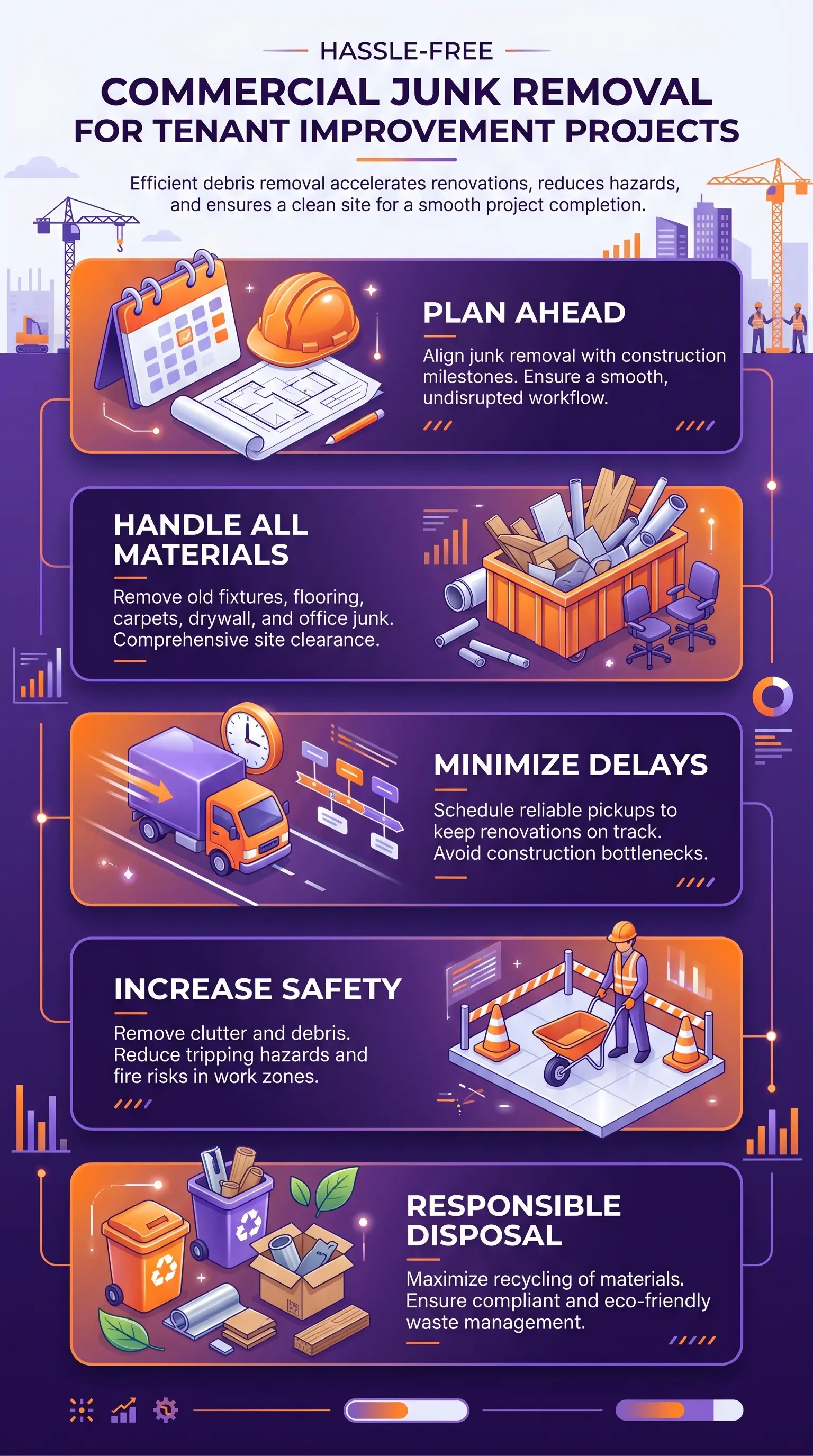
Treat debris removal as a scheduled line item, not a cleanup afterthought. The build-outs that finish on time clear material between phases.
Time hauls to milestones: bulk-out after demo, steady pickups through rough-in, and a final broom-clean sweep before turnover.
Most build-out debris is recoverable rather than landfill-bound waste when it's sorted correctly.
Match the method to the job: dumpster rental for steady demo volume, full-service removal for tight or variable sites.
Verify licensing, insurance, and disposal documentation before you hire.
What Tenant Improvement Junk Removal Covers
Tenant improvement (TI) junk removal is the hauling of debris and discarded material generated when a commercial space is built out for a new or existing tenant. Unlike full building demolition, a TI project is selective. Crews pull specific partitions, flooring, ceiling tile, and fixtures while protecting the core building systems that stay in place. The material that comes out covers a wide range: drywall and lumber offcuts, carpet and tile, old office furniture and cubicles, retail shelving, light fixtures, plumbing fittings, packaging, scrap metal, and anything else that needs to be cleared to imprоvе air quality before the next phase. Clearing it cleanly between phases is what keeps the site workable for the next trade.
Why Debris Slows the Turnover
On most build-outs, debris is the quiet schedule killer. Piled material blocks trade access, creates trip and fire hazards, and hands an inspector an easy reason to flag the site. A space that isn't clear can't pass a walk-through, and a failed inspection can push a certificate of occupancy past the lease commencement date. At that point the delay costs real money: rent that can't be collected, a tenant whose own move-in plans slip, and trades that have to be rescheduled. Keeping the site clear isn't housekeeping. It protects the date everyone is working toward.
Timing Removal to the Build-Out
The cleanest projects tie debris removal to project milestones instead of waiting for one big haul at the end. A practical rhythm looks like this:
After demolition, clear the bulk debris within a day or two so site prep can start on schedule.
Through rough-in and mid-build, schedule pickups as material accumulates so walkways and work zones stay open.
Before turnover, book a final sweep that leaves the space broom-clean for inspection, staging, or the tenant walk-through.
Bundling pickups with phases costs less than emergency hauls and keeps the crew productive instead of working around piles.
Junk Removal, Dumpster Rental, or In-House?
There are three ways to handle build-out debris, and each fits a different job. A roll-off dumpster, usually in the 10 to 40 yard range, suits steady high-volume demolition where material comes out fast and predictably. Full-service junk removal adds the labor and sorting, which works better on tight sites, variable debris, or jobs where the crew can't spare hands to load. Handling it in-house looks cheapest until you add up labor hours, disposal fees, and the liability of moving heavy material. For most TI timelines, a scheduled removal service, or a dumpster paired with on-call hauling, gives the best balance of speed and cost.
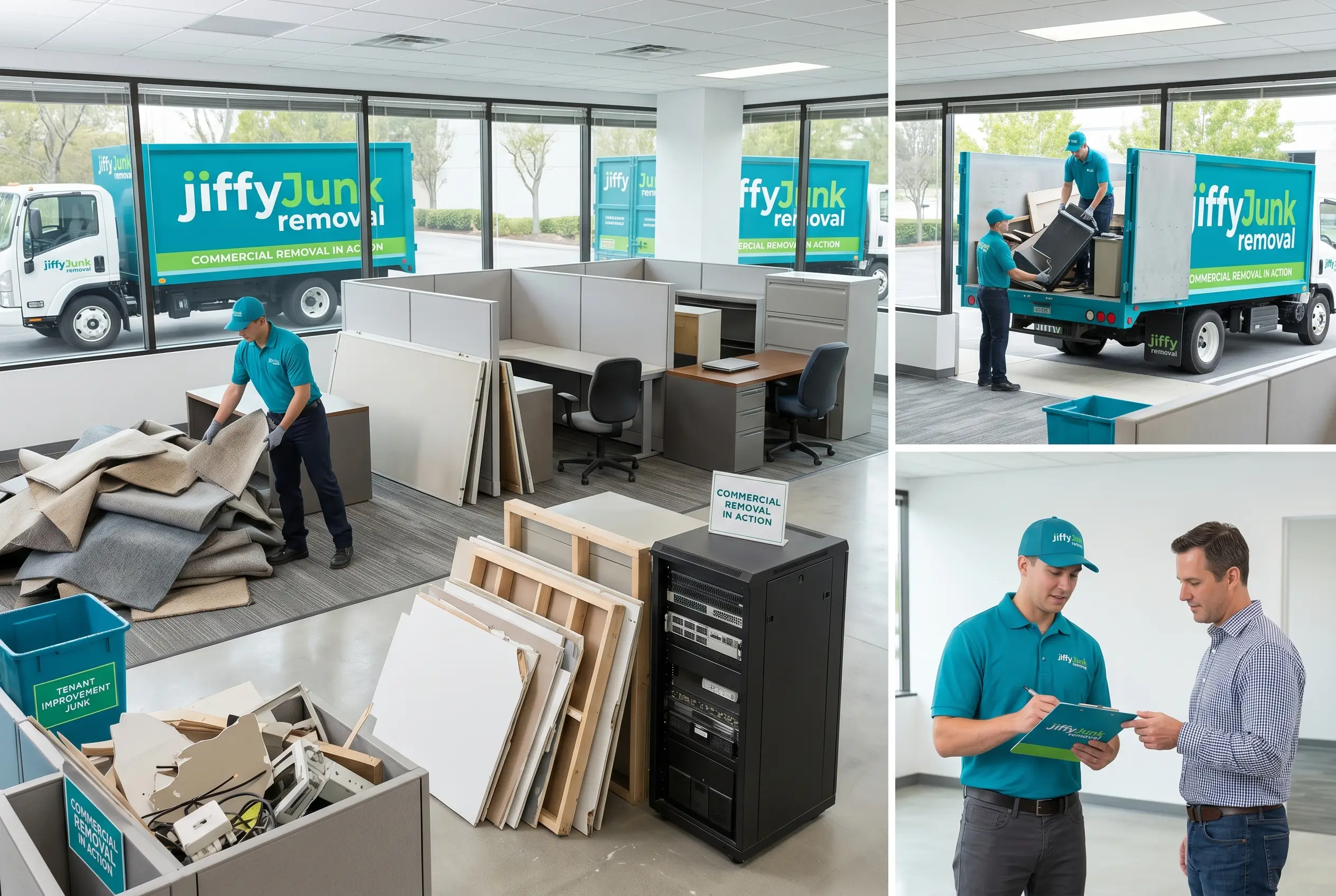
“The crews that finish on time aren't the ones that work faster. They're the ones that never let debris build up. I've watched a single one-day final sweep save a project from missing its certificate of occupancy, and I've watched a skipped mid-build haul cost a full week of trade access. Debris removal is the cheapest schedule insurance on a build-out, and it's the first thing inexperienced teams cut. Build the hauls into the project calendar the same way you schedule the electrician, and the turnover stops being a scramble.”
7 Essential Resources
EPA: Best Practices for Reducing, Reusing, and Recycling C&D Materials – federal guidance on diverting build-out material through source reduction, salvage, and recycling.
EPA: Protecting Communities with Safe, Sustainable Materials Management – why responsible disposal of construction and demolition debris matters for health and the environment.
How to Get Rid of Cardboard Boxes Without Breaking Them All Down – a practical look at handling the packaging debris that stacks up fast on any fit-out.
Estate Cleanout Explained for First-Timers – how full-property cleanouts work, useful context for whole-floor or whole-unit clears.
How to Schedule Same-Day Refrigerator Removal and Haul Away – a guide to fast appliance haul-away when you're clearing a break room or kitchen during a build-out.
What Tools Do You Really Need for a Garage Cleanout? – a clear-eyed view of what a DIY clear-out involves before you decide to hire it out.
30 Yard Dumpster Size Guide for Homeowners – sizing basics that help you weigh a dumpster rental against full-service removal.
3 Statistics
Build-outs feed a massive waste stream. The EPA estimated that 600 million tons of construction and demolition (C&D) debris were generated in the United States in 2018, more than twice the country's municipal solid waste. (EPA)
Most of it can stay out of the landfill. Of that 2018 total, just over 455 million tons were directed to next use and just under 145 million tons went to landfills, meaning roughly three-quarters of C&D material was recovered. (EPA)
Demolition drives the volume. Demolition accounts for more than 90 percent of total C&D debris generation, while new construction generates less than 10 percent, which is why selective TI demos produce so much material so quickly. (EPA)
Final Thoughts and Opinion
If there's one habit that separates the build-outs that hit their date from the ones that don't, it's how a team treats debris. The strong projects schedule removal like any other trade. The weak ones let material pile up and pay for it at the finish line, when there's no time left to recover. My opinion, after watching enough turnovers go sideways, is simple: debris removal isn't a cost to minimize, it's a lever to protect the schedule. Plan it phase by phase, divert what you can, and choose a licensed, insured partner who documents disposal. Do that, and the space stays clean, safe, and ready for the tenant on the day you promised.
Frequently Asked Questions
What's the difference between commercial junk removal and a dumpster rental for a TI project?
Junk removal includes the crew and the sorting, so you point at the pile and it's gone. A dumpster is a container you load yourself, billed by size and rental period. Dumpsters fit steady, high-volume demo; junk removal fits tight sites and variable debris where loading by hand isn't practical.
How quickly can build-out debris be removed?
Many providers offer same-day or next-day pickup. After demolition, the practical target is clearing bulk debris within 24 to 48 hours so site prep and the next trade stay on schedule.
What types of construction debris can be hauled away?
Drywall, lumber, flooring, ceiling tile, insulation, plumbing and lighting fixtures, packaging, old office furniture, retail fixtures, and scrap metal. Hazardous material is handled separately under different regulations, so flag it ahead of time.
Does commercial junk removal include recycling and donation?
Reputable providers sort loads so concrete, metal, and wood go to recovery and usable furniture and fixtures get donated, with only non-recoverable material sent to disposal. Ask for a provider's diversion approach if sustainability targets matter on your project.
How is commercial junk removal priced?
Pricing usually comes down to volume (how much of the truck you fill), labor, and how hard the material is to reach. Most services give a free, upfront estimate before the job so there are no surprises.
Can debris be removed without disrupting tenants already in the building?
Yes. On phased build-outs, crews schedule hauls around occupied areas and during off-hours, keeping operations running while the work continues next door.
Plan a Smoother Project Cleanup
Plan the cleanup before the next phase starts. Line up a junk removal partner early, build the hauls into your schedule, and debris never gets the chance to stall your turnover. A cleaner site is a faster site, and a faster site protects your date.