A waterless no rinse hand soap fixes that gap. It doesn't replace a real sink. It replaces the walk to one. Pack it right, and hand hygiene stops depending on whichever camp faucet has the shortest line that day.
This checklist covers what actually earns a spot in a family's hygiene bag: the soap itself, a couple of backups, and the two or three rules that keep a campsite from turning into a mess of greywater and wrappers.
TL;DR Quick Answers
waterless no rinse hand soap
Waterless no rinse hand soap cleans hands without a sink. Rub a small amount into dry hands until it lifts dirt, oil, and grime into visible flakes, then brush or wipe them off. No water, no towel, no rinsing. It works anywhere a sink doesn't: campsites, flights, playgrounds, the back seat of a car with a toddler mid-meltdown over a dropped snack.
Top Takeaways
No sink at camp is normal, not a failure of planning. A rinse-free hand soap replaces the entire handwashing step without water.
Kid-safe means alcohol-free and low-fragrance. Check the label before it goes in the family pack.
Soap, sanitizer, and wipes solve different problems. Carry all three instead of picking just one.
TSA's 3.4-ounce carry-on rule applies to any soap flying with you. Car camping has no such limit.
Wash and dump greywater at least 200 feet from any water source, a core rule of Leave No Trace practice for any camp cleanup involving soap.
Why Waterless Hand Soap Belongs on Every Family Camping Checklist
Campsites rarely have a sink at the tent. The ones that do usually share one faucet across an entire loop, and that faucet grows a line right when everyone wants to eat. A waterless hand soap sidesteps the whole bottleneck. Rub in a small amount, work it until it lifts dirt and residue off the skin, and that's it. No walk to the pump. No five gallons hauled back to camp just so four people can wash up before lunch.
Kids make this matter more, because they touch everything. Dirt, bug spray, the dog, the picnic table, then a sandwich. Soap staged right at the table means hands get cleaned the moment it counts, not fifteen minutes later once someone finally reaches the water source.
What Makes a Waterless Soap Safe for Kids
Not every rinse-free product earns a spot in a kid's hygiene kit. Alcohol-based sanitizers sting on a bug bite or a scraped knee, and they dry out young skin fast, so an alcohol-free formula is worth checking for first. Fragrance matters too. Heavy scents pull insects toward camp, and kids with sensitive skin usually do better without added perfume.
A plant-based formula is the other detail worth confirming on the label. Kids' hands end up near kids' mouths more than anyone wants to admit, so a soap built without harsh detergents holds up better across a multi-day trip. We'd rather see a shorter ingredient list than a longer marketing claim.
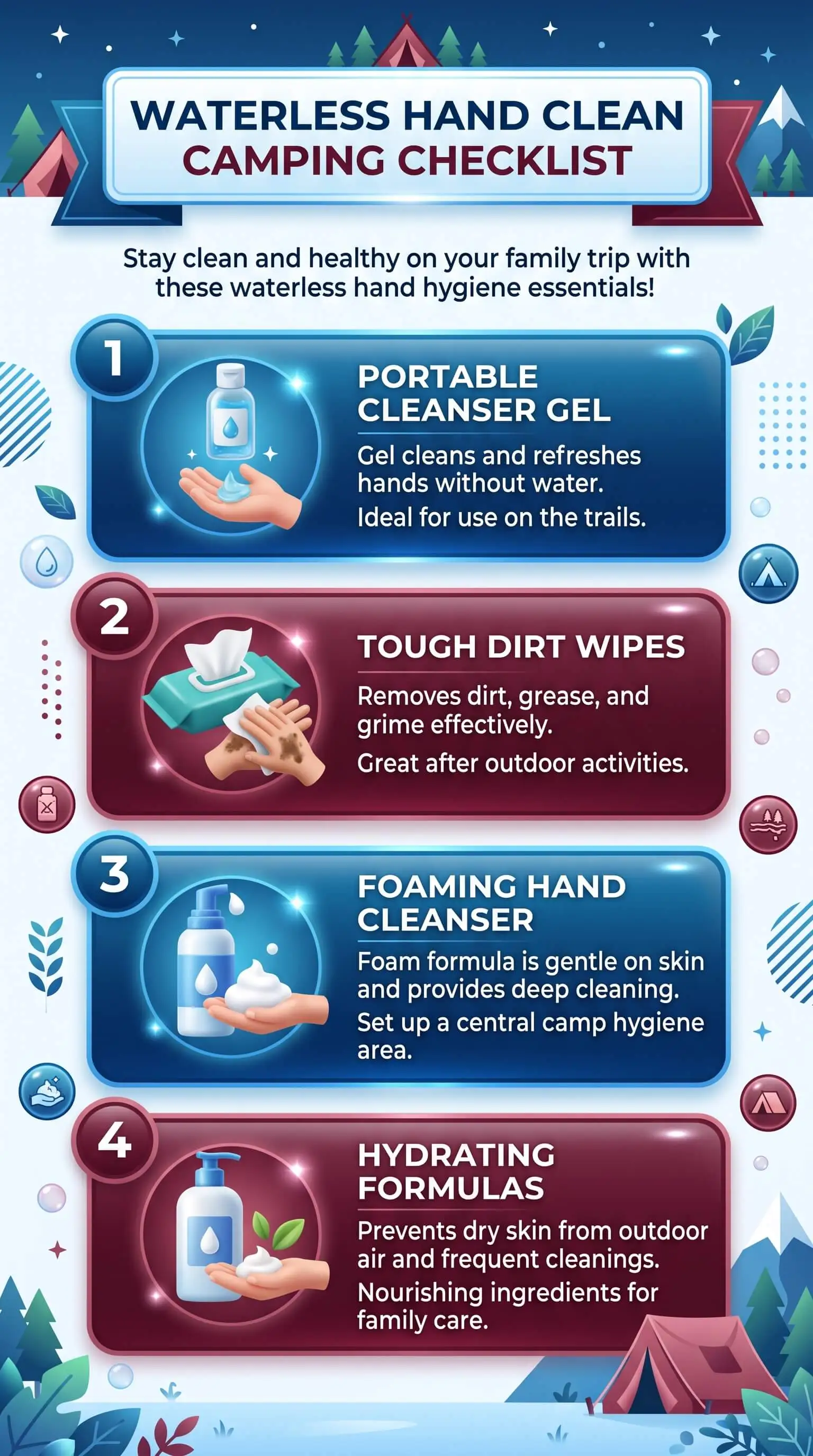
The Full Family Camping Hygiene Packing Checklist
Keep these together in one clear pouch so hygiene supplies don't end up scattered across four different bags:
Travel-size waterless, no-rinse hand soap (one per adult, one shared for the kids)
Hand wipes or a small quick-dry towel for wiping off excess residue
Alcohol-based hand sanitizer as a backup for when hands aren't visibly dirty
A small collapsible wash basin or bowl for the rare occasion there's water to spare
Biodegradable soap for dishes, kept separate from hand soap
A designated greywater dump spot at least 200 feet from any water source
A printed or saved copy of this checklist, since packing at 6 a.m. shouldn't rely on memory
Packing and TSA Considerations
Flying to the trailhead still means playing by the TSA's Liquids, Aerosols, and Gels Rule. Every liquid, gel, or cream in a carry-on needs to sit at 3.4 ounces (100 milliliters) or less, packed inside one quart-size clear bag. Most travel-size waterless hand soaps already fit that limit. Check the label before leaving the house, not at the checkpoint.
Car camping drops that restriction entirely. Bring a larger family-size bottle for base camp and a travel-size one for day hikes, and store both somewhere leakproof. A jostled cooler has ruined more than one bag of snacks this way.
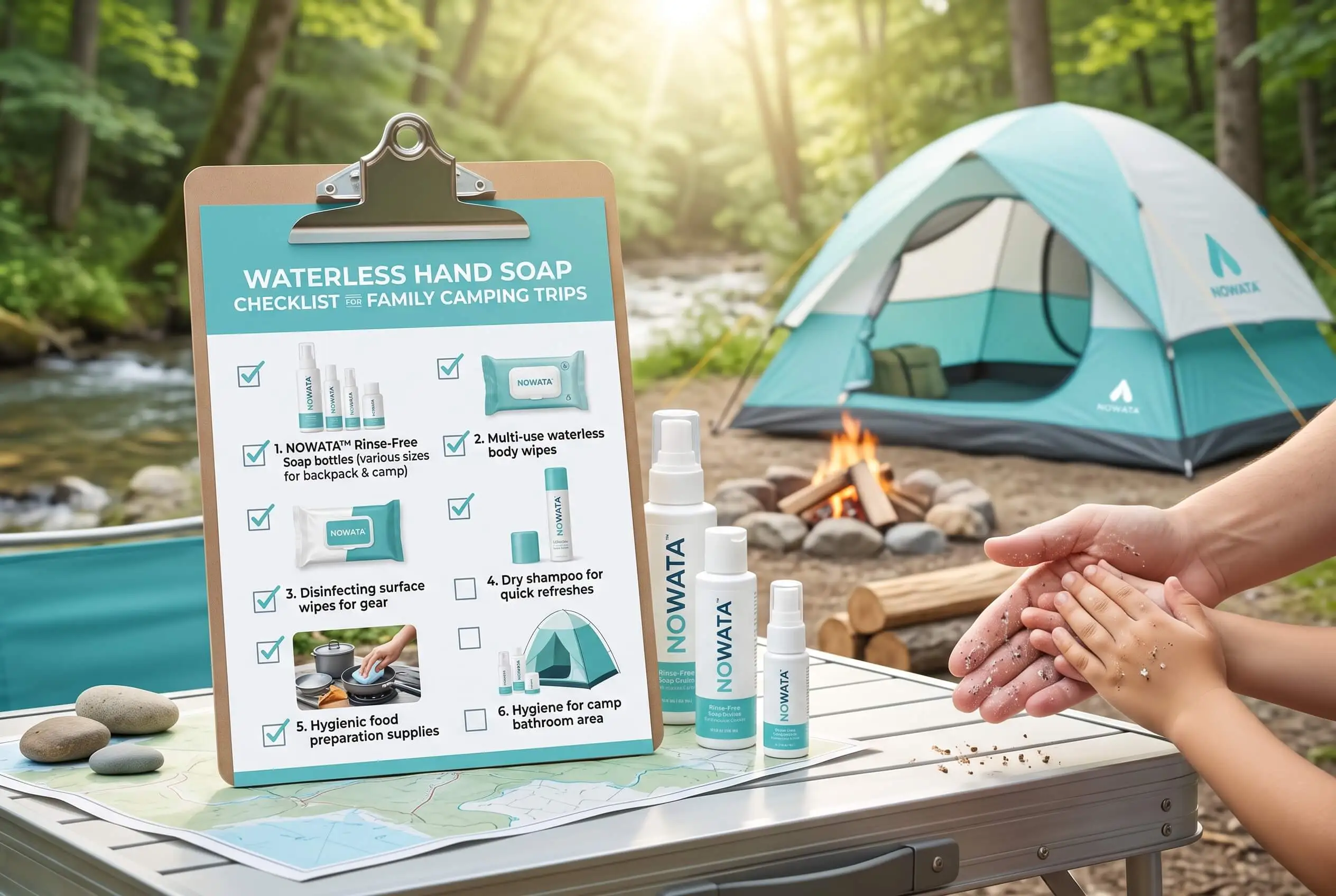
"Every family that's never had a hygiene problem at camp has the same habit. The soap stays somewhere obvious, like right on the picnic table, so nobody has to think twice before eating."
7 Essential Resources
These sources back up the hygiene, water, and travel guidance above:
CDC Handwashing Facts. The research behind why handwashing, with or without water, cuts down on illness. https://www.cdc.gov/clean-hands/data-research/facts-stats/index.html
WHO/UNICEF Guidelines on Hand Hygiene in Community Settings (2025). The first global, science-based hand hygiene guidance for settings outside health care, travel and outdoor use included. https://www.who.int/news/item/15-10-2025-new-guidelines-on-community-hand-hygiene-to-help-governments-reduce-the-spread-of-infectious-diseases
TSA Liquids, Aerosols, and Gels Rule. The official carry-on sizing rule for any soap or sanitizer flying to a camping destination. https://www.tsa.gov/travel/security-screening/liquids-aerosols-gels-rule
EPA WaterSense Statistics and Facts. Government data on how much water everyday handwashing draws, and why a rinse-free option cuts that draw to zero. https://www.epa.gov/watersense/statistics-and-facts
Leave No Trace: Dispose of Waste Properly. The 200-foot rule for washing and greywater disposal that keeps campsite hygiene from becoming an environmental problem. https://lnt.org/why/7-principles/dispose-of-waste-properly/
NSF International: Germiest Items in the Home. Independent research on where household bacteria actually concentrates. Useful context for why quick, frequent hand cleaning matters at a campsite kitchen too. https://www.nsf.org/consumer-resources/articles/germiest-items-home
CDC Hand Sanitizer Facts. When a sanitizer is the right backup, and when it falls short compared to soap-based cleaning on visibly dirty or greasy hands. https://www.cdc.gov/clean-hands/data-research/facts-stats/hand-sanitizer-facts.html
3 Statistics
Handwashing education reduces diarrhea-related illness by 23 to 40 percent, and respiratory illness like colds by roughly 16 to 21 percent. That's a real drop for a family sharing tight quarters at a campsite for several days. Source: CDC Handwashing Facts, cdc.gov
1.7 billion people worldwide still lacked basic hand hygiene services at home in 2024, including 611 million with no facility at all. That gap is why WHO and UNICEF issued their first global community hand hygiene guidance in late 2025. It's also the same gap a family runs into the moment a campsite has no working sink. Source: WHO/UNICEF Guidelines on Hand Hygiene in Community Settings, who.int
Replacing an old, inefficient bathroom faucet with a WaterSense labeled model can save a household roughly 500 gallons of water a year. That's the scale of water a normal sink handwashing routine draws on at home. A waterless hand soap needs none of it, which is exactly the point when a campsite's water source is limited or a mile away. Source: EPA WaterSense Statistics and Facts, epa.gov
These statistics show that waterless hand soap can support healthier campsite hygiene by reducing reliance on limited water supplies and helping families clean their hands when no sink is available, alongside other practical measures that improve air quality and overall comfort in shared camping spaces.
Final Thoughts and Opinion
A family camping trip runs on a dozen small logistics decisions, and hand hygiene is the one that's easy to underrate until someone feels sick on day two. The fix isn't complicated, and it doesn't need to be. A waterless, no-rinse hand soap staged somewhere obvious solves the sink problem before it starts, and it weighs almost nothing in a pack.
Our take, after packing for enough of these trips: the soap matters less than the habit. Families who never run into a hygiene problem at camp aren't carrying rare gear. They've just made hand soap something everyone reaches for without thinking, the same way they reach for bug spray or sunscreen. Build that habit before the trip, not during it.
Frequently Asked Questions
Q: Is waterless hand soap safe for kids to use on camping trips?
A: Yes, as long as it's an alcohol-free, plant-based formula built for repeated use. Alcohol-based products can dry out or sting young skin, so check the label before packing it for the whole family.
Q: What's the difference between waterless hand soap and hand sanitizer?
A: Waterless hand soap lifts dirt and residue off the skin through friction, similar to regular soap, minus the rinse step. Hand sanitizer relies on alcohol to reduce germs, but it doesn't remove visible dirt or grease, which is common at a campsite.
Q: Can I bring waterless hand soap on a flight to a camping destination?
A: Yes, as long as the container is 3.4 ounces (100 milliliters) or less and packed in a quart-size liquids bag, per the TSA's Liquids, Aerosols, and Gels Rule. Larger bottles belong in checked luggage.
Q: How many hand-soap uses does a family of four need per camping trip?
A: Most travel-size bottles are built for dozens of uses, so one shared family bottle plus a backup usually covers a long weekend. For trips longer than four or five days, pack a second bottle instead of rationing the first.
Q: Where should camping hand-wash water be disposed of?
A: At least 200 feet from any lake, stream, or water source, scattered over a wide area rather than dumped in one spot. That distance is the standard Leave No Trace guideline for any wash water, soapy or not.
CTA
Save this checklist before the next trip, and pack the hygiene pouch the night before instead of the morning everyone leaves. The related guides linked throughout this article cover eco-friendly camping soap options, how waterless soap actually cleans without water, and hand hygiene tips for kids. Worth a look before the bags zip shut.