The Air Quality Index, or AQI, is the scale the EPA created to turn raw pollution readings into one number between 0 and 500. Lower numbers mean cleaner air. Once the AQI passes 100 conditions start to affect people with asthma heart disease or other sensitivities. Tracking air quality Milwaukee helps residents know when pollution levels are changing so they can plan outdoor activities more confidently and reduce unnecessary exposure. Above 150 they start to affect nearly everyone spending time outdoors.
TL;DR Quick Answers
air quality milwaukee
Milwaukee's air quality shifts throughout the day, driven by summer heat, lake breezes off Lake Michigan, and drifting wildfire smoke. A live AQI map beats a seasonal guess for current conditions. I check the real-time number before deciding whether outdoor plans need to wait.
Main pollutants: ground-level ozone and fine particle pollution (PM2.5)
When to limit outdoor time: once the AQI passes 100
Biggest wildcard: drifting wildfire smoke, which can spike readings with little warning
Top Takeaways
Milwaukee's AQI can swing from moderate to unhealthy within a single afternoon, driven by heat, lake breezes, and wildfire smoke.
Ground-level ozone tends to peak on hot, sunny, still afternoons, especially near traffic corridors.
Wildfire smoke from as far away as Canada has pushed local AQI into hazardous territory with little warning.
Kids, older adults, and people with asthma or heart disease should check the AQI more closely than the general population.
A same-day check beats relying on yesterday's forecast or a seasonal guess.
Two pollutants drive most of Milwaukee's bad-air days: ground-level ozone and fine particle pollution, known as PM2.5. Ozone tends to build up on hot, sunny, still afternoons, especially near the I-94 corridor and the harbor, where traffic and industrial activity add to the mix. PM2.5 behaves differently. It often starts locally, but it also travels, making indoor air quality testing a smart way to understand how outdoor pollution may be affecting the air inside your home. Smoke from wildfires hundreds of miles away in Canada has pushed Milwaukee's AQI into the orange, red, and even maroon range with almost no local warning.
Lake Michigan adds its own twist. A lake breeze can trap pollution close to shore on some days and clear it out on others, so the AQI can swing from moderate to unhealthy within the same afternoon. That's the main reason a seasonal guess or yesterday's forecast won't tell you much on a given morning. Before I decide whether it's a good day for a run along the lakefront or a day to keep the windows shut, I check a live, real-time Milwaukee AQI map.
“After checking Milwaukee's air quality most mornings for the past few summers, I've noticed the days that catch people off guard usually aren't the smoggy ones you can see. They're the clear, sunny days when ozone quietly climbs past 100 by early afternoon, long after everyone's already outside.”
7 Essential Resources
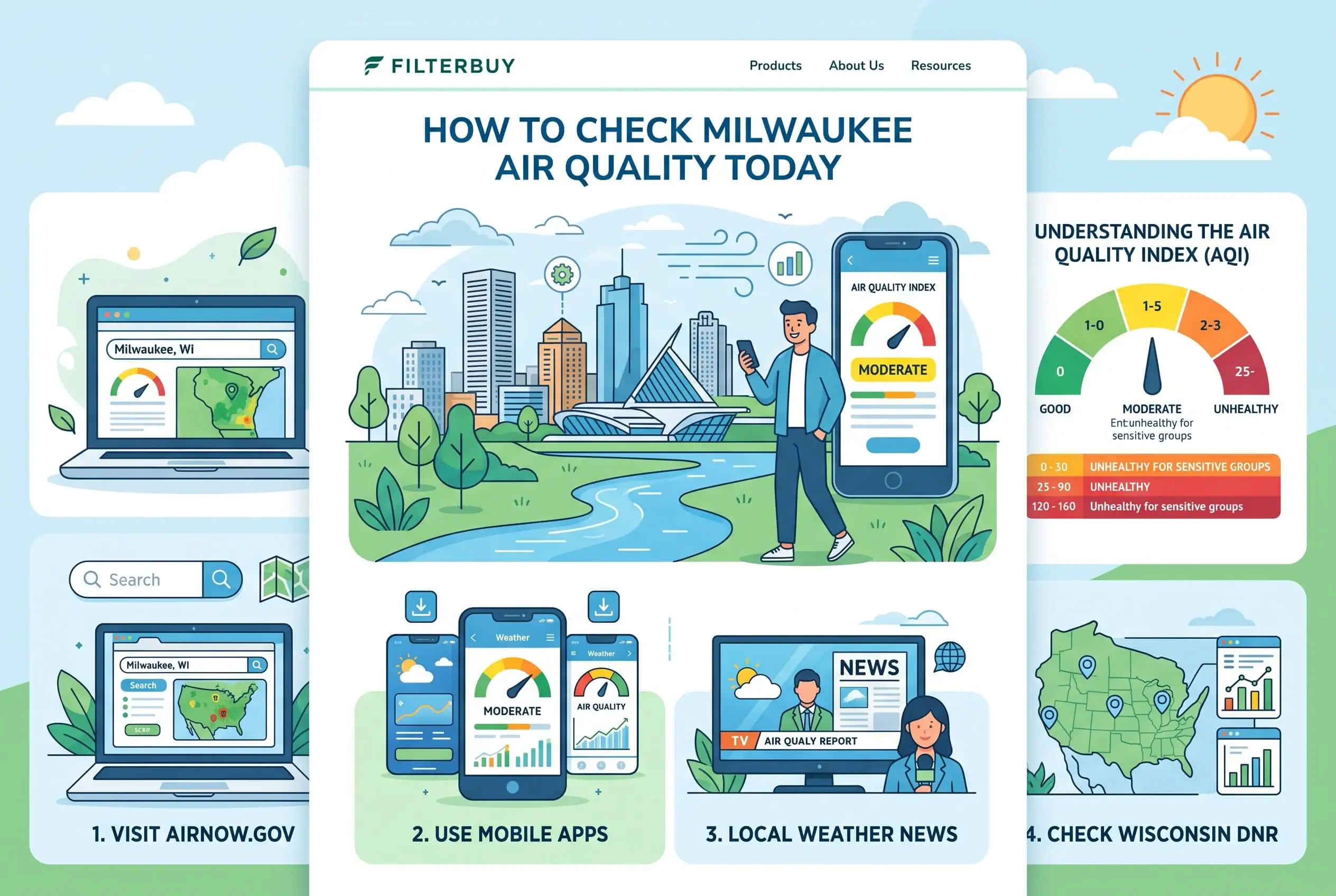
Pull Up the National Real-Time AQI Map
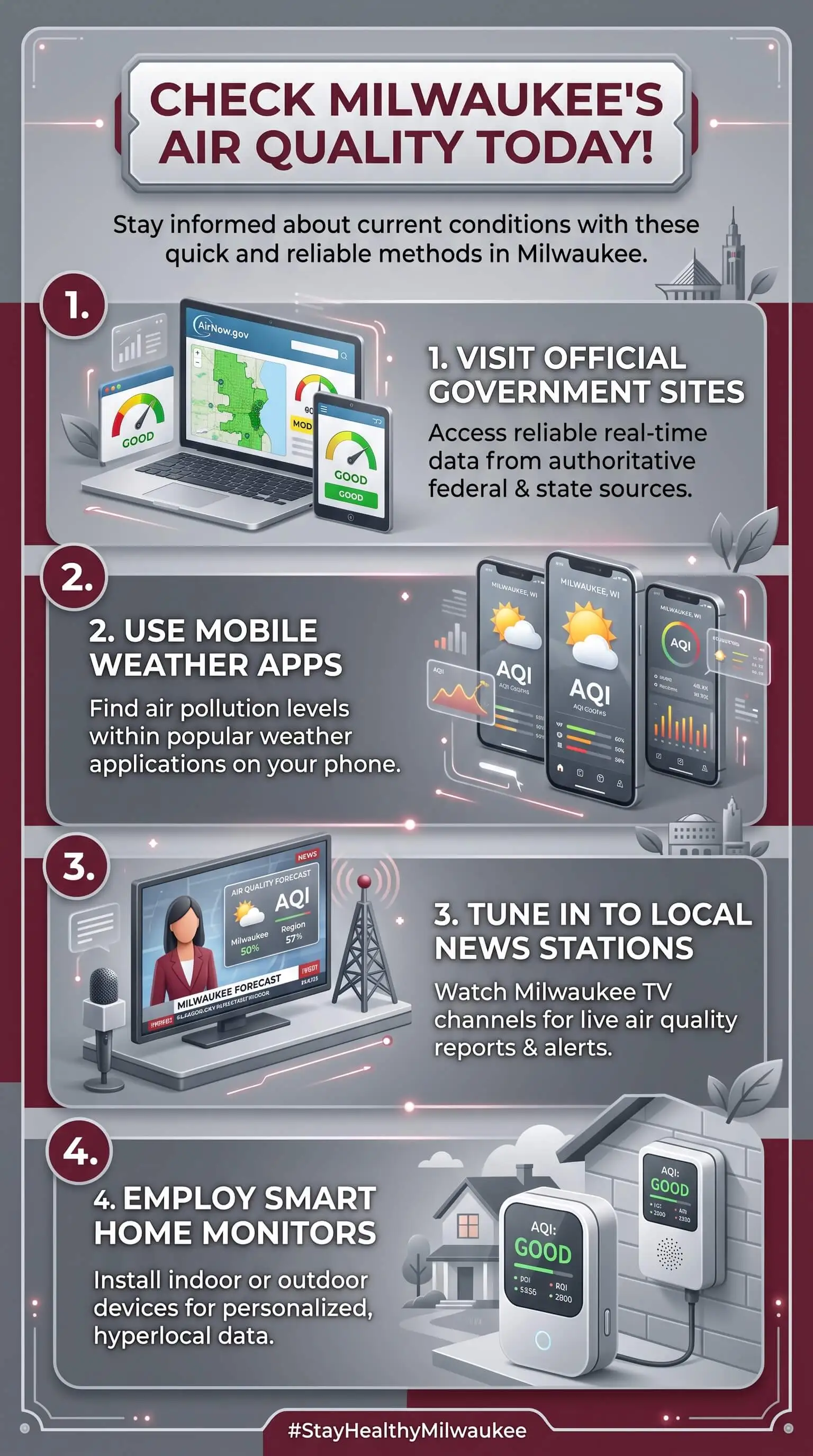
AirNow.gov is the EPA-backed source I check first. It pulls live monitor data for Milwaukee and lets you zoom into specific neighborhoods.
Follow Wisconsin's Statewide Forecast
The Wisconsin DNR Air Quality Forecast posts a daily statewide outlook that flags smoke or ozone trends before they reach Milwaukee.
Check the Local Weather Context
The National Weather Service Milwaukee/Sullivan office tracks the wind patterns and summer heat that often drive local ozone spikes.
Review the City's Own Guidance
Milwaukee's Health Department outdoor air quality page covers what to do during a wildfire smoke advisory.
Learn How the AQI Actually Works
The CDC's overview of air quality breaks down what each AQI color means for your health in plain language.
See the EPA's Role in Monitoring Air Pollution
The EPA's air quality page explains how the agency tracks the pollutants that make up the AQI.
Get Pediatric Guidance for Kids and Sensitive Groups
The American Academy of Pediatrics' outdoor air pollutants guidance outlines why children react differently to poor air quality and what parents can watch for.
These trusted resources help you monitor Milwaukee's air quality, understand AQI forecasts, protect your family's health during smoke or ozone events, and learn practical steps to improve air quality both indoors and outdoors.
3 Statistics
The American Lung Association ranked the Milwaukee-Racine-Waukesha metro area 22nd worst in the nation for ozone pollution and gave it an F grade, based on 10.7 unhealthy ozone days a year in the metro's worst-performing county.
Roughly 550 Wisconsin children are hospitalized for asthma-related issues every year, and another 4,800 end up in emergency departments statewide, according to the Wisconsin Department of Health Services.
Nationally, the average concentration of fine particle pollution fell 37% and ozone fell 22% between 1990 and 2015, according to EPA data cited by NASA's Global Modeling and Assimilation Office.
Despite long-term improvements in air quality nationwide, Milwaukee still experiences unhealthy ozone days that can affect people with asthma and other respiratory conditions. During these periods, using a high quality filter in your HVAC system can help reduce fine particles that enter your home and support cleaner indoor air.
Final Thoughts and Opinion
Milwaukee's air quality doesn't deserve constant worry, but it doesn't deserve to be ignored either. Most days here are fine. Some days, especially in summer or during a wildfire smoke event, aren't. The only way to tell the difference is to check the number, and that check takes less time than picking an outfit. Pairing that habit with top air filters can also help keep the air inside your home cleaner when outdoor pollution levels rise.
Frequently Asked Questions
What is a good AQI for Milwaukee?
An AQI of 50 or below is considered good, and anything up to 100 is generally fine for most people. Once it passes 100, sensitive groups should start paying closer attention.
Does Milwaukee have bad air quality?
Milwaukee's air quality is good on most days, but the metro area has struggled with ozone specifically, earning an F grade in the American Lung Association's most recent State of the Air report.
What causes poor air quality in Milwaukee?
Traffic, industrial activity, hot and still summer weather, and drifting wildfire smoke are the biggest contributors to Milwaukee's worst air days. During periods of elevated pollution, ionizer installation can help improve indoor air by reducing airborne particles that make their way inside the home.
How often does Milwaukee's AQI change during the day?
It can shift more than once in a single day, especially in summer, which is why a real-time check beats a general forecast.
Check Milwaukee's Air Before You Head Out
A quick look at today's AQI takes less time than checking the weather and it settles whether outdoor plans need a second thought. Make it part of your morning routine alongside the forecast and remember that MERV 8 pleated HVAC furnace air filters can also help improve your indoor air by capturing common airborne particles that enter your home.