Wind direction drives more of the daily swing in the air quality index Chicago families check each morning than anything else on the map. In Chicago, it decides which pollution sources reach your block and whether that pollution keeps moving or settles over your neighborhood. Keep a live air quality index Chicago map open while you read, and patterns you can’t see from the sidewalk start showing up on screen.
TL;DR Quick Answers
air quality index Chicago
Chicago’s air quality index rates ozone and fine particle pollution, called PM2.5, on a 0 to 500 scale, and wind direction drives most of its daily swings. South winds and afternoon lake breezes push lakefront ozone up. North winds carry in wildfire smoke, and calm days trap PM2.5 close to the ground.
0 to 50, Good: Normal outdoor plans for everyone.
51 to 100, Moderate: Fine for most people, though unusually sensitive people may notice symptoms.
101 and up: Sensitive groups should cut back outdoors, and the Illinois EPA may call an Air Pollution Action Day.
South or southeast wind on a hot day: Expect lakefront readings to climb, so get outdoor time early.
North wind with hazy skies: Smoke is likely, so check the AirNow Fire and Smoke Map, close the windows and run a MERV 13 filter if your system can handle one.
Top Takeaways
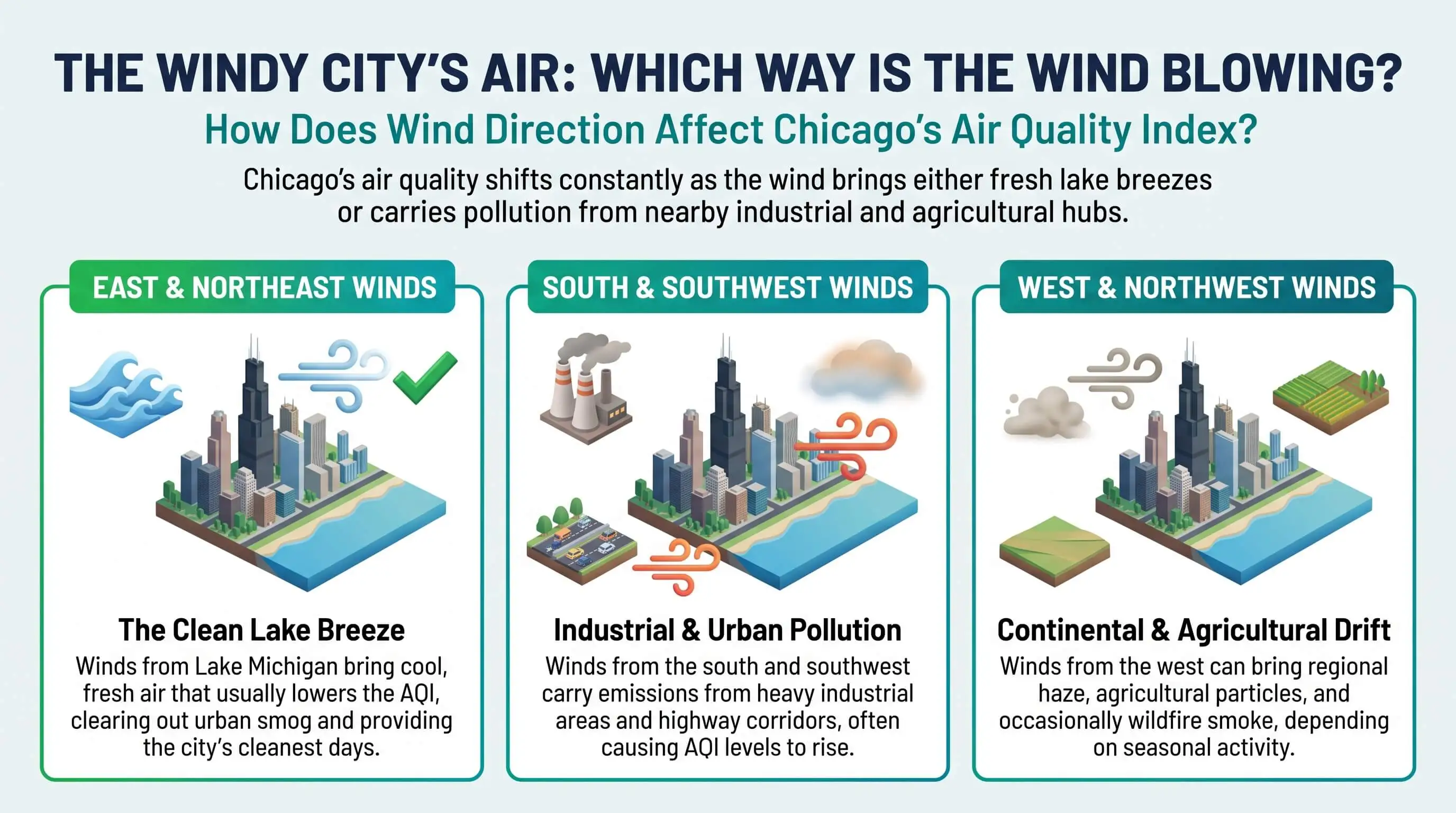
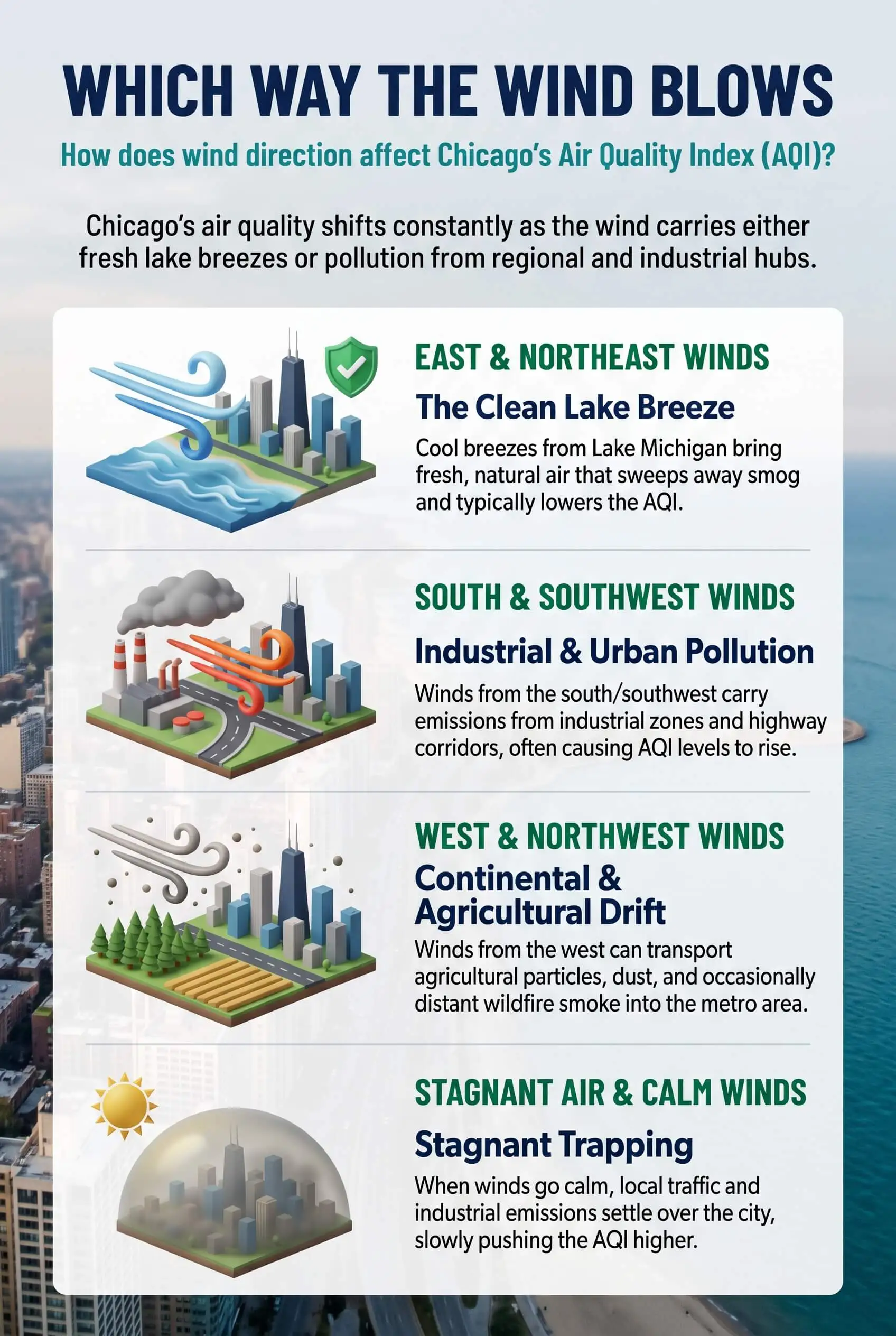
South and southwest winds carry ozone-forming emissions north into Chicago and its shoreline suburbs.
Afternoon lake breezes bring ozone-heavy air back from over Lake Michigan and hold it in a shallow layer along the shore.
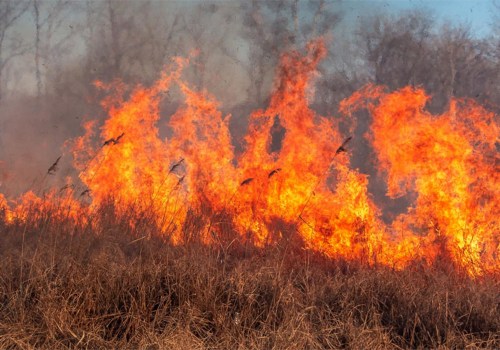
North and northwest winds deliver Canadian wildfire smoke, which can send PM2.5 climbing within hours.
Calm, stagnant weather often brings worse air than a windy day, especially under summer high pressure or a winter inversion.
Pairing the wind with the live AQI turns one reading into a forecast.
Why Chicago’s Geography Makes Wind Matter So Much
Chicago hugs the southwest shore of Lake Michigan, with heavy industry, rail yards and expressways running south and southeast into northwest Indiana while suburbs and farmland spread out to the west. Every compass direction brings its own kind of air.
Then there’s the lake, which runs a weather cycle of its own. Land warms quickly in late spring and summer while the water hangs on to its winter chill. That gap pushes air out over the lake at night and pulls it back by afternoon, making it important to understand the steps to improve air quality as pollution moves between the lake and the city.
Which Wind Directions Raise or Lower Chicago’s AQI?
South and Southwest Winds: Industrial Corridors and Regional Ozone
A southerly wind on a hot day is the classic recipe for high ozone. The Lake Michigan Air Directors Consortium has tracked bad-air days when ozone plumes march north from the bottom of the lake, riding southerly winds along the western edge of a high pressure system. Along the way it collects emissions from northwest Indiana, the Southeast Side and sometimes the Ohio River Valley.
Downtown often posts lower ozone than the shoreline towns farther north, which surprises plenty of people. Fresh exhaust near the source uses up some ozone, so the plume peaks later and farther downwind.
East and Southeast Winds: The Lake Breeze Loop
When the wind swings off the lake on a warm afternoon, shoreline ozone tends to jump. The loop starts overnight, when a light land breeze carries city emissions out over Lake Michigan. After sunrise, sunlight turns those emissions into ozone over the water. By late morning or afternoon, the lake breeze carries that ozone-heavy air right back to the beach.
In the 2017 Lake Michigan Ozone Study, researchers found that the cool lake layer stayed within roughly the lowest 200 meters and flattened the mixing height when it arrived, leaving pollution nowhere to go but street level. That’s why a lakefront neighborhood can read worse than an inland one during the very same hour.
North and Northwest Winds: Canadian Wildfire Smoke
North and northwest winds are the delivery route for wildfire smoke. Fires in Ontario and Quebec send plumes south on that flow, and the smoke can settle over the Great Lakes and push fine particle pollution, or PM2.5, up within hours. During fast-moving smoke, the posted AQI often lags what you see and smell, because the reading blends several recent hours.
West Winds and Strong Breezes: Usually the Cleanest Days
For most of the city, a steady west wind means cleaner air. Westerly flow pushes local emissions east over the lake and away from neighborhoods, and a strong enough west wind holds any lake breeze close to the water. Beachgoers should still watch the lakefront monitor, since ozone-rich lake air can bunch up in a thin strip along the sand on those days and push shoreline readings well above inland ones.
Why Calm Days Can Be Worse Than Windy Ones
Wind dilutes pollution. Take it away, and emissions from traffic, industry and home heating pile up right where they started. In summer, a stagnant high pressure system bakes that trapped air into ozone. On still winter nights, a temperature inversion works like a lid on a pot, holding PM2.5 near the ground until morning rush hour adds another layer. Several days of light, variable winds in the forecast usually means a creeping AQI, smoke or no smoke, making a pleated furnace filter a practical way to help capture airborne particles that enter your home.
How to Read Chicago’s Air Quality Index Alongside the Wind Forecast
Start with this plain-language guide to what the air quality index means if the color scale is new to you. After that, these five habits put you a step ahead of the next bad-air day.
Read the wind before the number. Check direction and speed in the National Weather Service Chicago forecast. A south or southeast wind on a hot afternoon is your early warning.
Compare two monitors. A wide gap between a lakefront and an inland station usually means a lake breeze has moved in.
Watch for Action Days. The Illinois EPA issues an Air Pollution Action Day when it forecasts air quality in the orange Unhealthy for Sensitive Groups range or worse.
Plan around the wind shift. On lake breeze days, lakefront runs and bike rides usually go better before the wind turns onshore.
Trust your eyes during smoke. When the sky looks hazy but the number looks fine, open the AirNow Fire and Smoke Map. It adds sensor data and tracks plumes faster.
What Wind-Driven Pollution Means Inside Your Home
Don’t take your indoor air for granted on a bad-air day. Ozone breaks down fairly quickly indoors, so shutting the windows handles most of it. PM2.5 is far more stubborn. It slips in around doors and window frames and hangs in the air for hours.
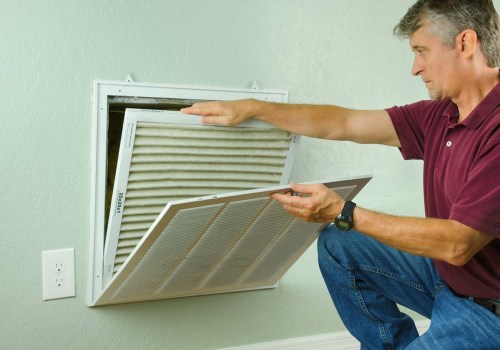
That’s where your HVAC system earns its keep. During smoke events, the EPA recommends a MERV 8 filter, or the highest rating your system can handle, with the fan running so air keeps passing through it. Homes without ducts can lean on a bedroom-sized portable HEPA air cleaner.
Pro Tip: Time your windows to the wind. Open them when a clean west wind settles in, and close them the moment the breeze swings off the lake or the sky turns hazy. That habit keeps your family breathing easier on the days the city can’t.
“I’ve spent years reading Chicago-area monitor data, and the wind shift tells me more than the number does. When a southwest wind turns southeast before noon on a hot day, I expect lakefront ozone to climb within a couple of hours, so I tell people to get their outdoor time in early.”
7 Essential Resources
See How Lake Breezes Carry Ozone Ashore
The EPA’s overview of the Lake Michigan Ozone Study explains why shoreline towns still record ozone above federal standards.
Check for Illinois Air Pollution Action Days
The Illinois EPA outdoor air page posts daily forecasts for 14 sectors and spells out what triggers each Action Day level.
Explore the Lake Michigan Ozone Study Data
NASA’s LMOS 2017 mission page shows how aircraft, ships and ground stations mapped the lake breeze and the ozone gradient along the shore.
Learn What Each AQI Number Means
AirNow’s guide to using the Air Quality Index breaks down each color category and who should adjust plans.
Understand the Weather Side of Air Quality
The National Weather Service air quality safety page ties ozone and particle forecasts to the weather outlook.
Protect Your Family During Smoke Events
The CDC’s wildfire smoke guidance lists smoke symptoms and who faces the most risk.
Read the Story Behind Breezy High-Ozone Days
Great Lakes Now’s report on lake breezes and ozone follows the researchers who measured the lake breeze connection in the field.
Comparing cities helps, too. Reading the Los Angeles air quality index map shows how differently a mountain basin traps smog.
These resources explain how Lake Michigan breezes, shifting weather patterns, and ozone pollution affect Chicago's air quality, helping you understand AQI readings and prepare for unhealthy conditions. Alongside checking daily forecasts and smoke alerts, choosing top air filters for your HVAC system can help capture airborne particles that enter your home, supporting cleaner indoor air when outdoor pollution levels rise.
3 Statistics
Researchers found a lake breeze present on 76% to 82% of days when ozone at Lake Michigan shoreline monitors reached 70 parts per billion for at least an hour, according to a 2022 study in Atmospheric Environment of Wisconsin lakeshore sites from 2013 to 2019.
Chicago gets a lake breeze on roughly half of all days from May through September, according to research cited in a 2022 Journal of the Atmospheric Sciences study archived by NOAA.
During the 2017 Lake Michigan Ozone Study, 15% to 20% of readings at the Zion, Illinois monitor topped 70 parts per billion when the wind blew from the southeast, while weak westerly winds lined up with low ozone, according to the Lake Michigan Air Directors Consortium’s LMOS 2017 Preliminary Finding Report.
Research shows that Lake Michigan's lake breezes play a major role in Chicago's ozone pollution, with shifting wind directions influencing how often air quality exceeds healthy levels. Understanding these patterns helps households prepare for poor outdoor air quality, while consulting air ionizer installation companies can help homeowners explore additional indoor air treatment options alongside proper filtration.
Final Thoughts and Opinion
In my opinion, the wind forecast is the most underused air quality tool in Chicago. Most of us already check it to pick a jacket, and reading it as a pollution forecast takes about ten more seconds. Neighbors up the shore deal with the same lake breeze, which is why checking Milwaukee air quality follows nearly the same playbook. The number shows where your air stands, and the wind shows where it’s headed.
Frequently Asked Questions
Does wind make Chicago’s air cleaner?
Most of the time, yes. A steady wind mixes pollution and moves it along and a strong west wind tends to bring the cleanest days. The exceptions matter. Southerly winds can import ozone-forming emissions, onshore lake breezes can lift shoreline ozone, and north winds can carry in wildfire smoke.
Why is ozone often worse along Chicago’s lakefront?
Emissions drift over Lake Michigan overnight and turn into ozone in the morning sun. The afternoon lake breeze brings it back in a cool, shallow layer that hugs the ground, so shoreline monitors often read higher than inland stations a few miles away.
Which wind direction brings wildfire smoke to Chicago?
North and northwest winds carry most of the smoke from fires in Ontario and Quebec into the Chicago area. When a stagnant high pressure system parks over the Great Lakes, that smoke can hang around for days and push PM2.5 into unhealthy ranges.
Is the air quality index in Chicago worse on calm days?
Often, yes. Without wind, emissions from traffic and industry build up right where they’re released. Hot, still summer days favor ozone, and calm winter nights can trap PM2.5 beneath a temperature inversion until the wind picks back up.
Where can I check the Chicago air quality index today?
Start with a live AQI map that shows individual monitors, then compare a lakefront station with an inland one. AirNow and the Illinois EPA also post daily forecasts and Air Pollution Action Day alerts for the Chicago area.
Let the Wind Tell You What Chicago’s Air Will Do
Pair the wind direction with the air quality index each morning, and a single number becomes a forecast your family can plan around. Keep a live map close, check the wind before you head out, and you’ll know which way Chicago’s air is about to move. At home, air filters for allergies can help capture airborne allergens and particles that make their way indoors.