Most of us look at exactly one air pollution reading a day, and most of us couldn’t say what AQI meaning really tells us. It’s that small number parked next to the temperature in your weather app.
I ignored mine for years. Then one afternoon last April I laced up, glanced at a 118, decided it sounded fine, and spent the back half of a four-mile loop breathing like I’d run eight.
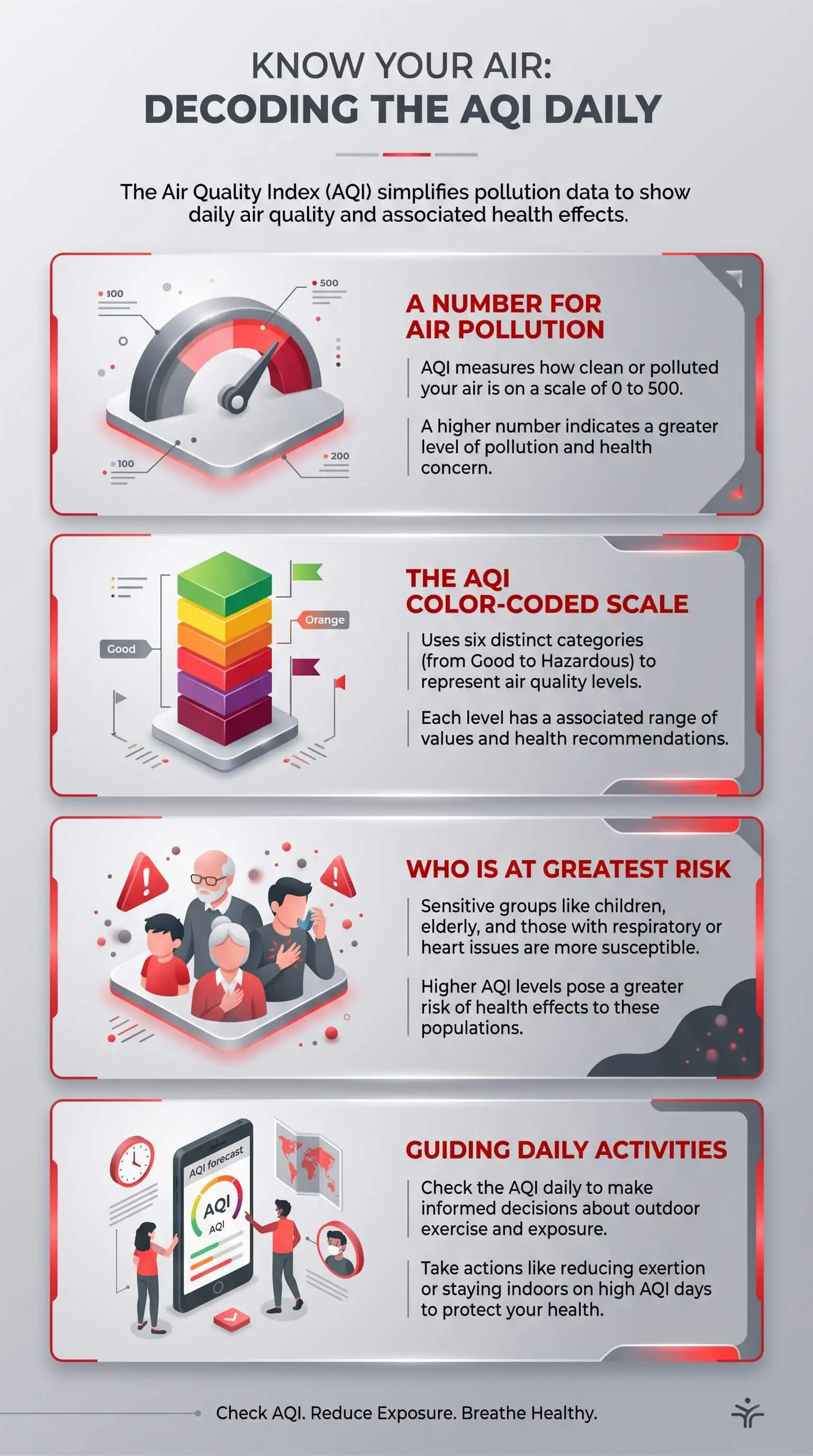
That 118 was the Air Quality Index. It’s a 0 to 500 score for how much health risk is sitting in the outdoor air right now, where lower means cleaner and higher means more risk. Nobody ever told me which parts of that score should change my afternoon, when to shut the windows, or whether the number says anything at all about the air in my own kitchen. It doesn’t, and that turns out to be the part worth knowing.
TL;DR Quick Answers
AQI Meaning
AQI means Air Quality Index, a 0 to 500 score for how much health risk the outdoor air carries right now. Lower is cleaner. The number comes from whichever tracked pollutant is the worst that day, so one bad pollutant sets your score by itself and can help guide steps to improve air quality indoors.
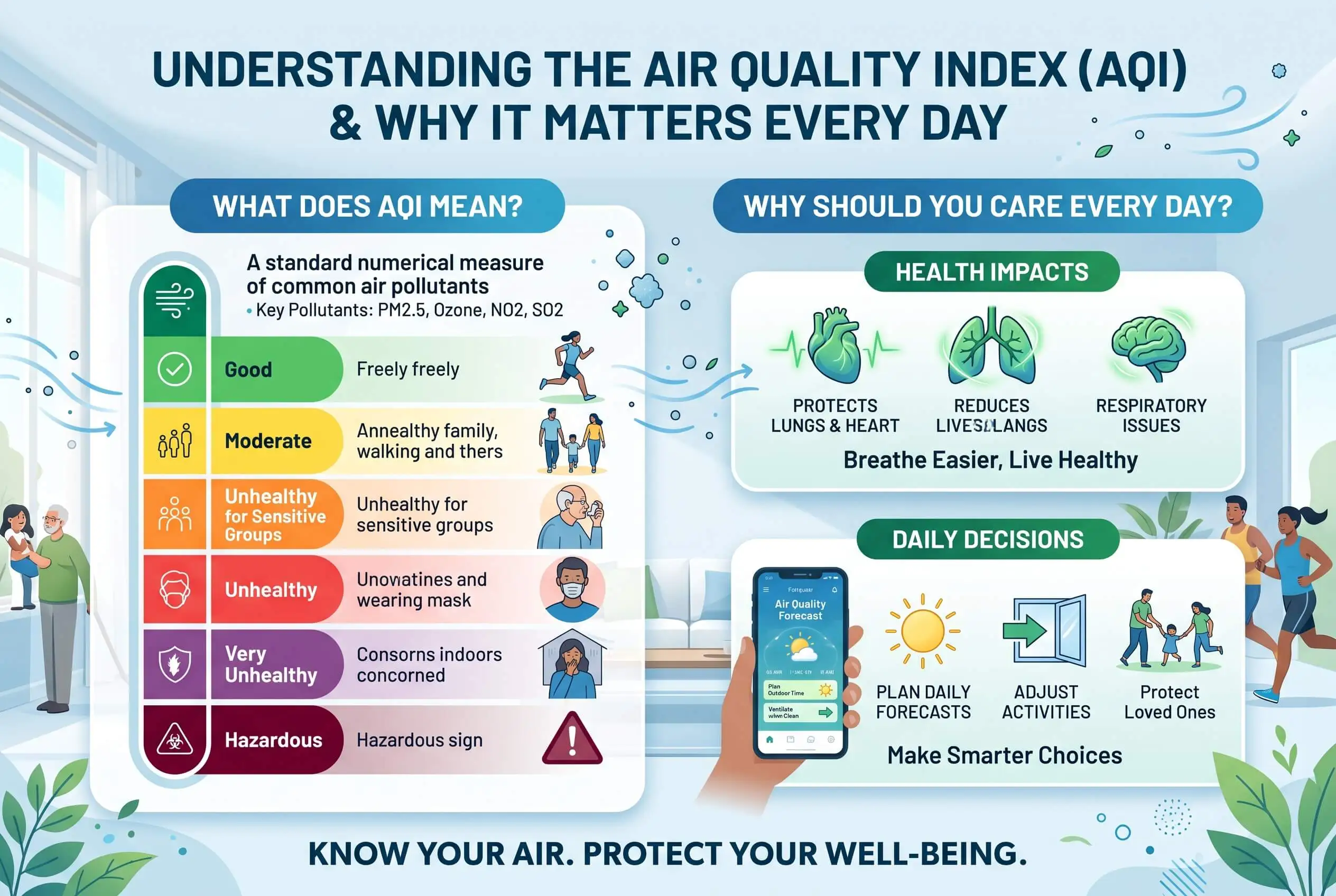
Scale: 0 to 500, split into six color bands from green (Good) to maroon (Hazardous).
What it measures: health risk from outdoor air pollution, not a percentage of pollution in the air.
How it's set: the single highest pollutant value wins. Nothing gets averaged.
What drives it: ozone, PM2.5, PM10, carbon monoxide, sulfur dioxide, or nitrogen dioxide.
What it skips: the air inside your house. That gets measured separately, and outdoor pollution still finds its way in.
Top Takeaways
The index runs 0 to 500 and measures health risk. Lower means cleaner air. Higher means more strain on your lungs and heart.
One pollutant sets the score. The highest individual pollutant value becomes the reported number. Nothing gets averaged.
An AQI of 100 is not 100 percent pollution. It roughly marks the short-term national health standard for the worst pollutant that day.
The index covers outdoor air only. Your indoor conditions are measured separately, and outdoor pollution still finds its way in.
The same day can shift bands. Ozone peaks on hot afternoons and fades at night. Particle pollution follows a different curve entirely.
An AQI of 100 Doesn’t Mean the Air Is 100 Percent Polluted
I believed it did for years, which meant I read a 60 as "the air is 60 percent bad" and adjusted nothing.
What 100 actually marks is roughly the short-term national health standard for whichever pollutant happens to be the worst that day. Readings at or below it are generally considered satisfactory. Climb past it and the air turns unhealthy for certain sensitive groups first, then for everybody as the number keeps going.
The scale tops out at 500. That ceiling isn’t a percentage either. It’s the far end of a health risk yardstick the EPA built so a reading in Phoenix carries the same weight as a reading in Cleveland.
One Pollutant Sets the Score
This is the part that changed how I read my phone.
The index doesn’t blend pollutants into an average. Each tracked pollutant gets its own index value, and the single highest value becomes the number you see. Say ozone comes in at 62, fine particles at 121, and carbon monoxide at 19. Your reported AQI is 121. Particles won, and the other two readings have nothing to do with the figure on your screen.
AirNow and most weather apps print the driving pollutant right beside the score. It sits there in smaller type, almost nobody reads it, and it’s more useful than the number it’s attached to because it can help explain what dust causes when particles are driving poor air quality.
What the Colors Actually Change About Your Day
Six color bands run from green at the clean end to maroon at the hazardous end, with yellow, orange, red, and purple stacked between them. Rather than memorize the ranges, bookmark a aqi meaning and pull it up when you need it.
The short version of what those bands change:
Green and yellow. Nothing changes for most people. Go about your day.
Orange. Your first real decision point. Children, older adults, and anyone with a heart or lung condition should ease off long stretches of outdoor exertion.
Red. Everybody cuts back on heavy or extended activity outside.
Purple and maroon. The outdoor plan is off. Move it inside, or move it to Thursday.
If you live with a diagnosed heart or lung condition, your threshold probably sits lower than mine. That’s a conversation for a qualified healthcare professional, not an article.
Why the Same Day Can Be Green at Breakfast and Orange by Dinner
Ozone and particle pollution don’t run on the same clock. Once that clicked for me, I stopped reading the index as a single verdict for the next sixteen hours.
Ground-level ozone forms when sunlight hits emissions from traffic and industry. It builds through hot, sunny afternoons and drops off after sundown. Particle pollution keeps its own schedule and can sit heavy overnight, especially when smoke has drifted in from somewhere else or the air simply isn’t moving.
Current readings update faster than you’d expect, too. The EPA weights the most recent hourly measurements more heavily when conditions shift quickly, so during a smoke event the number tracks the smoke instead of trailing a full day behind it.
So here’s what I do now. Ozone driving the score means I go early and I’m usually fine. Particles driving it means the hour buys me almost nothing, and I plan around the entire day.
The Number on Your Phone Might Not Be Measuring Your Neighborhood
Daily AQI reporting is required for metro areas above 350,000 people. Smaller communities often report anyway as a public service, but the monitor feeding your app can sit a long way from your street.
Mine reads from a station on the far side of a ridge. On a still day, close enough. When something is burning upwind of my house and not upwind of that station, not close enough at all. Finding out which monitor feeds your number takes about ten minutes, once, ever.
A 90 in Delhi and a 90 in Dallas Aren’t the Same Statement
Countries run their own indices, with their own scales, breakpoints, and category names. Canada reports a health index that runs 1 to 10. The United Kingdom uses a ten-point banded scale. China and India both use 0 to 500 ranges built on breakpoints and descriptors of their own. If you travel, or you follow coverage from abroad, the side-by-side comparison of national air quality indices shows how far apart these systems really sit.
The Index Stops at Your Front Door
The Air Quality Index measures outdoor air. Nobody handed me that limitation up front, and it’s the one that matters most, because the score says nothing about your kitchen.
That doesn’t make the outdoor number irrelevant indoors. Outdoor air comes in through windows, doors, gaps in the building envelope, and your HVAC system. Americans spend roughly 90 percent of their time inside, so what makes it through those paths matters more to most of us than what’s happening on the sidewalk. Learning how to read an air quality index map is worth ten minutes before you decide how much weight to give the reading.
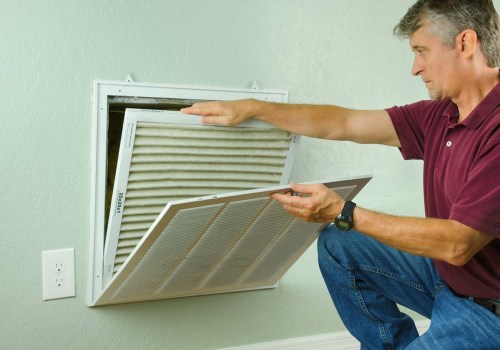
The indoor half is unglamorous and it’s entirely yours. Shut the windows when the number’s up. Run the system fan so air keeps cycling through the filter. Check that the filter is clean and rated for what you’re asking it to catch. A loaded filter can’t move air the way a fresh one does, and the rating stamped on the frame only counts while the filter still has room left in it.
"The readers who get real value out of the index are the ones who look at which pollutant is driving it. In fifteen years of fielding calls during smoke season, the single question that changes the most is whether the score is ozone or fine particles, because one of those gives you a bad afternoon and the other gives you a bad week."
7 Essential Resources
These are the pages I actually go back to. Everyone was alive when I wrote this.
1. Get the Definition From the Agency That Wrote It
Six categories, the 0 to 500 range, and the five criteria pollutants the index covers, straight from the source. Start here if you only read one. AirNow, U.S. EPA: Air Quality Index (AQI) Basics
2. Turn Tomorrow’s Forecast Into an Actual Plan
This one covers the daily index, next-day forecasts, and how current readings get calculated when conditions move fast. It’s the reference behind most of what I said about timing. AirNow, U.S. EPA: Using the Air Quality Index
3. Work Backward From a Score to a Real Concentration
A working calculator that converts an index value into the pollutant concentration sitting behind it. Useful when you want to see what the number is standing in for. AirNow, U.S. EPA: AQI Calculator
4. Find Out Whether You Should Act Sooner Than Everyone Else
Ozone and particle pollution reach people with asthma, other lung disease, and heart conditions earlier and harder. This page explains why, in plain terms. AirNow, U.S. EPA: Asthma and Heart Disease
5. Understand the Particles Behind Most High Readings
Fine and coarse particles drive more elevated AQI days than anything else across most of the country. Here’s what they are and where they come from. U.S. EPA: Particulate Matter (PM) Pollution
6. See What Actually Governs the Air Inside Your House
Since the index quits at the front door, this is the other half of the picture. Source control, ventilation, and filtration are your three levers, and this page walks through all of them. U.S. EPA: Indoor Air Quality (IAQ)
7. Read a Plain-Language Second Opinion
A shorter, less technical walkthrough of the same system, written for patients and families instead of regulators. American Lung Association: Air Quality Index
These resources explain how to read AQI, understand the pollutants behind the score, plan around outdoor air conditions, and improve indoor air with steps like ventilation, source control, and using MERV 8 pleated HVAC furnace air filters as part of your filtration strategy.
3 Statistics
Americans spend roughly 90 percent of their time indoors. Indoor concentrations of some pollutants run 2 to 5 times higher than typical outdoor levels. U.S. EPA: Report on the Environment
Daily AQI reporting is required only for metro areas above 350,000 people. The EPA has issued a national air quality index since 1976, and the version we use today dates to 1999. AirNow, U.S. EPA: Using the Air Quality Index
Nearly half of children in the United States live in places with unhealthy levels of air pollution. American Lung Association: State of the Air 2026
With Americans spending about 90% of their time indoors, limited AQI reporting in smaller metro areas, and nearly half of U.S. children exposed to unhealthy air pollution, knowing how to test indoor air quality like a pro can help you better assess the air you actually breathe every day.
Final Thoughts and Opinion
We treat this index like a warning label. It works far better as a scheduling tool, and that’s the whole of my opinion after a few years of paying attention to it.
A warning label gets read once, in a hurry, when something has already gone wrong. A scheduling tool gets checked the night before, right next to the weather, and quietly moves a run from four in the afternoon to seven in the morning. That second reader collects nearly all of the benefits and never once feels like they’re managing a crisis.
I’d change one more thing about how the number reaches us. The driving pollutant is the useful half of the report, and it almost always appears in smaller types than the score itself. I read about the pollutant first now, then consider whether high quality filters can help with the indoor side of the problem. My plans are better for it.
Frequently Asked Questions
What does AQI stand for?
AQI stands for Air Quality Index. It’s the EPA system for reporting outdoor air quality on a 0 to 500 scale, using six color-coded categories that run from green for good conditions up to maroon for hazardous ones.
What does an AQI of 100 mean?
An AQI of 100 sits at the top of the moderate range. It roughly corresponds to the short-term national health standard for whichever pollutant is highest that day. Above 100, conditions turn unhealthy for sensitive groups before they affect anyone else.
What AQI should I stay inside?
Above 150, everyone should cut back on long or heavy outdoor activity. Above 200, move it indoors. Children, older adults, and people with heart or lung conditions should start easing off at 101, the moment the index turns orange.
Why is my AQI different from the reading on someone else’s phone?
Different apps pull from different monitors, and those monitors can be miles apart. Update intervals vary too. Checking which station actually feeds your number explains most of the gap, and a walkthrough of how to check a city air quality reading settles the rest.
Does AQI measure the air inside my house?
No. The index measures outdoor air only. What happens indoors depends on your own pollution sources, your ventilation, and your filtration. A high outdoor number is still a good reason to close the windows, consider whether duct cleaning may be needed, and go look at your filter.
How often does the AQI update?
Current readings refresh hourly, and the calculation gives extra weight to the most recent measurements when conditions are changing quickly. State and local forecasters usually issue next-day forecasts in the afternoon.
Knowing What the Number Means Is What Changes the Day
Check the score and the driving pollutant before you plan outdoor time, and let that pick the hour instead of writing off the whole day. Then go look at the pleated furnace filters in your system, because indoor air is the piece of this you actually control.