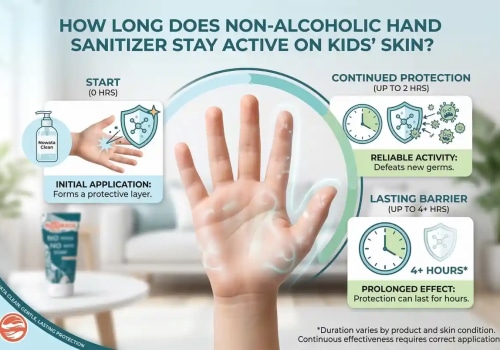
Most advice on hand soap for eczema assumes a calm patient who holds still for 20 seconds. Toddlers don't. Below are the gentle options that work for sore skin and stubborn kids, what we'd leave on the shelf, and a few changes that make how often kids wash their hands during the day a lot less of a fight.
TL;DR Quick Answers
Hand soap for eczema
The best hand soap for eczema is defined by what it leaves out. Look for a cleanser that is:
Fragrance-free, not just “unscented,” which can hide masking fragrance
Soap-free or a gentle synthetic cleanser, not a harsh alkaline bar
Free of SLS/SLES sulfates, alcohol and dyes
Not antibacterial, since the American Academy of Dermatology advises families with eczema to skip antibacterial soaps
Short on ingredients, ideally carrying the National Eczema Association Seal of Acceptance
What most advice misses: frequent washing is part of the problem, not just the soap. Every rinse and towel-dry pulls moisture from a damaged skin barrier. For toddlers with eczema, this is often why they refuse the sink. Their hands sting, so they pull them back.
What works best:
At the sink: use lukewarm water and a fragrance-free cleanser. Pat dry, then apply a thick fragrance-free moisturizer within a few minutes.
Away from the sink: use a rinse-free, alcohol-free, plant-based soap. It removes dirt without water, so cracked skin avoids the wet-dry cycle.
For light messes: a lukewarm rinse plus moisturizer is often enough without soap.
Before switching: patch-test any new product on the inner forearm for a few days.
A gentle soap protects skin between flares, but it doesn’t treat eczema. See a pediatrician or dermatologist if hands bleed, ooze or crust over.
Top Takeaways
Fix the sting first. Eczema leaves hands cracked and sensitive. When washing stops hurting, most toddlers stop resisting.
Read the label for what’s missing. Choose a soap that skips:
Fragrance (look for “fragrance-free,” not “unscented”)
Sulfates, alcohol and dyes
Antibacterial ingredients
Match the cleanser to the moment.
At the sink: a soap-free, fragrance-free cleanser
On the go: a rinse-free, alcohol-free soap
Last resort: alcohol sanitizer, with supervision
Build a gentle routine. Use lukewarm water, pat dry and moisturize within minutes. Apply thick cream at bedtime.
Know when to call the doctor. Gentle care protects skin but doesn’t treat eczema. Call your pediatrician for bleeding, oozing, crusting or flares that won’t settle.
Why Hand Washing Hurts When Your Toddler Has Eczema
Eczema is a type of dermatitis, and in toddlers the trouble starts with a leaky skin barrier. Healthy skin holds water in and keeps irritants out. Skin with eczema does a poor job of both, so it dries fast and reacts to almost everything.
Cracked knuckles and fingertips leave raw skin exposed. Hot water lands on it, and so does fragrance, along with the sulfates that make soap foam. To a two-year-old, that adds up to one simple lesson. The sink hurts.
Then there's how often toddlers wash. Snack time, diaper changes, the sandbox, daycare pickup, dinner. Each rinse and towel-dry pulls a little more moisture out of the skin, and the cycle repeats all day. That's why switching soaps alone rarely calms a flare, because the washing itself is part of the problem.
What to Look For in a Hand Soap for Eczema
Read the label from the bottom up. What a hand soap for eczema leaves out matters more than anything printed on the front of the bottle.
Look for:
"Fragrance-free" on the label, since "unscented" isn't the same thing
A soap-free or gentle synthetic cleanser instead of a classic alkaline bar
No sodium lauryl sulfate (SLS) or sodium laureth sulfate (SLES)
No alcohol and no dyes
An ingredient list short enough to read in the checkout line
The National Eczema Association Seal of Acceptance, if you'd like someone else to have done the screening
Leave on the shelf:
Antibacterial soaps, which the American Academy of Dermatology tells parents of kids with eczema to skip
Bright, bubbly kids' soaps that smell like candy
"Unscented" products that hide a masking fragrance
Hot water and scratchy towels, which undo whatever a gentle soap gets right
Patch-test anything new on the inside of your toddler's forearm for a few days first. Toddler skin is unpredictable, and a small red spot on one arm is a lot easier to deal with than two angry hands.
Best Hand Cleaning Options for Toddlers with Eczema, Compared
No single product covers a toddler's whole day. Most kids do best with something gentle at the sink and a backup for everywhere else.
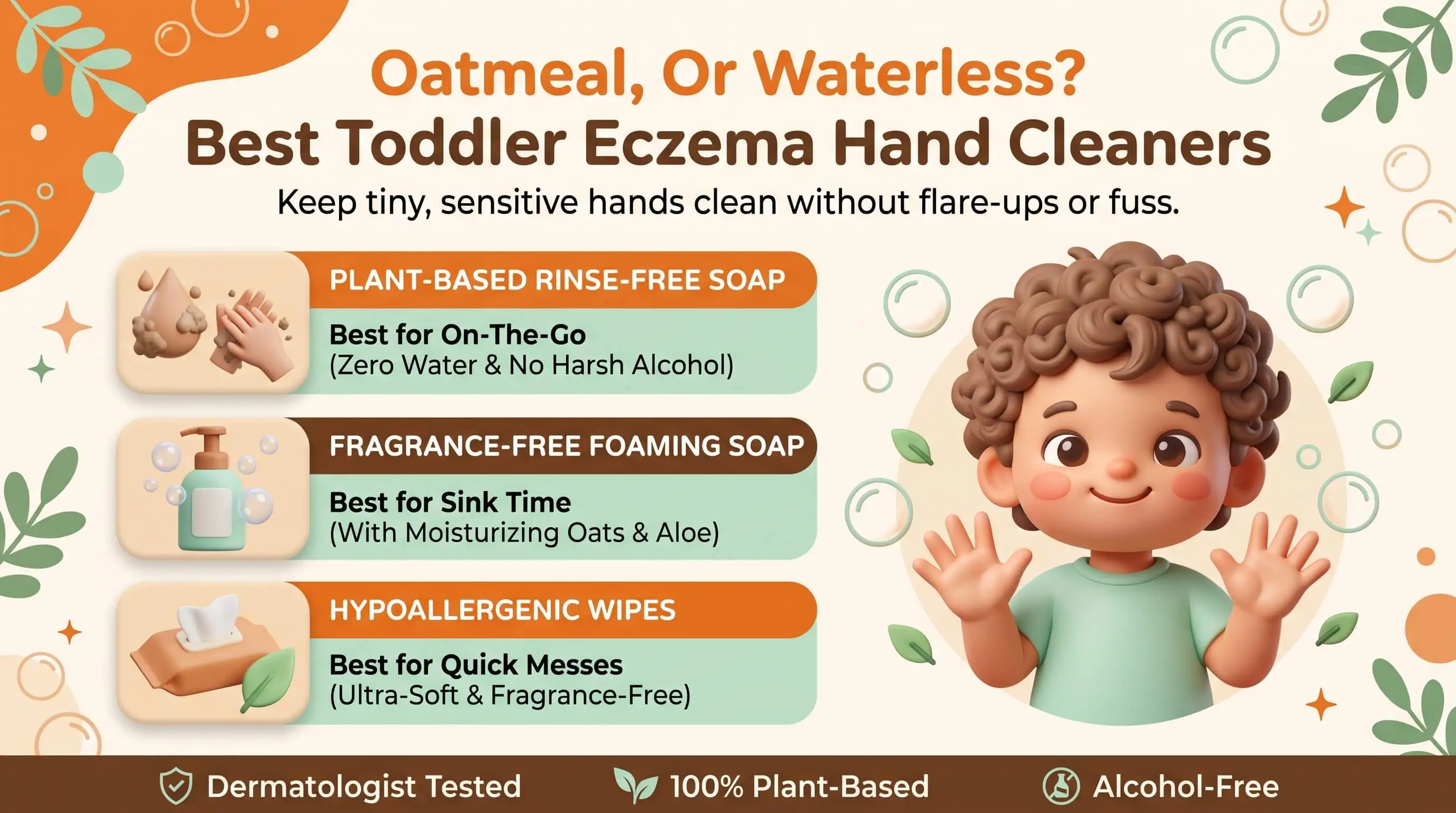
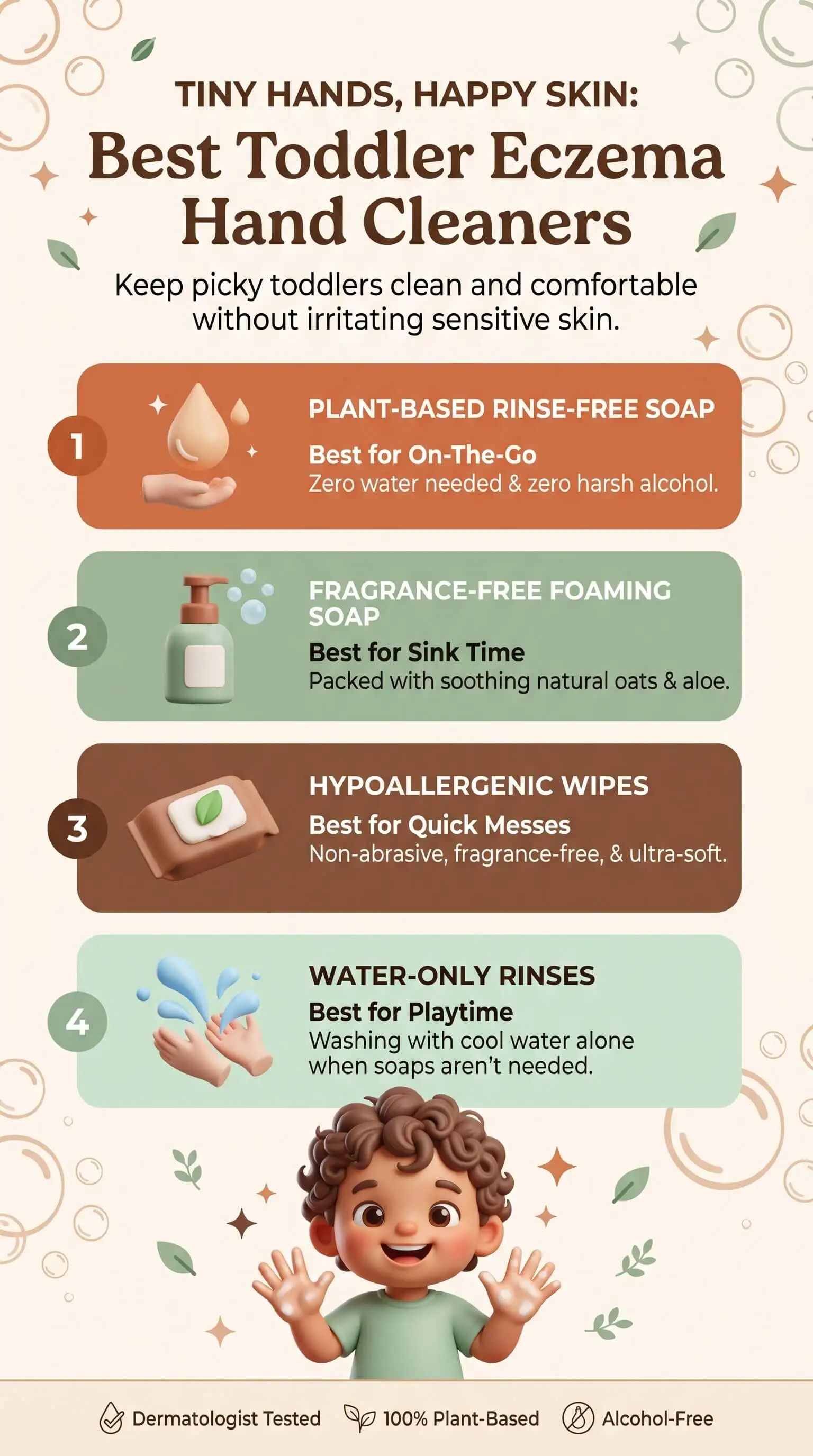
Fragrance-free soap-free cleanser: needs water, low sting risk, decent toddler appeal, and best for daily sink washes at home.
Rinse-free plant-based soap: no water, low sting risk, high toddler appeal thanks to the "brush off the crumbs" step, and best for the car, the park and daycare pickup.
Lukewarm water plus moisturizer: very low sting risk and fine for light messes that don't need soap.
Fragrance-free water wipes: no water, low to medium sting risk depending on the brand, and good for quick wipe-downs between washes.
Alcohol hand sanitizer: no water but a high sting risk on cracked skin, so it stays a supervised last resort.
Fragrance-free soap-free cleanser at the sink
This is the everyday default. Use lukewarm water and about 20 seconds of gentle rubbing, then pat dry and put on a thick fragrance-free moisturizer within a few minutes.
Rinse-free plant-based soap
This is the gap we built NOWATA to fill. You rub it onto dry hands until it forms small clumps, then brush the clumps away, and the dirt and germs leave with them. The unscented version has no fragrance or alcohol, and since there's nothing to rinse, cracked skin skips the wet-dry cycle entirely. One parent wrote in a review that their toddler actually liked flaking the dirt off. If you're curious about the mechanics, here's how waterless hand soap cleans hands without water.
Water rinse plus moisturizer
A little sand on the palms doesn't need soap. The Allergy & Asthma Network points out that soap isn't required for good hand hygiene every time, so a lukewarm rinse and a moisturizer is often enough.
Fragrance-free water wipes
They're handy in the diaper bag. Read the label anyway, because plenty of baby wipes still carry fragrance or alcohol.
Alcohol hand sanitizer
Sanitizer works against germs. On cracked skin it also stings and dries things out further, so we keep it for times when nothing else is around. Use a small amount, help your toddler rub it in, and follow with moisturizer once it dries.
When Your Toddler Refuses the Sink
In our house, picky hands almost always turned out to be sore hands. Fix the sting and most of the stubbornness goes with it.
Test the water on your inner wrist. Lukewarm should feel like almost nothing.
Put on thick cream at bedtime. Cracks get a whole night to close, so morning washes hurt less.
Hand over some control. A step stool, their own pump bottle or a choice between two cleansers gives a toddler a say in the routine.
Turn it into a game. Sing a 20-second song, or with a rinse-free soap, let them "brush off the crumbs."
End on something nice. A favorite fragrance-free cream as the last step gives the whole routine a payoff.
Call your pediatrician if you see bleeding, oozing or yellow crusts, or if a flare won't settle with gentle care.
How Indoor Air Affects Your Toddler's Hands
Winter heat dries out more than the air. Once the furnace kicks on, indoor humidity drops, and dry air pulls water from skin that's already losing it. Maintaining balanced indoor humidity is one way to improve air quality while creating a more comfortable environment for toddlers with eczema-prone skin.
Keep indoor humidity moderate, roughly 30 to 50%, and check it with an inexpensive hygrometer.
Run a cool-mist humidifier in your toddler's room and clean it often. Warm-mist models get hot enough to burn curious fingers.
Skip fragranced plug-ins and room sprays.
Keep dust down, and here's how to get rid of dust mites effectively if they're part of the picture.
Don't overshoot, though. Push the humidity too high and you trade dry skin for mold.
"We never planned to start a soap company. We just wanted our kids to stop crying at the sink. I'm a dentist, so I wash my hands dozens of times a day, and I've watched colleagues end up with chronic hand dermatitis from soap and water alone. At home we saw the same damage on our children, except they couldn't tell us why washing hurt. They just pulled their hands back. So we asked what clean hands would look like if they didn't need water at all, and we spent two years answering that. Our children were the first ones to use what we made. Nothing goes into it that we wouldn't put on their skin. And the thing that surprised us most is that toddlers don't really fight clean hands. They fight the sting, and once the sting is gone, most of the fight goes with it."
7 Essential Resources
We're parents first and scientists second. When families ask us where to read more, these are the pages we send them to, and none of them is trying to sell you anything.
American Academy of Dermatology: Eczema tips to help your child feel better. Bathing and moisturizing steps written by dermatologists, including why a child's cleanser should be mild, fragrance-free and used only when needed.
American Academy of Dermatology: 4 infection fighters to avoid if your child has eczema. A short do-not-use list that includes antibacterial soaps, with the reasons dermatologists give for skipping them.
National Eczema Association: Hand eczema. What hand eczema looks like, what tends to set it off, and how to care for it from one day to the next.
National Eczema Association: Seal of Acceptance. A searchable directory of cleansers and moisturizers screened for common eczema irritants. We lean on it as a shortcut when we're comparing labels.
Allergy & Asthma Network: Eczema and washing hands frequently. Practical advice on soap, soap-free washes, sanitizer and moisturizer for anyone who washes a lot. We wish we'd found it sooner.
MedlinePlus (National Library of Medicine): Eczema. The NIH's plain-language hub, with links to American Academy of Pediatrics pages written for parents.
CDC: About Handwashing. The moments when kids really do need clean hands, which helps you decide when a full wash can wait.
3 Statistics
About 1 in 10 young children has eczema. The CDC found that in 2021, 10.8% of U.S. children aged 0 to 17 had diagnosed eczema, including 10.4% of kids aged 0 to 5. Source: CDC, NCHS Data Brief No. 459.
The more hands get washed, the more hand eczema shows up. Loh and Yew reviewed 45 studies and found that washing at least 8 to 10 times a day raised hand eczema risk by about 51%. At 15 to 20 washes a day, the increase was about 66%. Most of those studies followed adults, but small hands go through the same wet-dry cycle. Source: Loh and Yew, Contact Dermatitis, 2022.
Hand eczema is far from rare. A large Dutch population study found that 15.0% of people had hand eczema at some point in their lives, close to the pooled global estimate of 14.5%. Source: Acta Dermato-Venereologica, 2021.
Final Thoughts and Opinion
Most hand soap was designed for grown-up hands that don't crack, and toddlers with eczema have been absorbing that mismatch for years. Our view is simple. Comfort gets you compliance. A toddler whose hands don't sting will wash without a standoff, and a toddler who washes without a standoff ends up with cleaner hands more often.
In practice that means a fragrance-free cleanser at the sink, a rinse-free option for the car and the park, lukewarm water, a thick moisturizer, and air at home that isn't bone-dry. None of it is complicated. It only works if you do it every day, though.
We'll be just as plain about the limits. A gentle soap protects skin between flares, but it doesn't treat eczema. If your toddler's hands bleed, ooze, crust over or stay angry despite gentle care, call your pediatrician or a pediatric dermatologist before you try another bottle.
Frequently Asked Questions
What is the best hand soap for eczema in toddlers?
No single brand wins for every child. The best hand soap for eczema in toddlers is fragrance-free, sulfate-free, alcohol-free and dye-free, and it isn't antibacterial. Use it with lukewarm water, pat your hands dry, and put on a thick fragrance-free moisturizer within a few minutes. For the times you're nowhere near a sink, a rinse-free cleanser fills the gap.
Is antibacterial soap safe for a toddler with eczema?
The American Academy of Dermatology advises parents to avoid antibacterial soaps and body washes when a child has eczema. Dermatologists have found that these products can irritate the skin or cause allergic reactions, and they don't lower the chance of a skin infection. A plain, gentle, fragrance-free cleanser does the job.
Can I use hand sanitizer on my toddler's eczema hands?
You can, but expect tears if the skin is cracked, because alcohol stings open skin and dries it further. Keep sanitizer for times when nothing else is available, help your toddler use a small amount, and moisturize once it dries. An alcohol-free, rinse-free soap is a gentler option for the diaper bag.
How do I get my toddler to wash their hands when it hurts?
Start with the sting. Lukewarm water, a fragrance-free cleanser and a thick cream at bedtime give cracks a chance to close. After that, give your toddler a little control, like a step stool, their own pump bottle or a choice of cleanser. A 20-second song helps, and so does a favorite cream at the end.
Does "unscented" mean fragrance-free?
No. "Unscented" only means a product doesn't smell strongly, and some unscented formulas use masking fragrance to cover the odor of other ingredients. For a toddler with eczema, look for "fragrance-free" on the front and make sure "fragrance" or "parfum" isn't on the ingredient list.
Can dry indoor air make my toddler's hand eczema worse?
Yes. When the heat runs in winter, indoor humidity drops, and dry air pulls moisture from skin that's already struggling to hold on to it. A cool-mist humidifier in your toddler's room, cleaned often, keeps the air from getting too dry. Just don't push the humidity too high, since that invites mold.
CTA
Your toddler's hands have been through enough experiments. If you want something gentle for the car and every stop between sink washes, try NOWATA, the plant-based, fragrance-free rinse-free soap we made for our own children before we ever offered it to yours. In lab testing it physically removed over 99.9% of germs* without water or alcohol, and every order comes with a 30-day satisfaction guarantee. Patch-test it first, and if your little one's skin is already broken or infected, check with your pediatrician before you change anything.